Forest researchers define 'wood security' and want it ranked with food, energy and water
A 41-author team from 23 institutions defines wood security and lists 20 challenges, urging that it rank with food, energy and water security. The list comes from a scored expert workshop, so it ranks judgement and sets a research agenda.
The Scientist · Science desk
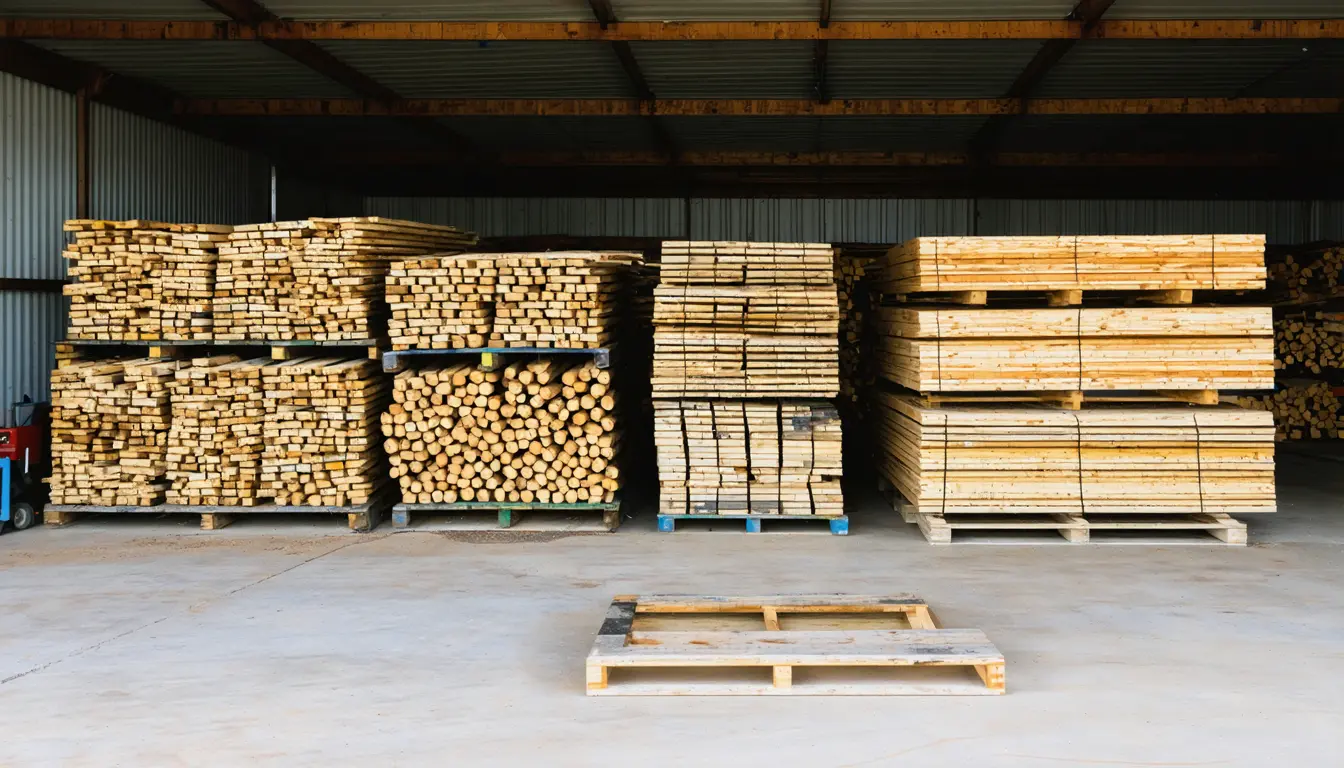
Key figures: global timber demand is expected to rise by at least 50% by 2050, and by up to 200%. Timber production generates approximately $1.5 trillion a year. The study identifies the 20 greatest challenges to wood security.
| Figure | Value | Note | Claim |
|---|---|---|---|
| Expected rise in global timber demand by 2050, at least | 50% | up to 200% | 9 |
| Timber production a year | $1.5tn approx. | 8 | |
| Wood security challenges | 20 identified | 1 |
What happened
- The 20 challenges sit in five themes: forest management and land-use change, climate, policy and governance, monitoring and technologies, and innovation, trade and circularity.
- Named priorities include the land squeeze between commercial forestry, agriculture and conservation, wildfire and extreme weather, and legal governance and Indigenous land tenure.
- Timber production generates roughly $1.5 trillion a year, and about one-third of all forests are managed for it.
- Forests cover roughly a third of the land surface, storing carbon that absorbs nearly half of annual fossil fuel emissions.
Why it matters
- What doesn't add up contradiction Part of the projected demand growth comes from the shift toward wood as a low-carbon substitute for steel and concrete, so a climate-driven choice adds to the forest pressure the paper wants managed.
- Who has to decide decision Funders choosing where to start have 20 challenges to pick from and, in the published summary, no scores to order them by.
- What's now possible capability Wood recycling, longer-lasting products and higher plantation yields are offered as ways to meet demand without more pressure on primary natural forests.
- What's now possible capability Remote sensing combined with long-term ground inventories could improve tracking of illegal timber trade and monitoring of forest recovery.
The design is a modified Delphi horizon scan, a structured way to pool expert judgement. The author team held a workshop in May 2025 to identify, score and rank the most pressing issues facing global forests [5]. The output is a prioritised list. No intervention was tested, so there is no control group or effect size to ask for.
The summary's one forecast shows how wide the uncertainty is. Timber demand is expected to rise by between 50% and 200% by 2050 [9]. As multiples of the starting level, that is 1.5 times to 3 times, so the high end is twice the low end [15]. Phys.org's account does not say which models or scenarios produced the range.
The definition may outlast the ranking. The authors define wood security as "the long-term, sustainable delivery of ecosystem services provided through forest use, restoration and conservation" [3]. That covers more than timber supply.
Professor David Edwards, head of Tropical Ecology and Conservation at Cambridge and senior author, made the comparison with food directly. He said: "Our understanding of global wood security lags behind that of food security." [12]
Lead author Dr. Christopher Bousfield of the University of Sheffield framed the aim as agenda setting. He said: "By establishing the concept of wood security and assessing its core issues, we hope to spur the collaborative research and action required to tackle these complex pressures." [11]
We think the shared vocabulary is the sturdier contribution. The 20-item ranking is a starting list, and we'd treat it as provisional until the scores behind it can be read. The paper appears in Trends Open and draws on authors from 12 nations [2].
What to watch
- Whether the full Trends Open paper reports the scores and rank order of the 20 challenges, which the Phys.org summary does not reproduce.
- Whether any international body or funder adopts wood security as a category alongside food, energy and water.
- Whether later demand projections narrow the 50% to 200% range for 2050.
Clarity's read
What the record supports and how the coverage leans. The claims behind it follow.
Reality
- Evidence45
- Adoption
- Not scored
- Hype gap+15
- Incentives
- Not scored
- Confidence50
Claim ledger
Ranked by verification strength, evidence, and original report placement.
- [1]
A study led by the Centre for Global Wood Security formally defines the concept of global wood security and identifies the 20 greatest challenges to wood security in the 21st century.
- [2]
The publication was authored by 41 experts spanning 23 institutions and 12 nations and published in the journal Trends Open.
- [3]
The paper defines wood security as the long-term, sustainable delivery of ecosystem services provided through forest use, restoration and conservation.
- [4]
The authors urge the international community to elevate wood security alongside food, energy and water security as a grand societal challenge of the 21st century.
- [5]
The author team convened a workshop in May 2025 to systematically identify, score and rank the most pressing current and future issues facing global forests using a modified Delphi horizon-scanning approach.
- [6]
The study organizes the 20 core challenges into five themes: forest management, conservation and land-use change; climate change and mitigation; policy and governance; monitoring and technologies; and innovation, trade and circularity.
- [7]
Forests cover roughly a third of Earth's land surface, storing vast amounts of carbon that absorb nearly half of annual fossil fuel emissions while supporting the majority of terrestrial biodiversity.
- [8]
Timber production generates approximately $1.5 trillion annually, with roughly one-third of all forests managed for timber production.
- [9]
Global demand for timber is expected to increase by between 50% and 200% by 2050, driven by rapid population growth, expanding urbanization and a societal shift toward wood as a low-carbon alternative to steel and concrete in construction.
- [10]
Key issues highlighted include navigating the global land squeeze between commercial forestry, agriculture and nature conservation, mitigating escalating wildfire and extreme weather risks, and strengthening legal governance and Indigenous land tenure.
- [11]
"By establishing the concept of wood security and assessing its core issues, we hope to spur the collaborative research and action required to tackle these complex pressures."
- [12]
"Our understanding of global wood security lags behind that of food security."
- [13]
Enhancing supply chain circularity through wood recycling, improving timber product durability and optimizing productive plantation yields can help satisfy wood demand without placing additional pressure on primary natural forests.
- [14]
Advancing remote-sensing technologies combined with long-term ground inventory data sets can enhance capacity to track illegal timber trade and monitor forest recovery.
- [15]
Taking the cited increase of 50% to 200% against the same baseline, 2050 demand at the top of the range (3.0 times the baseline) is twice that at the bottom (1.5 times).
Get this ledger inside ChatGPT. Ask about any of our stories and the answer brings its figure, each claim’s verdict and the sources. Free, no account.
Sources
1 independent publisher whose own reporting we read for this story.
- phys.orgPutting wood security on the global agenda: Researchers outline 20 core challenges
1 article · October 16, 2026
Topics and entities
Follow any of these and your For You feed starts watching them — no settings page required.
Entities
- University of SheffieldFollow
- David EdwardsFollow
- University of CambridgeFollow
- Centre for Global Wood SecurityFollow
- Christopher BousfieldFollow
- Trends OpenFollow