InvestNot yet confirmed elsewhere1 publisher3 min readPublished Updated
Data-center construction's $85 billion pace leaves building crews exposed to an AI slowdown
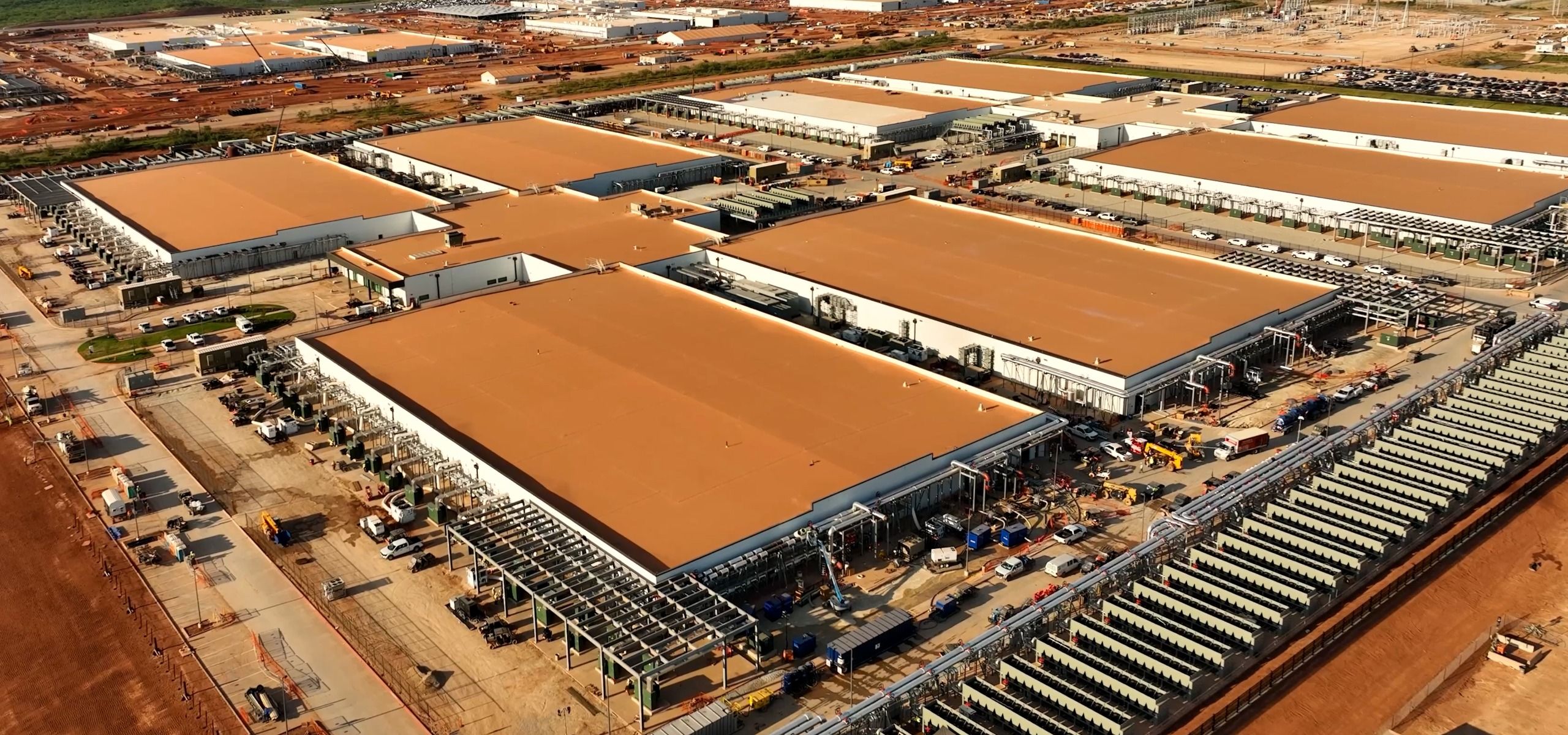
US private data-center construction ran at about $85 billion a year in August, 73% above a year earlier, according to the Census Bureau. AI spending only lifts growth when it rises, so the crews building these campuses now need next year's budgets to beat this year's.
The Investor · Invest desk
Bar comparison from an Associated General Contractors of America survey this summer: 60% of member firms that worked on a data center in the past year added workers, compared with 36% of firms that had not.
AGC member firms that added workers, summer survey, past year In % of firms
| Item | Value | Claim |
|---|---|---|
| Worked on a data center | 60% of firms | 8 |
| Did not work on a data center | 36% of firms | 8 |
What happened
- St. Louis Fed researchers calculated that AI-related business spending made up 39% of US growth in the first nine months of 2025, a bigger share than similar spending at the 2000 dot-com peak.
- The same researchers found that this spending's contribution to US growth fell from 1.3 percentage points in the first quarter of 2025 to under half a point in the third quarter.
- Census figures show companies spending nearly twice as much on data centers as on offices this August, a year after offices were slightly ahead.
- In an Associated General Contractors of America survey, 60% of firms that had worked on a data center in the past year added workers, against 36% of firms that had not.
- Meta's Hyperion site in Louisiana had about 3,700 workers in March, while Meta has said the finished campus will support more than 500 permanent jobs.
Why it matters
- exposure With roughly seven construction workers on site for each permanent job promised at Hyperion, most of the local payroll and the businesses serving it must find another campus when the build ends.
- exposure Banks that lent to build these campuses would take losses if AI spending slowed, Quartz reports, so the downside reaches lenders as well as tech shareholders.
- cost Households could be left paying for power capacity built to serve data centers if AI spending slows, according to Quartz.
Divide the Census pace by 1.73 and the year-earlier figure comes out near $49 billion. That means private builders added roughly $36 billion a year of data-center work in twelve months [19]. Data centers now run at nearly twice the office figure, so office construction works out to a little above $42 billion a year [20].
The boost to growth shrank even as those checks got bigger, because spending adds to growth only when it beats the previous quarter's [4]. A budget that holds steady at a record level adds nothing. Three Federal Reserve Board economists wrote in July that the jobs and productivity evidence is "consistent with a buildout phase" [5]. They also found the buildout "is still growing rapidly" as of early 2026 [6]. For the $85 billion pace to keep lifting GDP, next August's figure has to come in higher [4].
The biggest spenders have little operating surplus left to pay for the next increase. Meta brought in $31.9 billion of cash in its second quarter and spent $31.1 billion on buildings and equipment [14]. That left about $0.8 billion, with roughly 97.5% of the cash going into capital spending [17]. Meta can still raise spending, but a further step-up would have to be funded from something other than that quarter's surplus [17].
The tight construction labour market depends on that one segment. Companies are cutting back on new offices, warehouses and hotels [16], while data-center builders hire skilled workers away from other jobs [15]. About half of those builders report more pressure to raise pay [9]. In August, unemployment among job seekers who last worked in construction was 3.1%, the lowest in the 26 years the figures cover, according to the Associated General Contractors of America's analysis of federal data [10].
Kayla Caskey opened a 12-space RV park about 25 minutes from Meta's $27 billion Hyperion campus in Richland Parish, Louisiana, and it filled quickly [12]. "It may just be land out there again," she told Fortune in March. "But hopefully, over the next couple of years, it'll pay off while the workers are still here." [13]
This can go three ways. In the first, spending keeps accelerating, as the Fed Board economists found it was in early 2026, and the crews stay employed [6]. In the second, budgets plateau near the current pace: contractors stay busy while AI's contribution to growth falls toward zero, so the GDP figures show the slowdown well before construction payrolls do [4]. In the third, budgets fall, and the cost lands on people well outside tech [21]. Quartz did not put a figure on the bank loans behind these projects [21].
I think the plateau is the likeliest near-term case, given how little operating cash Meta had left after its second-quarter building [17]. The counter-case is the Fed Board finding that the buildout was still growing quickly into 2026 [6]. The Census series will settle the question. A reading for next August well above $85 billion would prove the plateau view wrong [1].
What to watch
- The next Census construction spending releases: a data-center pace climbing above $85 billion means the buildout is still accelerating, and a flat one means its growth contribution is heading to zero.
- Updated St. Louis Fed estimates for late 2025 and 2026, showing whether AI's contribution to growth keeps falling from the 1.3 points it added in early 2025.
- Meta's next quarterly gap between operating cash and spending on buildings and equipment, after it kept about $0.8 billion in the second quarter.
Clarity's read
What the record supports and how the coverage leans. The claims behind it follow.
Reality
- Evidence66
- Adoption74
- Hype gap+12
- Incentives
- Insufficient
- Confidence58
Claim ledger
Ranked by verification strength, evidence, and original report placement.
- [1]
In August, private companies were building data centers at a pace of roughly $85 billion annually, 73% more than a year earlier, according to the Census Bureau's report.
- [2]
Business spending on AI-related equipment, software, research and data centers made up 39% of all US growth over the first nine months of 2025, a bigger share than the same kinds of spending at the height of the dot-com boom in 2000, St. Louis Fed researchers calculated.
- [3]
AI-related spending added 1.3 percentage points to the US growth rate in the first quarter of 2025 and less than half a point by the third, according to St. Louis Fed researchers, because companies kept spending heavily but stopped raising it as fast.
- [4]
Spending only adds to growth when companies spend more than they did the quarter before; to keep lifting growth, each year's spending has to beat the last.
- [5]
Three Federal Reserve Board economists who tracked AI's effects on jobs and productivity wrote in July that the evidence is "consistent with a buildout phase" rather than the start of widespread job losses.
- [6]
The Federal Reserve Board economists found the buildout "is still growing rapidly" as of early 2026.
- [7]
As recently as August 2025, companies spent a little more building offices than building data centers; by this August, they were spending nearly twice as much on data centers as on offices, according to the Census report.
- [8]
In an Associated General Contractors of America survey this summer, 60% of member firms that had worked on a data center in the past year said they had added workers, compared with 36% of firms that hadn't.
- [9]
About half of data center builders said they felt more pressure to raise pay.
ReportedSupportedSource: Associated General Contractors of America survey, via QuartzView cited source - [10]
In August, the unemployment rate for job seekers who had recently worked in construction was 3.1%, the lowest in the 26 years the figures go back, the Associated General Contractors of America found in federal jobs data.
- [11]
About 3,700 workers were on the job at Meta's Hyperion site in March; once the campus is running, Meta said it will support more than 500 permanent jobs.
- [12]
Kayla Caskey turned inherited land into South Stuart RV Park, about 25 minutes from Meta's $27 billion Hyperion data center in Richland Parish, Louisiana; its 12 spaces filled quickly.
- [13]
"It may just be land out there again," Caskey told Fortune in March. "But hopefully, over the next couple of years, it'll pay off while the workers are still here."
- [14]
Meta brought in $31.9 billion in cash in the second quarter while spending $31.1 billion on buildings and equipment, keeping about two cents of every dollar its business took in.
- [15]
Data center builders are hiring skilled workers away from other jobs.
- [16]
Construction crews still have data centers to build while companies cut back on new offices, warehouses, and hotels.
- [17]
Meta's second-quarter cash left after capital spending was about $0.8 billion, with roughly 97.5% of the cash it brought in going to buildings and equipment.
- [18]
Hyperion had roughly seven construction workers on site in March for each permanent job Meta has promised (at most about 7.4, since Meta said more than 500).
- [19]
The year-earlier data-center construction pace was about $49 billion a year, so the annual pace rose by roughly $36 billion in twelve months.
- [20]
With data centers at nearly twice office spending, office construction is running at a little above $42 billion a year.
- [21]
If companies slow AI spending, construction crews would lose work and banks that lent to build data centers would take losses, Quartz reported; the report does not quantify bank exposure.
- [22]
If companies slow AI spending, households would be left paying for power built to serve data centers, Quartz reported.
Sources
1 independent publisher whose own reporting we read for this story.
- qz.comIf the AI data center boom ends, construction workers and banks will pay
1 article · October 9, 2026
Topics and entities
Follow any of these and your For You feed starts watching them — no settings page required.
Topics
- AI Infrastructure SpendingFollow
- Construction labour marketFollow
- Data Center ConstructionFollow
Entities
- MetaFollow
- Hyperion data centerFollow
- US Census BureauFollow
- Federal Reserve Bank of St. LouisFollow
- Federal Reserve BoardFollow
- Associated General Contractors of AmericaFollow