Science1 publisherNot yet confirmed elsewhere3 min readPublished
Canada's forest carbon ledger is missing an entry: the colour of the ground in winter
A UNU-INWEH policy brief says dark boreal plantations absorb enough winter sunlight to cancel 6 to 20 percent of the cooling they are credited with, and Canada's frameworks do not subtract it.
The Scientist · Science desk
Drafted by a language model from the sources cited here and checked against its claim ledger before publication. How we use AISend a correction
What happened
- Dense evergreen plantations in Canada's boreal forest absorb so much winter sunlight that the resulting surface warming can offset 6% to 20% of the climate benefit they are credited with.
- According to a new policy brief from the United Nations University Institute for Water, Environment and Health (UNU-INWEH), Canada's current carbon accounting frameworks measure the carbon stored but largely omit the heat absorbed by these forests; the result is inflated mitigation estimates and public investment in forests that may not deliver the cooling they promise.
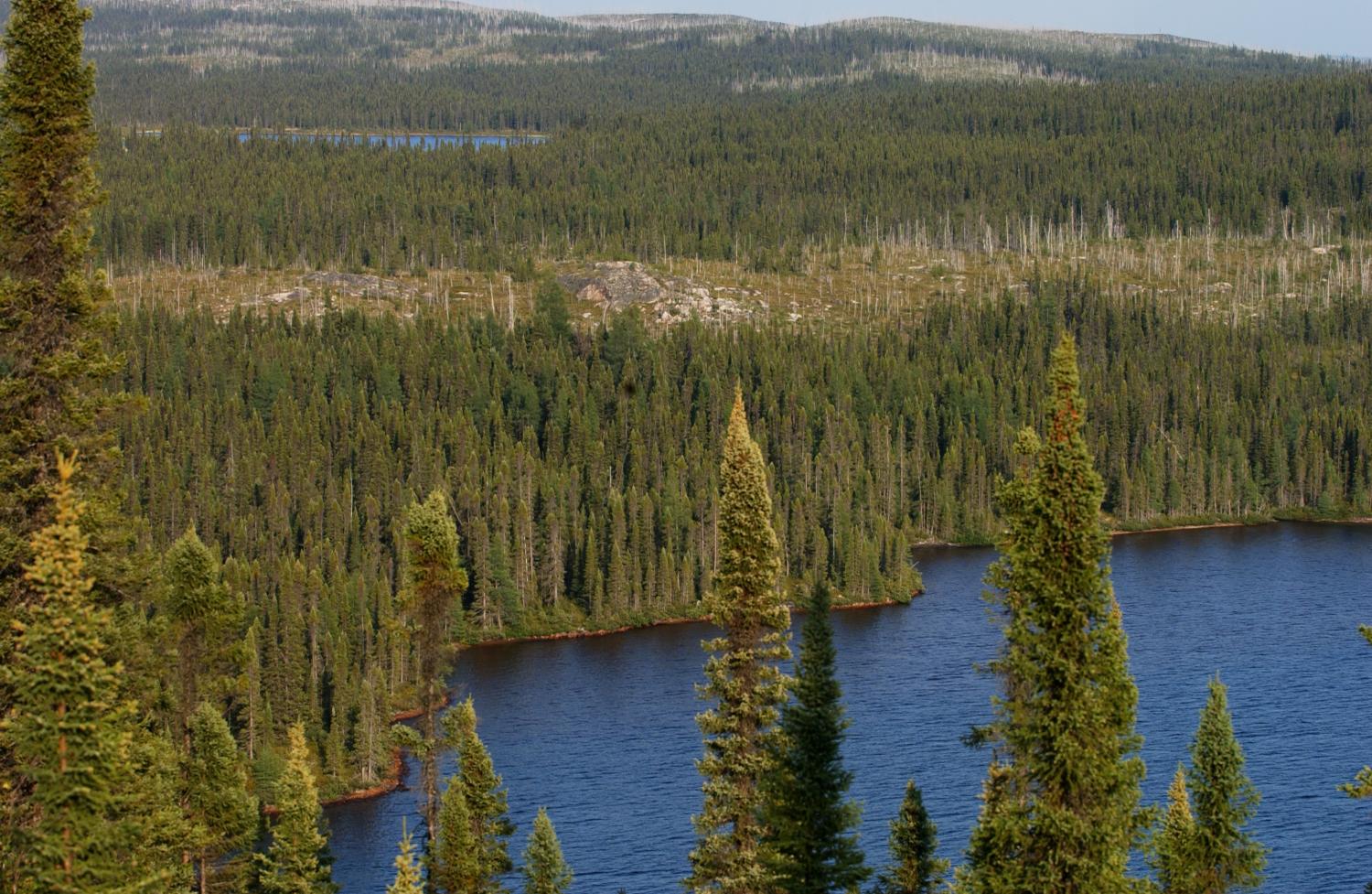
- Open snow reflects most of the sunlight that reaches it, but a dark spruce canopy absorbs it; a dense evergreen stand across a snowy landscape makes the ground measurably darker for months of the year, warming the surface even as the trees pull carbon from the air.
- Scientists call this reflectivity albedo, and most carbon accounting frameworks in use today do not subtract it.
- Evidence from the Taiga Plains shows that heat absorbed by dark spruce forests can offset 6% to 20% of their reported carbon gain.
Compiled by The ScientistSomething wrong?How this is made
Why it matters
A policy brief published by the United Nations University Institute for Water, Environment and Health argues that dense evergreen plantations in Canada's boreal forest absorb so much winter sunlight that the resulting surface warming offsets 6 to 20 percent of the climate benefit those forests are credited with [1]. Canada's carbon accounting frameworks measure the carbon stored and largely omit the heat absorbed, which according to the brief's authors inflates mitigation estimates and puts public money into forests that may not deliver the cooling they promise [2].
The physics is not subtle. In a snow-covered landscape, open snow reflects most of the sunlight that reaches it while a dark spruce canopy absorbs it, so a dense evergreen stand makes the ground measurably darker for months of the year even as the trees pull carbon from the air [5]. That reflectivity is called albedo, and most carbon accounting frameworks in use today do not subtract it [3]. Evidence from the Taiga Plains, cited in the brief, shows heat absorbed by dark spruce forests can offset 6 to 20 percent of their reported carbon gain [4].
Framed the way a buyer should frame it, the arithmetic is worse than the headline percentage. If a fifth of the cooling is cancelled, a credit priced on gross stored carbon overstates the net temperature effect by about 25 percent; at the low end of the range, by roughly 6 percent [18]. The units diverge: tons stored is not degrees avoided, and only one of those is what anyone is buying.
"A forest can pass a carbon audit and still leave the surface warmer than it was. That's the part nobody is measuring," said Pooneh Maghoul of UNU-INWEH, adding that the authors are not questioning whether trees help but arguing that "the ledger is incomplete, and in the North the missing entry is large enough to change the answer" [6]. The brief, written by authors at UNU-INWEH, the University of Waterloo and Polytechnique Montreal, calls this a policy failure to measure net temperature impact rather than a gap in the science [7][8].
The second exposure is durability. The brief argues wildfire has become the primary constraint on carbon durability in a warming boreal system, and that dense evergreen monocultures intensify competition for soil moisture while building the continuous fuel that drives high-severity fire in dry years [9][10]. Because afforestation and reforestation sit at the centre of Canada's climate commitments, the authors treat the gap as fiscal as much as environmental: public money may be flowing into stands that absorb more heat and carry elevated fire-reversal risk, leaving Canada issuing low-integrity credits [11][12].
There is a design answer in the same document. Long-term modelling in northern Canada indicates mixed stands with 25 to 40 percent deciduous trees, planted at moderate densities of 600 to 1,400 trees per hectare, hold substantial carbon while reflecting more winter sunlight, and burn less intensely [13].
What to watch is whether any of this reaches procurement rules. The authors call for a Net Cooling Standard that deducts an Albedo Penalty and screens for wildfire permanence across all publicly supported reforestation, restoration confined to hydrologically viable understocked land, and a satellite-supported national platform tracking soil moisture, fuel accumulation and surface reflectivity [14][15]. UNU-INWEH director Kaveh Madani framed the prize as first-mover credibility: verifying forests "on what they actually do to the climate, not on what they store on paper" [16].