Science1 publisher3 min readPublished
Descendant DNA settles the identity of the Franklin sailor found with the expedition's papers
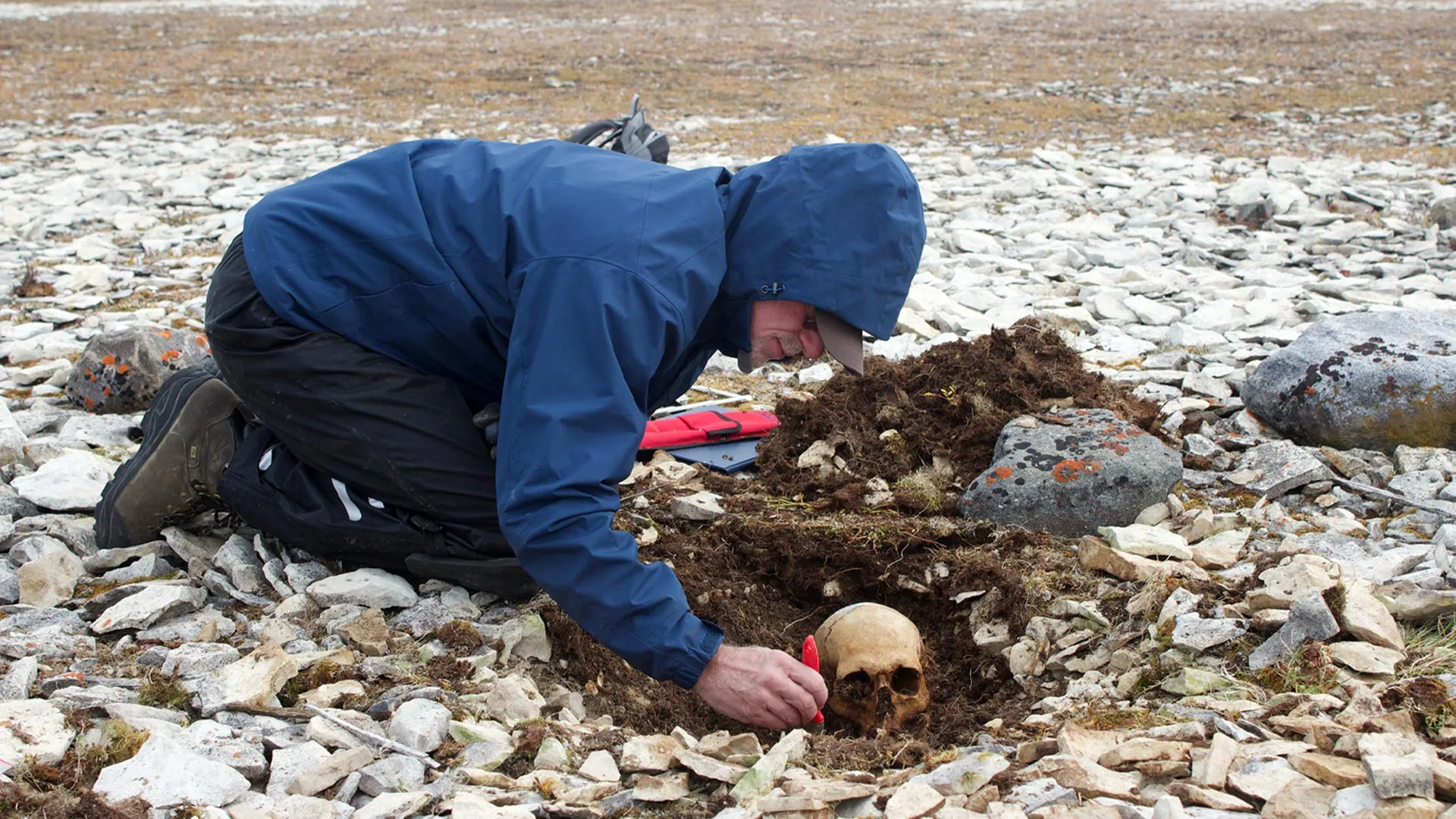
University of Waterloo anthropologists matched skeletal DNA to living relatives and named Harry Peglar, William Orren, David Young and John Bridgens. Six of the 105 men who walked away from Erebus and Terror now have names.
The Scientist · Science desk
What happened
- A University of Waterloo team compared DNA from skeletal remains with samples given by living descendants and identified four more sailors from Sir John Franklin's 1845 Arctic expedition.
- One of the four is Harry Peglar, whose identity had been in doubt since 1859, when a body was found carrying his personal documents but wearing clothing that did not correspond to his rank.
- Unlike the remains of Erebus captain James Fitzjames, identified in 2024, the remains of all four newly named sailors show no evidence of cannibalism.
Compiled by The ScientistSomething wrong?How this is made
Why it matters
- capability Peglar shows that a descendant match can overturn an attribution built on objects, which is the situation where documents found with a body and the clothing on it tell different stories.
- constraint The pipeline can only reach sailors who left documented descendants willing to be sampled, and 99 men remain unnamed.
- decision Families weighing whether to give a sample now have a concrete return to weigh: a place of death, and the names of the shipmates who died alongside their relative.
- exposure Without published sample counts, marker types or exclusion statistics, outside researchers cannot audit how firm the word 'definitively' is in these four cases.
A DNA match to a living relative names a skeleton only when two links hold: the genetic comparison, and the genealogy that connects the relative to the sailor. The Waterloo release describes the first and says nothing about the second. It does not state how many descendants gave samples, which genetic markers were compared, or how other crew members with similar ancestry were excluded [18].
Peglar is the case where the artifacts pointed the wrong way. A body found in 1859 carried his personal documents, but the clothing with the remains did not match his rank, and the question stayed open [7]. The release calls it a 166-year-old mystery [23]. He was Captain of the Foretop on HMS Terror [6]. "It was interesting to conclusively identify this sailor because the body was found with almost the only written documents from the expedition ever found," said Dr. Robert Park, Professor of anthropology at Waterloo [8]. Those documents, the Peglar Papers, were found alongside Peglar's seaman's certificate and contain poetry as well as what appear to be descriptions of events during the expedition [9].
Dr. Douglas Stenton, Adjunct Professor of anthropology at Waterloo, said: "Three of the sailors we have identified are from HMS Erebus, and they all died at Erebus Bay. The fourth, the only sailor from the HMS Terror to be definitively identified by DNA analysis, was found 130 kilometers away" [5].
Identifying William Orren, Able Seaman, David Young, Boy 1st Class, and John Bridgens, Subordinate Officers' Steward, confirms that all three survived the expedition's first three years and were among the crew who tried to escape after the ships were abandoned [10][11]. In April 1848, after nearly two years in the ice, 105 survivors left Erebus and Terror and hauled boats on sleds down the west coast of King William Island, Nunavut [3]. None of them lived [3].
Six of those 105 now have names from DNA [2]. That is about 5.7 percent [20], and four of the six come from this one study [21]; the other two are John Gregory, identified in 2021 [12], and James Fitzjames in 2024 [13]. Ninety-nine men remain unnamed [24].
Evidence from Fitzjames's remains showed that his body had been subject to cannibalism [13]. The four sailors named in this round show no such evidence [14]. The release does not say how complete each set of remains was [19], and evidence of that kind can only be read on the bone that was recovered.
One of the descendants who gave a sample was Rich Preston, a BBC News journalist, who turned out to be descended from Bridgens [16]. "I was so intrigued when Dr. Stenton first contacted me, telling me about his work and asking if I'd be willing to provide a DNA sample," Preston said [17]. Stenton put the return to families this way: "For the living descendants, these findings provide previously unavailable details regarding the circumstances and locations of their relatives' deaths, as well as the identities of some of the shipmates who died with them" [15].
What to watch
- A peer-reviewed paper carrying sample counts, marker types and match probabilities would let the four identifications be checked outside the team.
- Whether more descendants with documented lineages come forward, since the method only reaches crew who have traceable living relatives willing to give a sample.
- Whether re-examination of the other Erebus Bay remains changes the read on how widespread cannibalism was during the escape attempt.