Invest1 publisherNot yet confirmed elsewhere2 min readPublished
Counterpoint's 12-layer Rubin forecast keeps more DRAM wafers tied up in HBM
Counterpoint Research now expects most Nvidia Rubin products to use 12-layer HBM4 instead of the rumored eight-layer stacks. Four more dies per stack keep wafers in HBM as SK hynix and Samsung's 16-layer parts wait on yields and TSMC packaging.
The Investor · Invest desk
What happened
- Industry speculation had Nvidia asking suppliers to cut HBM4 stacks from 12 DRAM dies to eight, stoking fears that freed capacity would ease conventional memory prices.
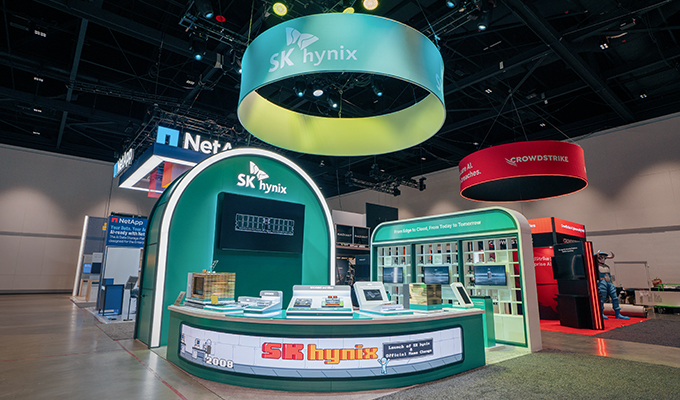
- At a TSMC conference in September, SK hynix fitted its Vera Rubin superchip display with 36GB 12-layer HBM4 and showed its 16-layer part separately.
- Samsung said in January that 16-layer HBM4 demand was limited and mass commercialization was not yet needed, though its stacking was ready for volume if customers asked.
Compiled by The InvestorSomething wrong?How this is made
Why it matters
- cost Conventional DRAM buyers lose the wafer relief an eight-layer Rubin would have brought, because each stack keeps four dies in HBM that the rumored design would have dropped.
- decision A mostly 12-layer Rubin lets Samsung keep 16-layer HBM4 out of volume production without giving up Rubin sockets, in line with the wait-for-customers stance it took in January.
- contradiction Silicon Analysts' report of 16-layer volume shipments for Rubin conflicts with SK hynix's own 12-layer Rubin display, so any 16-layer Rubin revenue estimate rests on one tracker's unconfirmed claim.
SK hynix's own parts give the scale. Its 12-layer HBM4 holds 36GB and its 16-layer version holds 48GB [5]. Both work out to 3GB a die [16]. That means a stack's capacity rises with its die count, and so does the DRAM silicon it uses. At that density an eight-layer stack would hold 24GB, or 12GB less than a 12-layer one [17].
Suppose the Korea Herald's figure that HBM takes more than three times the wafer capacity of conventional DRAM applies per gigabyte. Then those 12GB tie up capacity that could have made more than 36GB of conventional DRAM, stack by stack [19]. Counterpoint backed the eight-layer design in its August report [3], so the same firm has now argued for both layer counts since the summer. The report does not include DRAM prices. The Korea Herald presents the pricing effect as a possibility: sustained AI demand could keep standard memory supplies tight even as chipmakers expand production [14].
The forecast leaves three possible outcomes. Counterpoint could be right, and 12-high stacks would hold wafers in HBM through the Rubin cycle [1]. It said "most", so some Rubin products may still use eight layers [1]. The third outcome is that packaging sets the ceiling. HBM has to be joined to the GPU on TSMC's chip-on-wafer-on-substrate lines, and limited packaging capacity could hold back finished accelerators even when there is enough memory [11]. I'd expect packaging to limit volumes first. Against that, a packaging shortage slows how fast Rubin ships without changing how many dies each stack needs, so the wafers each accelerator uses stay where Counterpoint's forecast puts them. If conventional DRAM supply loosens while Rubin ships on 12-high stacks, the wafer argument is wrong.
SK hynix has been mass supplying HBM4 to major customers since the second quarter and has expanded production since then [6]. It has also been working with TSMC to fit its HBM to TSMC's packaging [12]. Samsung has shipped 12-layer HBM4 of up to 36GB since February [8]. Its development work is going into hybrid copper bonding for stacks of 16 or more dies, a technique meant to lower thermal resistance as die counts rise [10].
An industry source who spoke to the Korea Herald on condition of anonymity said: "Being first to develop 16-layer technology matters less than achieving the yields and packaging compatibility customers actually need. The pace of supply expansion will ultimately depend on how well memory makers' capabilities align with TSMC's packaging capacity." [13]
What to watch
- Whether SK hynix confirms or denies the 16-layer HBM4 shipments for Rubin that Silicon Analysts reported in September.
- Samsung's next earnings call, for any change to its view that large-scale 16-layer HBM4 commercialization is not yet necessary.
- TSMC chip-on-wafer-on-substrate capacity additions, which set how many HBM4 stacks end up in finished Rubin accelerators.
Clarity's read
What the record supports and how the coverage leans. The claims behind it follow.
Reality
- Evidence40
- Adoption55
- Hype gap+25
- Incentives
- Insufficient
- Confidence40
Claim ledger
Ranked by verification strength, evidence, and original report placement.
- [1]
Counterpoint Research said Friday that most Rubin-based products will likely use 12-layer HBM4 rather than the eight-layer configuration that had been rumored in the industry.
- [2]
Speculation held that Nvidia had asked memory suppliers to reduce stacked DRAM dies from 12 to eight, raising concerns that lower HBM requirements could free production capacity for conventional DRAM and ease pressure on memory prices.
- [3]
Counterpoint's latest assessment is a shift from its August report, which had pointed to Nvidia adopting an eight-layer HBM4 variant for Rubin.
- [4]
Producing high-performance chips can consume more than three times the wafer capacity required for conventional DRAM.
- [5]
SK hynix unveiled its 48-gigabyte, 16-layer HBM4 at CES in January, offering one-third more capacity than its 36GB, 12-layer version.
- [6]
SK hynix began mass supplying HBM4 to major customers in the second quarter and has since expanded production.
- [7]
At a TSMC technology conference later in September, SK hynix displayed a Vera Rubin superchip equipped with its 12-layer, 36GB HBM4, while showcasing the 16-layer version separately.
- [8]
Samsung has been shipping commercial HBM4 products since February, with its 12-layer lineup offering capacities of up to 36GB.
- [9]
On its fourth-quarter earnings call in January, Samsung said demand for 16-layer HBM4 remained limited and large-scale commercialization was not immediately necessary, but its 16-layer stacking technology was ready for mass production should customer requirements change.
- [10]
Samsung is developing hybrid copper bonding technology designed to support memory stacks of 16 layers or more while reducing thermal resistance.
- [11]
HBM chips must be integrated with GPUs through advanced packaging including TSMC's chip-on-wafer-on-substrate technology; even with sufficient memory production, limited packaging capacity could constrain the supply of completed AI accelerators.
- [12]
SK hynix has been working with TSMC to optimize the integration of its HBM products with advanced packaging.
- [13]
"Being first to develop 16-layer technology matters less than achieving the yields and packaging compatibility customers actually need. The pace of supply expansion will ultimately depend on how well memory makers' capabilities align with TSMC's packaging capacity."
ReportedSupportedSource: Unnamed industry source, quoted by Korea Herald on condition of anonymityView cited source - [14]
Sustained AI demand could keep standard memory supplies tight even as chipmakers expand production.
- [15]
A 12-layer HBM4 stack carries four more DRAM dies than the rumored eight-layer stack.
- [16]
SK hynix's 12-layer and 16-layer HBM4 both work out to 3GB per DRAM die.
- [17]
At 3GB a die, an eight-layer HBM4 stack would hold 24GB, 12GB less than a 36GB 12-layer stack.
- [18]
A September report by supply-chain tracker Silicon Analysts suggested SK hynix had begun volume shipments of 16-layer HBM4 for Rubin; the company has not publicly confirmed those deliveries.
- [19]
If HBM's more-than-three-times wafer intensity applies per gigabyte, the 12GB difference per stack ties up wafer capacity for more than 36GB of conventional DRAM.
Sources
1 independent publisher whose own reporting we read for this story.
- koreaherald.comSK hynix, Samsung push 16-layer HBM4 as Rubin favors 12
1 article · October 8, 2026
Topics and entities
Follow any of these and your For You feed starts watching them — no settings page required.
Topics
- DRAM marketFollow
- Advanced chip packagingFollow
- AI accelerator supply chainFollow
- High-Bandwidth MemoryFollow