China's own model says its drone output tops out near 1.9x, not 3x
A Beijing Institute of Technology simulation puts wartime order fulfilment at 63.4% when demand triples. The binding constraint it finds is component supply, not airframe assembly.
The Product Desk
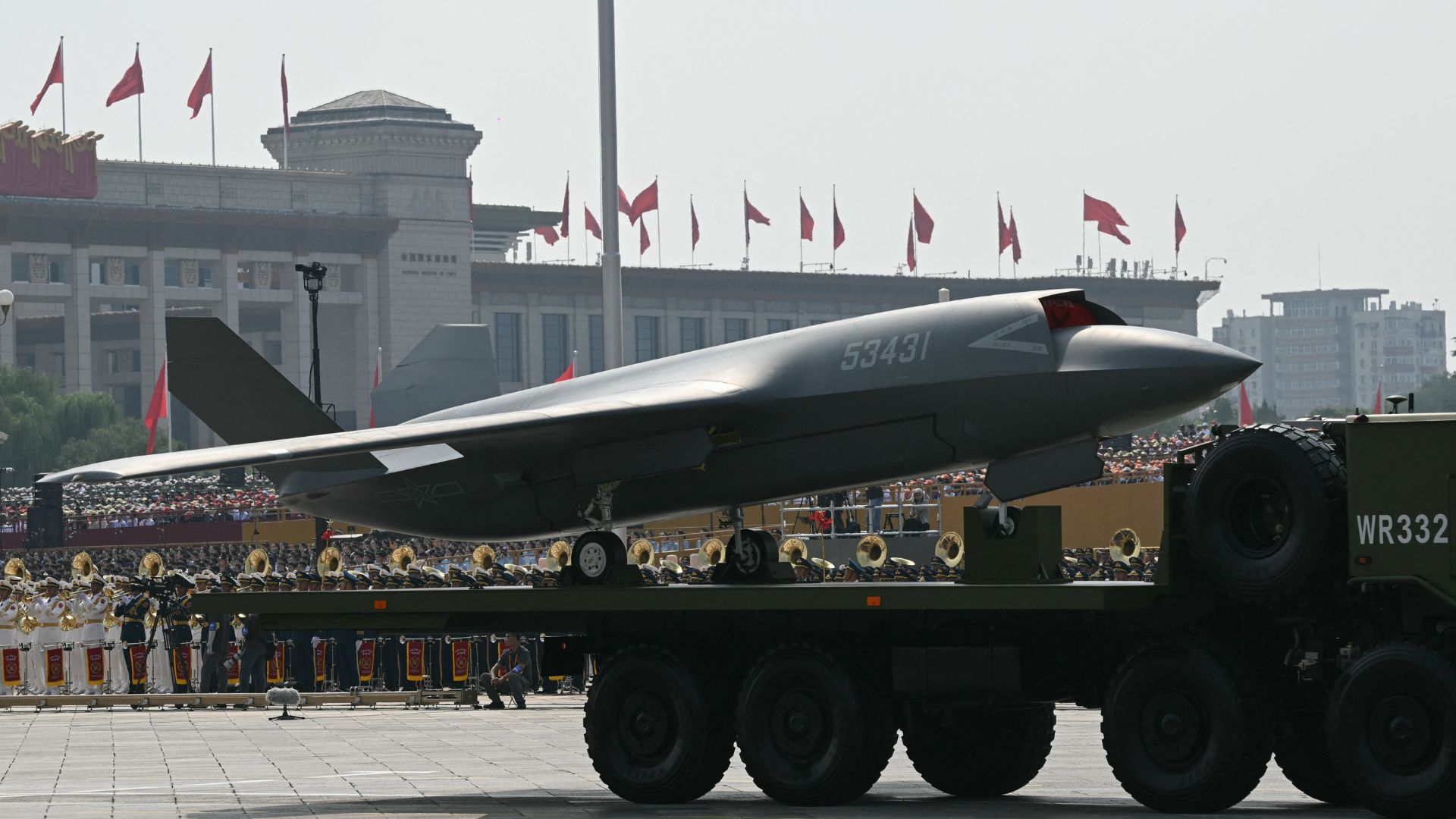
What happened
- A Beijing Institute of Technology team modelled a threefold rise in wartime demand and put Chinese military drone order fulfilment at around 60% even after mobilisation.
- In the headline scenario, released stock, overtime, new lines and converted civilian plants together reached cumulative fulfilment of 63.4%.
- Across 30 runs, median fulfilment was about 34% with no mobilisation, 51% with rule-based mobilisation and roughly 58% under an AI-led allocation strategy.
- Lifting mobilisation funding from 60% to 140% of baseline raised fulfilment from 54.9% to 62.3%, with gains tapering beyond that.
Why it matters
- constraint If component and subsystem supply sets the ceiling, counting airframe assembly lines overstates what any producer could field in a shooting war, on either side of the Pacific.
- cost The study prices its own limit: past a point, extra mobilisation money buys construction schedules rather than drones, so a bigger budget is not a faster one.
- decision Planners choosing between stockpiling finished aircraft and stockpiling qualified parts now have a model arguing the second is the harder problem to fix late.
- contradiction The specialist's objection is about the roster, not the mechanism, which makes the 60% a measure of how deep the qualified supplier base is rather than of Chinese industry as a whole.
Run the percentage back through the demand shock and the study reads less like a shortfall and more like a ceiling. Filling 63.4% of an order book three times its peacetime size means absolute output of roughly 1.9 baseline years' worth [17]. Hold the no-mobilisation case next to it: a median 34% of tripled demand works out to about 1.02 times peacetime output [18]. A supply chain that does nothing in particular produces about what it already produced.
So everything the model actually mobilises (released stored equipment, overtime, added lines, converted civilian plants [2]) buys something on the order of seven-tenths of one baseline year of extra drones, comparing the AI-led median with the do-nothing median [19]. The unfilled remainder in the headline scenario, 36.6% of a tripled book, is itself about 1.1 baseline years of demand that never gets met [21].
The money curve is blunter still. Raising available mobilisation funding from 60% to 140% of baseline is a 2.3-fold increase in cash, and it moves fulfilment 7.4 points, from 54.9% to 62.3% [8][20]. Against tripled demand, that is roughly 0.22 of a baseline year of additional output [22]. The researchers say why the curve flattens: factory construction times and conversion limits govern how fast new capacity becomes usable [9], and expansion and conversion arrive in phases rather than continuously [15]. Cash is not the scarce input in their model. Calendar time is.
Which is the same finding stated a second way when the team concludes that wartime output depends not only on assembling drones but on how quickly the supply of critical components can expand [16]. Their framing puts it directly: competition is "no longer merely about the performance of weapon systems, but more fundamentally about industrial capacity" [4]. That is a claim against the way most drone comparisons are written, and it comes from a group whose lead author directs a national defence mobilisation research centre and whose model explicitly links component and subsystem suppliers to assembly plants [3].
The dissent in the reporting is worth reading closely, because it does not contest the mechanism. A Chinese weapons specialist called the work an "argumentative study" rather than a forecast [10], and noted that "rapid production capability can fully meet the demand, but the supply of core components is not that simple" [12]. That is agreement on where the bottleneck sits, and disagreement about the roster. The simulation covered existing military suppliers plus civilian manufacturers capable of conversion [11], so 63.4% is a property of that roster's depth, not of Chinese manufacturing at large. Widen it to electronics, battery, vehicle, machinery and consumer technology firms and the number moves [11]. The Covid precedent cited is real, with non-medical companies turning quickly to masks and protective equipment [13], but drones need technical adaptation, suitable machinery and specialised parts before a converted line produces anything [14].
One small inconsistency in the reported figures is worth flagging: the AI strategy's advantage is given as 8.4% on averages [6], while the quoted medians for rule-based and AI mobilisation sit about seven points apart [23]. Either way, the allocation policy is the cheapest lever in the study, because it only re-sequences which suppliers expand and which civilian firms convert, using inventory, capacity, order pressure and funding as inputs [7]. It buys more than doubling the budget does [20][6].
What to watch
- Whether the team publishes which component or subsystem classes bind the model, which is the only way to read the 63.4% as an industrial fact rather than a model output.
- Whether Beijing widens the designated mobilisation roster beyond existing military suppliers and convertible civilian plants to electronics, battery, vehicle and machinery firms.
- Whether any comparable estimate exists for another producer using the same threefold demand multiplier, without which the 60% figure has nothing to be measured against.
Clarity's read
What the record supports and how the coverage leans. The claims behind it follow.
Reality
- Evidence32
- Adoption
- Insufficient
- Hype gap+24
- Incentives58
- Confidence40
Claim ledger
Ranked by verification strength, evidence, and original report placement.
- [1]
Researchers at the Beijing Institute of Technology estimated, using an AI model simulating a threefold rise in wartime demand, that China could fulfil only around 60% of its military drone orders even after industrial mobilisation.
- [2]
In one scenario where military demand rose to three times its normal level, factories released stored equipment, increased overtime, added production lines and converted civilian capacity, but cumulative order fulfilment reached only 63.4%.
- [3]
The research was led by Professor Zhang Jihai, director of the National Defence Mobilisation Research Centre; his team modelled a multilevel supply chain connecting component and subsystem suppliers with drone assembly plants.
- [4]
The researchers wrote that "Modern warfare competition is no longer merely about the performance of weapon systems, but more fundamentally about industrial capacity - especially the comprehensive capability of production mobilisation for military equipment."
- [5]
Across 30 simulations comparing three responses, median order fulfilment was around 34% with no mobilisation, 51% under a rule-based approach and approximately 58% under the AI-led strategy.
- [6]
The AI strategy's average fulfilment rate was 8.4% higher than the rule-based approach and 24.3% above the no-mobilisation scenario.
- [7]
The AI system examined inventory, production capacity, order pressure and funding before selecting military suppliers for expansion and civilian companies for conversion.
- [8]
Increasing available mobilisation funding from 60% to 140% of the baseline raised fulfilment from 54.9% to 62.3%.
- [9]
Further spending brought smaller gains because factory construction times and conversion limits restricted how quickly new capacity could become operational.
- [10]
A Chinese weapons specialist cautioned that the findings represented an "argumentative study" rather than a prediction of what would happen during an actual war.
- [11]
The simulation covered existing military suppliers and civilian manufacturers capable of conversion; a wider mobilisation could bring electronics, battery, vehicle, machinery and consumer technology companies into the military supply chain.
- [12]
The weapons specialist said: "The rapid production capability can fully meet the demand, but the supply of core components is not that simple."
- [13]
China's Covid-19 response showed that companies outside the medical sector could rapidly begin producing masks and protective equipment.
- [14]
Converting factories to manufacture military drones would still require technical adaptations, suitable machinery and specialised components.
- [15]
The researchers wrote that "Capacity expansion and conversion are not activated continuously, but rather exhibit phased triggering and discontinuous implementation."
- [16]
The findings show wartime output would depend not only on China's ability to assemble drones but also on how quickly it could expand the supply of critical components.
- [17]
Filling 63.4% of demand that has tripled implies absolute output of about 1.90 times the baseline level.
- [18]
The no-mobilisation median of 34% against tripled demand implies absolute output of about 1.02 times baseline, roughly the peacetime rate.
- [19]
Moving from the no-mobilisation median (34%) to the AI-led median (58%) against tripled demand is worth about 0.72 of a baseline year of extra output.
- [20]
Raising mobilisation funding from 60% to 140% of baseline is a 2.33-fold increase in funding and yields 7.4 percentage points of additional fulfilment.
- [21]
The 36.6% of orders left unfilled in the headline scenario equals about 1.10 times one baseline year of demand.
- [22]
The 7.4 percentage points bought by more than doubling funding equals about 0.22 of a baseline year of output when demand has tripled.
- [23]
The reported medians for rule-based and AI mobilisation differ by about 7 percentage points, against a stated average advantage of 8.4%.
Get this ledger inside ChatGPT. Ask about any of our stories and the answer brings its figure, each claim’s verdict and the sources. Free, no account.
Sources
1 independent publisher whose own reporting we read for this story.
- interestingengineering.comChina can meet only 60% of wartime drone demand, study finds
1 article · August 22, 2026
Topics and entities
Follow any of these and your For You feed starts watching them — no settings page required.
Topics
Entities
- Beijing Institute of TechnologyFollow
- National Defence Mobilisation Research CentreFollow
- Zhang JihaiFollow
- Interesting EngineeringFollow