Science1 publisherNot yet confirmed elsewhere3 min readPublished
Chaotic quantum waves stay at least twice as likely to be found in their starting state
Physicists at Tampere, Harvard and TU Dresden find a chaotic quantum wave stays at least twice as likely to be in its starting state as in any comparable one. Their paper treats quantum scars, an anomaly known since 1984, as one case of a memory every quantum system keeps.
The Scientist · Science desk
What happened
- In the test, a quantum wave packet released on a stadium-shaped billiard scrambled within moments into a pattern that looked completely random at any instant.
- The pull toward the starting state appeared only when that random-looking motion was averaged over very long stretches of time.
- The bias does not fade with time and persists for as long as the system stays quantum.
- The study, 'Quantum Birthmarks: Ergodicity Breaking Beyond Scarring', appeared in Physical Review X on Sept. 10, 2026.
Compiled by The ScientistSomething wrong?How this is made
Why it matters
- precedent Every other chaotic quantum system becomes a test of the authors' claim that all of them carry a birthmark, since the published account demonstrates it on a single billiard.
- constraint Because the memory lasts only while the system stays quantum, its relevance to real hardware depends on how long a device holds its quantum behaviour.
- exposure By Keski-Rahkonen's account, models of quantum simulators and nanoscale electronics that assume chaos erases the starting state describe a different system from one that remembers it.
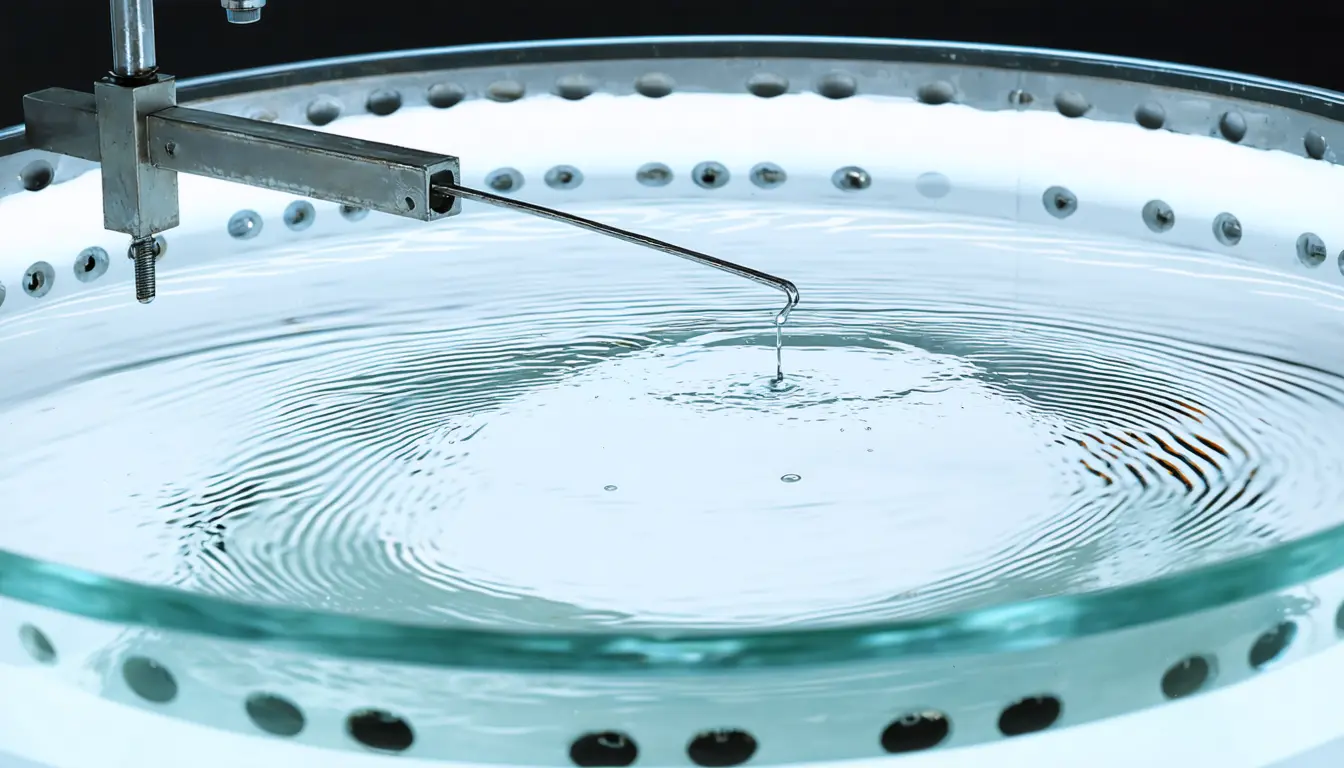
The finding comes from the time average. On the classical version of the stadium table, a ball tracked long enough visits every part of it and keeps no trace of where it was launched [3]. Physicists call that memory-erasing behaviour chaos, and it underpins explanations of everyday processes such as heat spreading through a room [13]. A quantum object on the same table is described by the chance of finding it here rather than there [4]. Look at that chance at any single instant and it appears completely random [5].
Average it over very long stretches and it leans toward the start [6], staying at least twice as likely to be found in its original condition as in any other comparable one [7]. That ratio's denominator is the set of comparable conditions, so "twice" compares the starting state with its peers. The thing this account doesn't tell you is how those peers were chosen, or how large the absolute probabilities are.
Joonas Keski-Rahkonen, one of the study's lead authors and a researcher in the Quantum Control and Dynamics group at Tampere University's Computational Physics Laboratory, put the contrast plainly. "In the everyday world, chaos wipes the slate clean. What we found is that quantum systems can't hide their origin, even in the middle of chaos," he said [11].
The larger claim concerns scars. In 1984 Eric Heller, a Harvard professor and now a co-author, found that quantum systems sometimes keep sharp imprints of repeating paths, and scarring was long treated as a rare exception [9]. The new paper makes it a special case of a birthmark that, the authors state, every quantum system carries [10]. That folds a 42-year-old anomaly into a general rule [14]. I'd want the word "every" tested on more systems than the single stadium billiard described in the phys.org account [3]. The team says its next aim is "a general way of asking how much of its own history a quantum system can ever truly forget" [12].
The persistence comes with one condition: the bias lasts for as long as the system stays quantum [8]. Keski-Rahkonen said the result "speaks to how quantum systems settle into equilibrium, and how our familiar classical world emerges from the quantum-mechanical rules" [15]. He also said that "quantum simulators and nanoscale electronics are nowadays small enough that these effects count" [16]. In my view his is the more defensible practical claim, because it asks only that models of small devices stop assuming the start is forgotten.
The phys.org write-up goes further, saying birthmarks and scars could eventually be harnessed to power next-generation nanoelectronics [17]. The study as reported measures long-time statistics in a model billiard, so the nanoelectronics line is a forecast.
What to watch
- Tests of the birthmark in chaotic systems other than the stadium billiard, which would decide whether the claim that every quantum system carries one holds up.
- Measurements in a quantum simulator or nanoscale device showing the starting-state bias in long-run averages, and how long it survives in real hardware.
- The team's promised general measure of how much of its own history a quantum system can forget.
Clarity's read
What the record supports and how the coverage leans. The claims behind it follow.
Reality
- Evidence50
- Adoption
- Insufficient
- Hype gap+20
- Incentives40
- Confidence55
Claim ledger
Ranked by verification strength, evidence, and original report placement.
- [1]
Researchers from Tampere University, Harvard University and TU Dresden found that even the most chaotic quantum systems keep a permanent mark of their own past, which they call a 'quantum birthmark'.
- [2]
The study 'Quantum Birthmarks: Ergodicity Breaking Beyond Scarring' by Anton M. Graf et al. was published in Physical Review X on Sept. 10, 2026.
- [3]
The team worked with a stadium-shaped billiard, a table with curved walls; a classical ball tracked long enough visits every part of the table with no hint left of where it began.
- [4]
Quantum objects behave more like ripples spreading across water, and physicists determine the chance of finding them here rather than there.
- [5]
A quantum wave packet set loose on the stadium table scrambled within moments into what, at any instant, appeared to be a completely random pattern.
- [6]
Averaging the wave packet's motion over very long stretches of time revealed a clear bias toward the system's own early history.
- [7]
In the long-time average, the system remained at least twice as likely to be found back in its original condition as in any other comparable one.
- [8]
The bias toward the starting condition does not vanish; it persists for as long as the system stays quantum.
- [9]
In 1984 Eric Heller, a Harvard professor and co-author of the new study, discovered that quantum systems sometimes retain sharp imprints of repeating paths, known as quantum scarring, long regarded as a rare exception.
- [10]
The new work establishes that scarring is a special case of something universal: every quantum system carries a birthmark from its own beginnings.
- [11]
"In the everyday world, chaos wipes the slate clean. What we found is that quantum systems can't hide their origin, even in the middle of chaos."
ReportedSupportedSource: Dr. Joonas Keski-Rahkonen, QCAD group, Tampere University Computational Physics Laboratory, one of the study's lead authors, quoted by phys.orgView cited source - [12]
The team aims to turn the finding into a general way of asking how much of its own history a quantum system can ever truly forget.
- [13]
Physicists call unpredictable, memory-erasing behavior chaos, and it underpins explanations of everyday processes such as heat spreading through a room.
- [14]
Heller's 1984 discovery of quantum scarring came 42 years before the 2026 paper that recasts it as a special case.
- [15]
"That matters beyond textbook physics. It speaks to how quantum systems settle into equilibrium, and how our familiar classical world emerges from the quantum-mechanical rules."
- [16]
"Moreover, quantum simulators and nanoscale electronics are nowadays small enough that these effects count. For instance, it matters that a system which quietly remembers its starting point behaves differently from one that forgets."
- [17]
Quantum birthmarks, along with quantum scars, could eventually be harnessed to power next-generation nanoelectronics.
Sources
1 independent publisher whose own reporting we read for this story.
- phys.orgQuantum systems never quite forget where they came from
1 article · October 5, 2026
Topics and entities
Follow any of these and your For You feed starts watching them — no settings page required.
Entities
- Tampere UniversityFollow
- Harvard UniversityFollow
- TU DresdenFollow
- Physical Review XFollow
- Eric HellerFollow
- Joonas Keski-RahkonenFollow
- Anton M. GrafFollow