ScienceNot yet confirmed elsewhere1 publisher2 min readPublished
CBL-514, an injection that kills fat cells, has cut weight regain after tirzepatide only in rats
In a phase 2 trial, 69.6% of people given CBL-514 lost at least 150 mL of subcutaneous fat at eight weeks, against none on placebo. Whether it can hold weight off after patients stop Ozempic or Wegovy has so far been tested only in animals.
The Scientist · Science desk
What happened
- The drug was highlighted at the annual meeting of the European Association for the Study of Diabetes in Milan, Italy.
- CBL-514 is designed to trigger apoptosis in adipocytes, the body's fat-storing cells, and to leave other types of cells unaffected.
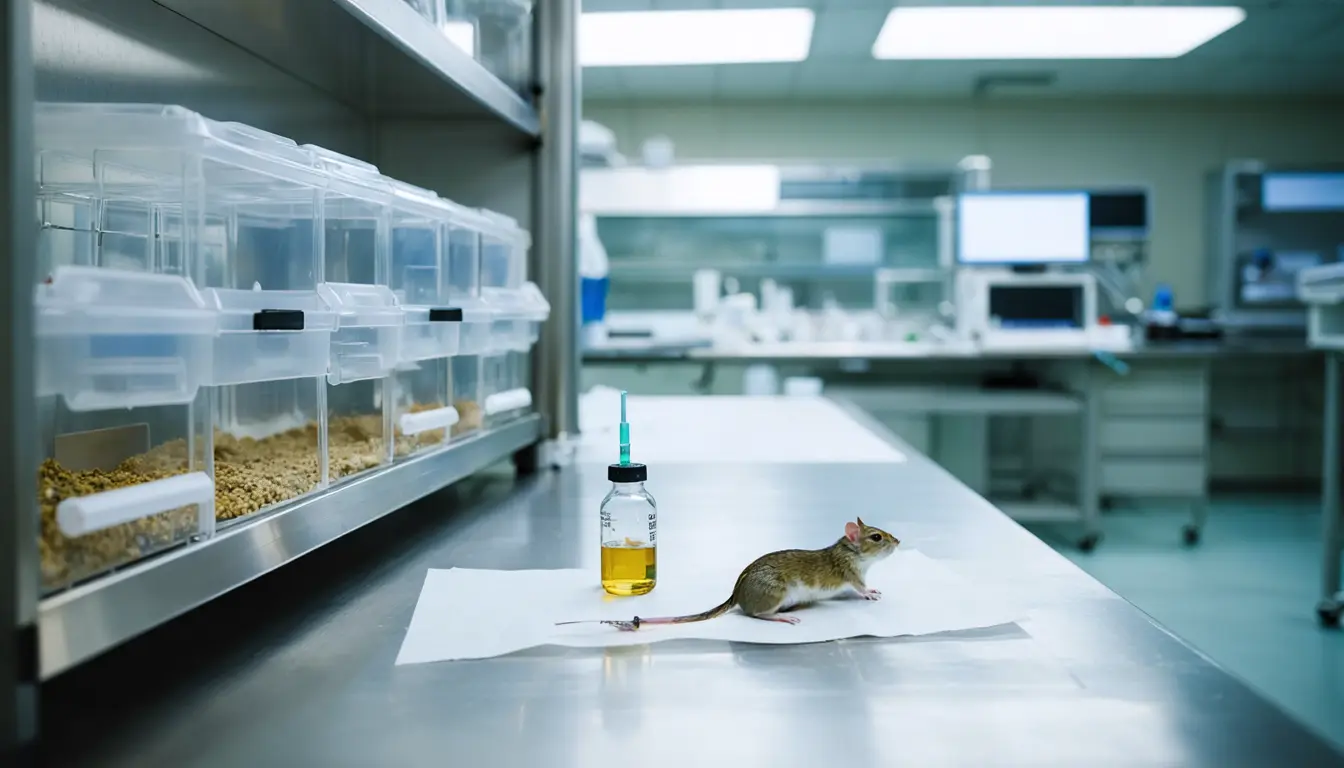
- In animal studies, CBL-514 combined with tirzepatide produced greater weight loss than tirzepatide alone.
Why it matters
- contradiction The release opens by saying early human trials cut fat deep in the abdomen, but the visceral reductions it details were measured in animal models.
- constraint An eight-week endpoint cannot show regain, which happens after a drug is withdrawn. A human test needs participants who stop a GLP-1 drug and are followed afterward.
- decision Anyone sizing a post-GLP-1 maintenance use for CBL-514 is working from one rat comparison, so the regain claim is a hypothesis to track and not yet a planning input.
The release gives a percentage without the number of participants behind it, and without the average fat loss in either group. What it reports is the share of treated participants who cleared a 150 mL cutoff at the eight-week follow-up [1]. By subtraction, 30.4% of treated participants did not reach that cutoff [9]. With no group sizes, we cannot say how firmly the comparison with placebo holds.
What was measured matters as much as how many. The human result is a volume of subcutaneous fat, the soft layer immediately below the skin [1]. The metabolic harm the release describes belongs to visceral fat, which surrounds organs such as the liver and intestines and is a major contributor to insulin resistance, type 2 diabetes, heart attacks and strokes [7]. A drug can clear the first layer and say little about the second.
The regain evidence is a single design in rats. Animals given tirzepatide alone are the natural control, and the combination group is the test. After tirzepatide was discontinued, the rats that had received both drugs regained less weight than the rats that had received tirzepatide only [6]. The researchers' proposed explanation is that removing fat cells reduces the body's capacity to store fat again, so fat accumulates more slowly after weight loss. They describe it as a hypothesis [12].
The problem being addressed is real. Many people regain weight after they stop GLP-1 treatment [8]. Garvey believes the approach could eventually help patients keep the improvements in blood pressure, blood sugar and cholesterol that come with weight loss [13].
Our reading is narrow. The human numbers in the release concern subcutaneous fat at eight weeks, and the regain finding comes from rats. Garvey, of the University of Alabama at Birmingham, says the findings raise the possibility of less regain after GLP-1 drugs are stopped, and the release states that this benefit has so far been shown only in animal studies and needs confirmation in humans [11]. We would treat the mechanism as plausible and the human effect as untested.
What to watch
- Human visceral fat measurements for CBL-514, since the release's detailed visceral results come from animals.
- A trial that adds CBL-514 to a GLP-1 drug and follows participants after the GLP-1 drug is withdrawn.
- Participant counts and mean fat loss for the phase 2 groups, which would show how firm the 69.6% versus zero comparison is.
Clarity's read
What the record supports and how the coverage leans. The claims behind it follow.
Reality
- Evidence40
- Adoption
- Insufficient
- Hype gap+30
- Incentives55
- Confidence50
Claim ledger
Ranked by verification strength, evidence, and original report placement.
- [1]
In phase 2 clinical trials, at the eight-week follow-up, 69.6% of participants treated with CBL-514 had lost at least 150 mL of subcutaneous fat volume; none of the participants who received a placebo reached that threshold.
ReportedSupportedSource: European Association for the Study of Diabetes release, via ScienceDaily2 sources— create a free account to open themView cited source - [2]
CBL-514 was highlighted at the annual meeting of the European Association for the Study of Diabetes (EASD) in Milan, Italy.
ReportedSupportedSource: European Association for the Study of Diabetes release, via ScienceDailyView cited source - [3]
CBL-514 triggers apoptosis (self-destruction) and is designed to target adipocytes, the body's fat-storing cells, while leaving other types of cells unaffected.
ReportedSupportedSource: European Association for the Study of Diabetes release, via ScienceDailyView cited source - [4]
In preclinical studies in animal models, CBL-514 reduced body weight as well as subcutaneous and visceral abdominal tissue.
ReportedSupportedSource: European Association for the Study of Diabetes release, via ScienceDailyView cited source - [5]
In animal studies, combining CBL-514 with tirzepatide produced greater weight loss than treatment with tirzepatide alone.
ReportedSupportedSource: European Association for the Study of Diabetes release, via ScienceDailyView cited source - [6]
After tirzepatide was discontinued, rats that had received both CBL-514 and tirzepatide regained less weight than rats treated only with tirzepatide.
ReportedSupportedSource: European Association for the Study of Diabetes release, via ScienceDailyView cited source - [7]
Visceral fat lies deep in the abdominal cavity, surrounding organs such as the liver and intestines, and excess visceral fat is a major contributor to insulin resistance, type 2 diabetes, and cardiometabolic conditions including heart attacks and strokes.
ReportedSupportedSource: European Association for the Study of Diabetes release, via ScienceDailyView cited source - [8]
Many people regain weight after discontinuing GLP-1 receptor agonist treatment.
ReportedSupportedSource: European Association for the Study of Diabetes release, via ScienceDailyView cited source - [9]
30.4% of CBL-514-treated participants in the phase 2 trial did not lose at least 150 mL of subcutaneous fat at eight weeks.
- [10]
CBL-514 is an experimental injection that causes fat cells to destroy themselves and has shown promising results in early human trials, significantly reducing dangerous fat hidden deep inside the abdomen, according to the release.
ReportedInsufficientSource: European Association for the Study of Diabetes release, via ScienceDailyView cited source - [11]
Dr. W. Timothy Garvey of the University of Alabama at Birmingham says the findings raise the possibility that CBL-514 could reduce weight regain after patients discontinue GLP-1 receptor agonist drugs such as Ozempic, Wegovy, Mounjaro and Zepbound; this benefit has so far been demonstrated in animal studies and still needs to be confirmed in humans.
ReportedInsufficientSource: Dr. W. Timothy Garvey, University of Alabama at Birmingham, as reported in the EASD releaseView cited source - [12]
One possible explanation is that eliminating fat cells reduces the body's capacity to store fat again; the researchers hypothesize that with fewer fat cells available, fat may accumulate more slowly after weight loss.
ReportedInsufficientSource: European Association for the Study of Diabetes release, via ScienceDailyView cited source - [13]
Professor Garvey believes the approach could eventually help patients preserve the health improvements associated with losing weight, including better blood pressure, blood sugar and cholesterol levels.
ReportedInsufficientSource: Professor W. Timothy Garvey, as reported in the EASD releaseView cited source
Sources
1 independent publisher whose own reporting we read for this story.
- sciencedaily.comNew injection makes fat cells self-destruct
1 article · October 11, 2026
Topics and entities
Follow any of these and your For You feed starts watching them — no settings page required.