ProductNot yet confirmed elsewhere1 publisher2 min readPublished
BYD publishes a humanoid robot design in a Chinese patent
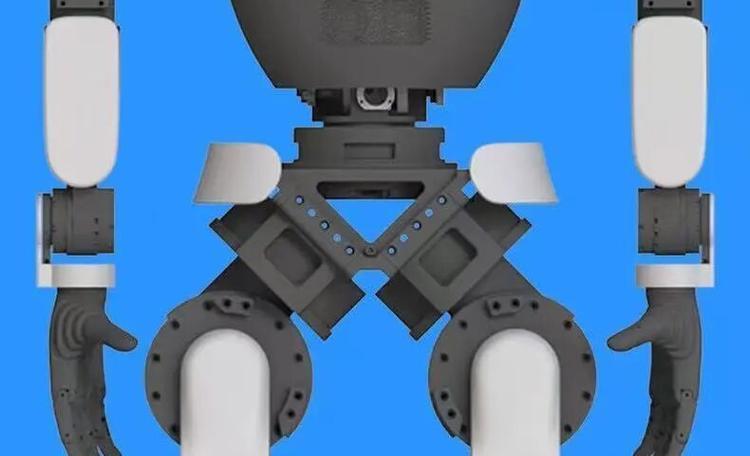
BYD's published humanoid patent resembles its Xiao Di concept, reported at 31 degrees of freedom, but BYD has not confirmed it is the production model. It has yet to announce a production timeline, Interesting Engineering reports.
The Product Desk
What happened
- The design appeared in a patent published by China's National Intellectual Property Administration, which describes a robot meant to walk, keep its balance and interact with its surroundings.
- The design shows a black-and-white body with a rounded head that has no display, and articulated joints across the torso, arms and legs.
- Earlier specifications for the Xiao Di concept put the robot at about 5 feet 3 inches tall and around 129 pounds (58 kg).
- The project belongs to a research effort that began in 2022 with a dedicated team for the hardware and software behind embodied AI.
- The patent points to possible uses in service, education and industrial settings.
Why it matters
- decision Any vendor comparison that uses 31 degrees of freedom or 0.04-inch hand accuracy is using reported concept figures, so they belong in the sheet as placeholders until BYD publishes production numbers.
- constraint The one on-site humanoid task record in the report belongs to Ubtech's Walker S1, hosted at the Changsha factory for material handling and identification, and the report cites none for the Xiao Di.
- capability A dealership deployment would let BYD test customer-facing work without major changes to existing facilities. In our view, that makes the showroom the cheaper place to learn what the robot can do.
The user moment BYD executives have floated is a customer walking into a dealership and being greeted by a robot that can explain the car. According to Interesting Engineering, executives have previously indicated that BYD could deploy humanoids across its dealership network for tasks including greeting customers and explaining vehicle features [10]. Those are statements from executives, and the patent is a separate document about the machine's body [1].
The numbers attached to this robot need care. The report's headline says 31 joints [15]. Its text says the Xiao Di is reported to have 31 degrees of freedom and a dexterous hand with repeatable positioning accuracy of about 0.04 inches [14].
Those features could support tasks such as picking up objects and pointing out information to people [5]. The report adds that the published design does not show how dependably the robot would handle that work in everyday settings, or whether the same specifications would hold in a production model [6].
BYD has outside bets alongside its own team. It invested in Agibot in August 2023 and took a stake in Percibot in April 2025 [8].
A humanoid pilot comes down to a 2x2 built from two answers: whether the maker has reliability data from conditions like yours, and what one failure costs you. If a failure is cheap, a pilot is how you collect the missing data. A costly failure means the reliability data needs to be in hand before any pilot starts.
In our view a showroom greeter sits in the cheap row, and the report says dealership use would let BYD test routine customer-facing work without requiring major changes to existing facilities [11]. The tradeoff is visibility, because a greeter's failures happen in front of customers. Material handling on a factory line sits in the costly row. On the report's evidence the Xiao Di is in the no-data column for both uses, because the published design does not establish real-world reliability [6].
What to watch
- BYD confirming whether the patent design is the production Xiao Di, or announcing a production timeline.
- Reliability data from real-world conditions, and whether the 31 degrees of freedom and 0.04-inch hand accuracy carry over to a production model.
- A dealership pilot, which BYD executives have said the company could roll out across its network.
Clarity's read
What the record supports and how the coverage leans. The claims behind it follow.
Reality
- Evidence35
- Adoption
- Insufficient
- Hype gap+25
- Incentives
- Insufficient
- Confidence50
Claim ledger
Ranked by verification strength, evidence, and original report placement.
- [1]
The design appeared in a patent published by China's National Intellectual Property Administration, describing a robot designed to walk, maintain balance and interact with its surroundings.
- [2]
The design resembles BYD's previously teased humanoid robot, known as Xiao Di, but BYD has not confirmed whether the patent depicts the final production model.
- [3]
The patent points to potential applications in service, education and industrial environments.
- [4]
The design features a black-and-white body, a rounded head without a display and articulated joints across its torso, arms and legs.
- [5]
The features could support tasks such as picking up objects, making gestures and pointing out information to people.
- [6]
The published design does not establish how reliably the robot can perform these tasks in real-world conditions, or whether the specifications will carry over to a production model.
- [7]
BYD's humanoid robot project is part of a longer-term research effort that began in 2022 with the formation of a dedicated team to develop the hardware and software needed to bring embodied AI into practical use.
- [8]
BYD invested in Agibot in August 2023 and acquired a stake in Percibot in April 2025.
- [9]
BYD's Changsha factory has hosted Ubtech's Walker S1 humanoid robot for material-handling and identification tasks.
- [10]
BYD executives have previously indicated that the company could deploy humanoid robots across its dealership network, with potential tasks including greeting customers, explaining vehicle features and demonstrating infotainment systems.
- [11]
Dealership applications would give BYD a way to test whether humanoid robots can perform routine customer-facing work without requiring major changes to existing facilities.
- [12]
BYD has yet to announce a production timeline for the robot.
- [13]
Previously disclosed specifications for the Xiao Di concept put its height at approximately 5 feet 3 inches and its weight at around 129 pounds (58 kg).
ReportedContestedSource: Interesting Engineering2 sources— create a free account to open themView cited source - [14]
The robot is reported to have 31 degrees of freedom and a dexterous hand with repeatable positioning accuracy of approximately 0.04 inches.
ReportedContestedSource: Interesting Engineering2 sources— create a free account to open themView cited source - [15]
The source's headline refers to a 31-joint humanoid robot, while its text describes 31 degrees of freedom.
ReportedContestedSource: Interesting Engineering headline2 sources— create a free account to open themView cited source
Sources
1 independent publisher whose own reporting we read for this story.
- interestingengineering.comChinese EV giant’s 31-joint humanoid robot could soon greet you at the car dealership
1 article · October 11, 2026
Topics and entities
Follow any of these and your For You feed starts watching them — no settings page required.
Topics
- Humanoid RobotsFollow
- Embodied AIFollow
- China EV and Battery IndustryFollow