Brooklyn prosecutors seize 112 servers from a crypto scam network that took tens of millions
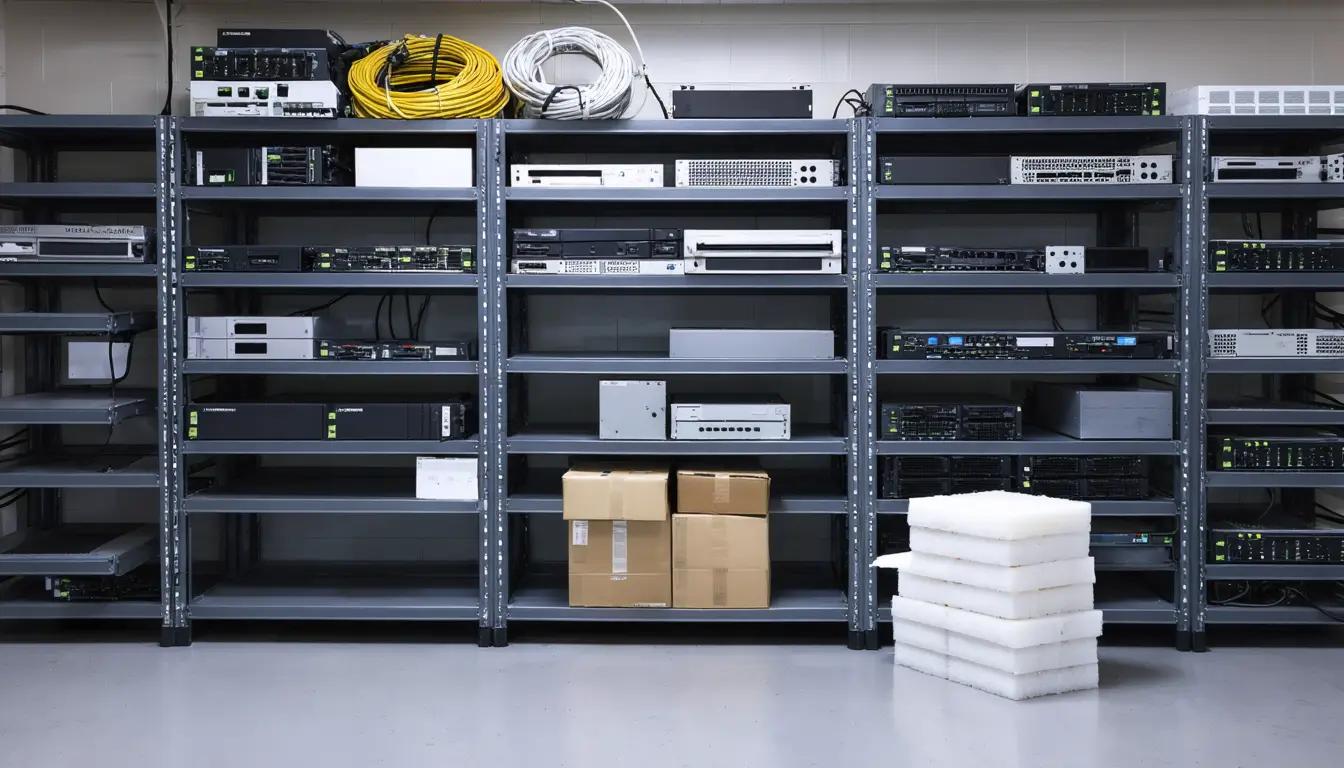
Brooklyn's District Attorney and the FBI seized 241 domains and 112 servers from a three-year crypto scam aimed at Russian speakers. The same operators then offered victims fake fund recovery, and about $300,000 has been recovered against tens of millions lost.
The Investor · Invest desk
Key figures: 241 web domains seized in this operation with the FBI; 400 domains taken down or disrupted by the unit before last week's operation; 70 web domains seized in a June 2024 action.
| Figure | Value | Note | Claim |
|---|---|---|---|
| Web domains seized in this operation with the FBI | 241 domains | 1 | |
| Domains the unit took down or disrupted earlier | 400 domains | not counting last week's operation | 14 |
| Domains, June 2024 action | 70 domains | 13 |
What happened
- Victims described the same path: a Russian-language Facebook ad, a call from an 'investment advisor', then a locked account or a demand for extra taxes and fees at withdrawal.
- Investigators traced the network's infrastructure and IP addresses to Ukraine and other Eastern European countries, and the seized servers sat with hosting companies in Eastern Europe and the US.
- The unit was created in 2023, and its June 2024 action seized 70 domains that had been used to drain $5 million from US residents.
Why it matters
- exposure The Russian-language Facebook ad that started each victim's path is outside the domains and servers seized, so the audience that answered it is still there to be approached by a successor scheme.
- constraint With no one in custody, the operators can rebuild on new hosts, and the seizure will be judged by how many weeks that takes.
- precedent The unit's running total is now 641 domains, and its next action will be read against 112 servers as well as against that domain count.
Start with the ratio. The 241 domains ran on 112 servers, about 2.2 domains per machine [20]. Domains are the layer a scammer can replace fastest, in our view, and domains are what the Virtual Currency Unit had mostly been taking: not counting last week's operation, it has taken down or disrupted 400 of them [14]. Servers are different. The Brooklyn DA's office says seizing them stripped the scammers of access to victim records, the content driving their domains and the tools that ran the operation [5]. Assistant District Attorney Alona Katz, who leads the unit, said, according to Bloomberg, "we disabled the back end of the operation" [6].
That matters most for the second half of the scheme. District Attorney Eric Gonzalez said the criminals stole from Russian-speaking victims "through an elaborate investment scheme, then tried to exploit them again with false promises to recover their money" [10]. A recovery pitch needs a list of people who have already been robbed, and victim records are what the DA says the operators lost [5]. We think the server seizure therefore hits the second pitch harder than another 241 domains would have. The link is our inference, because the sources do not say the recovery calls ran from these particular servers. Cointelegraph's narrower report is that the seizure cut the scammers' ability to create new websites and contact victims [7].
The money recovered so far is small. The DA estimates that tens of millions of dollars were stolen [8] and has seized about $300,000 [9]. Taking $20 million as the low end of "tens of millions" (our assumption), that is 1.5% [17]. The FBI figure cited by Bloomberg for reported US crypto fraud losses in 2025 is $11.4 billion, up 22% on the year [15]. A $20 million scheme is 0.18% of that total [18].
Three outcomes would change our view. Russian-language ads and recovery calls with the same script surfacing on new hosts within weeks would mean the operators kept their records and tools elsewhere, and the seizure cost them little. A next Brooklyn action that again counts only domains would make the server seizure a one-off. Arrests would make the case stronger than the equipment count suggests. The operation was carried out the week before the Wednesday announcement [4], so the first of those tests has barely started.
What to watch
- Whether Russian-language investment ads and fund-recovery calls with the same script resurface on new hosts in the coming weeks.
- Whether the Virtual Currency Unit's next action counts servers or falls back to counting domains.
- Whether arrests, or recoveries beyond the roughly $300,000 seized, are announced.
Clarity's read
What the record supports and how the coverage leans. The claims behind it follow.
Reality
- Evidence66
- Adoption
- Insufficient
- Hype gap+12
- Incentives
- Insufficient
- Confidence70
Perspective Coverage
4 publishers- Builder
- Builder 5%
- Operator
- Operator 50%
- Investor
- Investor 45%
Claim ledger
Ranked by verification strength, evidence, and original report placement.
- [1]
The Virtual Currency Unit and FBI investigation culminated in the seizure of 241 web domains and 112 servers, District Attorney Eric Gonzalez said in a Wednesday (Oct. 14) news release.
- [2]
A large portion of victims told the same story: they responded to a Russian-language Facebook ad for investment opportunities and got a call from an 'investment advisor' who helped them create an account with a crypto investment platform.
- [3]
When victims tried to make a withdrawal, they were locked out of their account or told they had to pay extra taxes or fees.
- [4]
The operation was carried out last week and announced on Wednesday.
- [5]
Taking down the servers stripped the scammers of access to victim records, the content driving their web domains, and the tools that ran their operation, the Brooklyn DA's office said.
- [6]
By seizing the servers, 'we disabled the back end of the operation,' said Assistant District Attorney Alona Katz, who leads the Virtual Currency Unit.
- [7]
Seizing the servers disrupted the scammers' ability to create new websites and contact victims.
- [8]
The DA estimates that tens of millions of dollars were stolen in the scheme, with some victims losing their life savings.
- [9]
Gonzalez's office has seized about $300,000 in stolen funds so far and is working to recover more.
- [10]
Gonzalez said: 'These criminals stole many millions of dollars from Russian-speaking victims through an elaborate investment scheme, then tried to exploit them again with false promises to recover their money.'
- [11]
Investigators traced the network's cyber infrastructure and internet protocol addresses to Ukraine and other Eastern European countries.
- [12]
The 112 servers were hosted by companies in Eastern Europe and the United States.
- [13]
Gonzalez created the Virtual Currency Unit in 2023; a June 2024 action by Katz's team seized 70 web domains that scammers had used to drain $5 million from U.S. residents.
- [14]
Not counting last week's operation, the Virtual Currency Unit has taken down or disrupted 400 domains involved in crypto investment fraud.
- [15]
Americans reported $11.4 billion in cryptocurrency fraud losses in 2025, a 22% increase from the previous year, according to FBI figures cited by Bloomberg.
- [16]
No arrests were made in the operation.
- [17]
At $20 million as the low end of 'tens of millions', the $300,000 seized is about 1.5% of the estimated loss.
- [18]
A $20 million loss is about 0.18% of the $11.4 billion in US crypto fraud losses reported for 2025.
- [19]
The unit's running total of domains taken down or disrupted is 641 including this operation.
- [20]
The seizure covered about 2.2 domains per server.
Get this ledger inside ChatGPT. Ask about any of our stories and the answer brings its figure, each claim’s verdict and the sources. Free, no account.
Sources
5 independent publishers whose own reporting we read for this story.
- cointelegraph.comUS authorities dismantle crypto scam network that stole tens of millions
1 article · October 14, 2026
- cryptobriefing.comBrooklyn DA takes down 241 domains tied to global crypto investment scam network
1 article · October 14, 2026
- pymnts.comBrooklyn DA Shuts Down Multi-Million Dollar Crypto Scam Operation
1 article · October 14, 2026
- qz.comBrooklyn DA and FBI shut down 241 crypto fraud websites tied to Eastern Europe
1 article · October 14, 2026
- therecord.mediaBrooklyn DA’s office disrupts crypto scam targeting Russian community
1 article · October 14, 2026
Topics and entities
Follow any of these and your For You feed starts watching them — no settings page required.
Topics
- Social media scam adsFollow
- Crypto FraudFollow
- Law Enforcement TakedownsFollow
Entities
- Brooklyn District Attorney's OfficeFollow
- Alona KatzFollow
- Eric GonzalezFollow
- Meta PlatformsFollow
- Federal Bureau of InvestigationFollow