ProductNot yet confirmed elsewhere1 publisher2 min readPublished
BAE Systems unveils a Technology Readiness Level 6 high-power microwave weapon to counter drone swarms
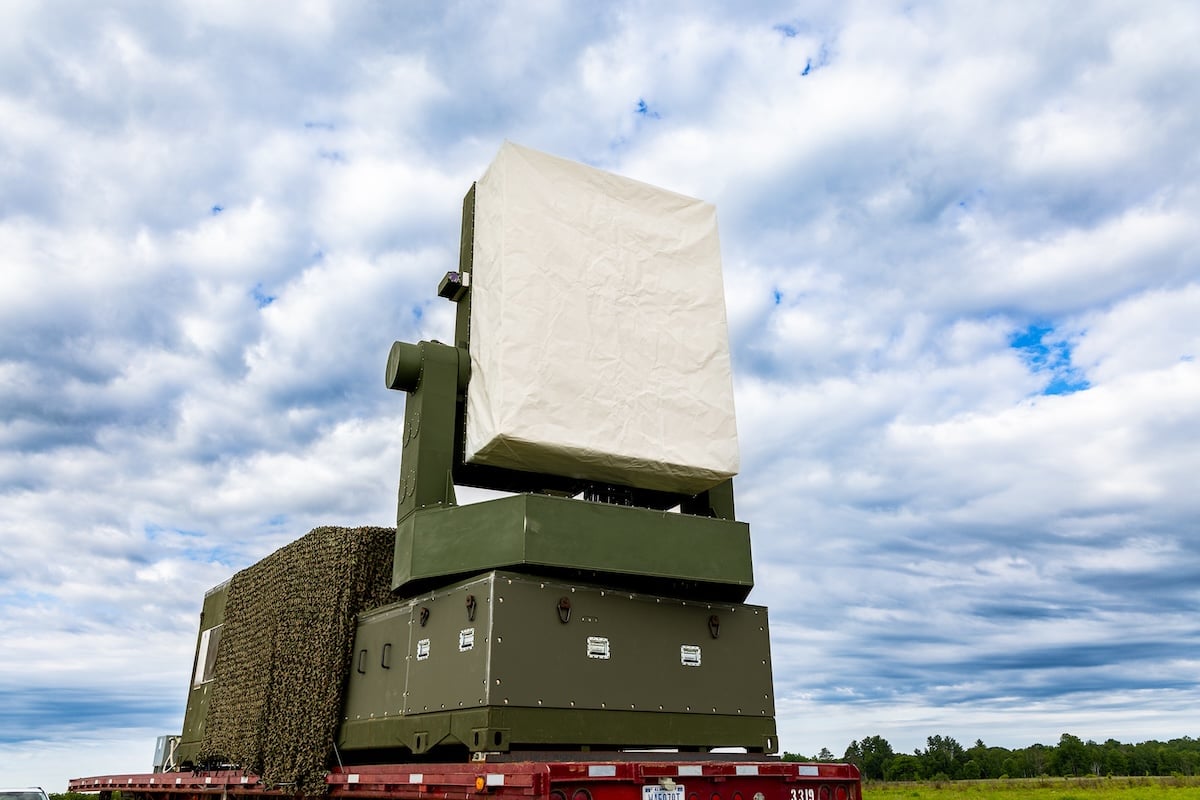
BAE Systems unveiled a high-power microwave weapon at AUSA 2026 that it says has reached Technology Readiness Level 6. Only the microwave half of the pairing works without conventional ammunition, and no Army adoption is shown.
The Product Desk
Key figures: more than 99 percent of the HPM system's components are commercial off-the-shelf; the HPM system supports four deployment configurations; BAE says Scorpio-XR doubles the range of existing precision-guided projectiles fired from 155 mm cannons.
| Figure | Value | Note | Claim |
|---|---|---|---|
| HPM components commercial off-the-shelf, more than | 99% | 4 | |
| HPM deployment configurations | 4 configurations | 5 | |
| Cannon size for existing guided projectiles | 155 mm | BAE says Scorpio-XR doubles their range | 8 |
What happened
- The microwave weapon engages groups of drones with electromagnetic energy and can keep taking successive targets for as long as its power supply remains available.
- BAE says outdoor range testing, including tests involving billions of microwave pulses to document effects on targets, has validated the weapon's operation.
- The weapon is modular and comes in four configurations: fixed installations, towed systems, combat vehicle integration and maritime platforms.
- The air-transportable MDACS artillery platform can launch the guided Hypervelocity Projectile against aerial threats.
- MDACS can also fire Scorpio-XR at fixed and moving ground targets, and BAE says that round doubles the range of existing precision-guided projectiles from 155 mm cannons.
Why it matters
- constraint The saving on missile interceptors applies to the microwave layer. MDACS is a projectile-based layer, so a buyer still has to plan munition supply for that half.
- contradiction The pitch is swarm defense, but the reported testing documents effects on targets. The source does not say how many drones were engaged at once.
- constraint The source says the eventual role of either system depends on further development, testing and procurement decisions.
BAE Systems is selling against the ammunition limit of a crew defending a fixed site from a drone swarm. Missile interceptors carry finite ammunition supplies, and replacing each shot can create substantial logistical demands in a prolonged engagement [3]. The buyer in view is the US Army [1].
The pitch is a layered defense in which the two systems complement each other [9]. In the source's description, one system uses directed energy to engage drones without conventional ammunition, and the other relies on high-velocity projectiles for kinetic interception [12]. In our view, the claim about sparing missile interceptors belongs to the microwave weapon alone. The artillery layer swaps in a different kind of round.
The microwave weapon needs no ammunition, but it depends on its power supply. BAE says its architecture is more than 99 percent commercial off-the-shelf components and that this supports manufacturing and sustainment [4]. Each of its four configurations can accommodate different power requirements [13].
The testing described is real but specific. BAE reports outdoor range validation at Technology Readiness Level 6 [6]. The reported announcement does not include a price, a power draw or an engagement range. Jason Casciotti, vice president of BAE Systems' Weapon Systems product line, said BAE's aim is to get mature technology into operational use more quickly, and he pointed to validated designs and a resilient supply chain [10]. The source adds that the eventual role of either system depends on further development, testing and procurement decisions [11].
For anyone specifying a counter-drone layer, it helps to sort each layer in a two-column table. In the first column, write what the layer spends on each engagement: a missile, a projectile or electrical power. In the second, write who measured the claim, the vendor or the customer. On BAE's account, the microwave weapon spends power and its testing claims are BAE's [6]. MDACS spends projectiles [12].
We'd judge each layer on that table before judging the pair. The tradeoff is that the microwave weapon's advantage, no ammunition resupply, lasts only while its power supply does [2].
What to watch
- Any Army test, program or procurement announcement that names BAE's HPM or MDACS, since the source ties their role to those decisions.
- Published power draw, engagement range and swarm-size results from the outdoor range testing, ideally from the customer rather than BAE.
- Cost and supply figures for Hypervelocity Projectile rounds, which would show how much of the interceptor saving the artillery layer keeps.
Clarity's read
What the record supports and how the coverage leans. The claims behind it follow.
Reality
- Evidence35
- Adoption5
- Hype gap+25
- Incentives70
- Confidence50
Claim ledger
Ranked by verification strength, evidence, and original report placement.
- [1]
BAE Systems unveiled two air defense technologies, a high-power microwave weapon and an artillery platform firing precision-guided projectiles, designed to help the US Army counter mass drone attacks without relying entirely on conventional missiles.
- [2]
BAE's High Power Microwave system targets groups of drones using electromagnetic energy and can engage successive threats as long as its power supply remains available, avoiding the ammunition resupply demands of conventional weapons.
- [3]
Missile-based interceptors carry finite ammunition supplies, and replacing each shot can create substantial logistical demands during prolonged engagements.
- [4]
The HPM system uses an architecture built around more than 99 percent commercial off-the-shelf components, which BAE says supports manufacturing and sustainment.
- [5]
The HPM system has a modular design supporting four deployment configurations: fixed installations, towed systems, combat vehicle integration, and maritime platforms.
- [6]
BAE reports the HPM system has reached Technology Readiness Level 6, with outdoor range testing validating its operation, including tests involving billions of microwave pulses to document effects on targets.
- [7]
The Multi-Domain Artillery Cannon System (MDACS) is an air-transportable platform that fires different precision-guided munitions by mission; against aerial threats it can launch the Hypervelocity Projectile (HVP), a guided round.
- [8]
MDACS can also fire Scorpio-XR, a precision-guided munition for fixed and moving ground targets, which BAE says doubles the range of existing precision-guided projectiles launched from 155 mm cannons.
- [9]
BAE is positioning the two systems as complementary parts of a layered defense.
- [10]
Jason Casciotti, vice president of BAE Systems' Weapon Systems product line, said the company wants to move mature technology toward operational use faster, pointing to validated designs and a resilient supply chain as important factors.
ReportedSupportedSource: Jason Casciotti, BAE Systems, via interestingengineering.comView cited source - [11]
BAE's announcement does not establish that the US Army has adopted either system for operational service; their eventual role depends on further development, testing, and procurement decisions.
- [12]
One of the two systems uses directed energy to engage drones without conventional ammunition, while the other relies on high-velocity projectiles for kinetic interception.
- [13]
Each of the HPM system's deployment configurations can accommodate different power requirements and operational needs.
Sources
1 independent publisher whose own reporting we read for this story.
- interestingengineering.comNew microwave weapon can zap drone swarms without burning through missiles
1 article · October 12, 2026
Topics and entities
Follow any of these and your For You feed starts watching them — no settings page required.