ProductNot yet confirmed elsewhere1 publisher3 min readPublished
Army sizes its first new locomotives in over a decade to the track each one runs on
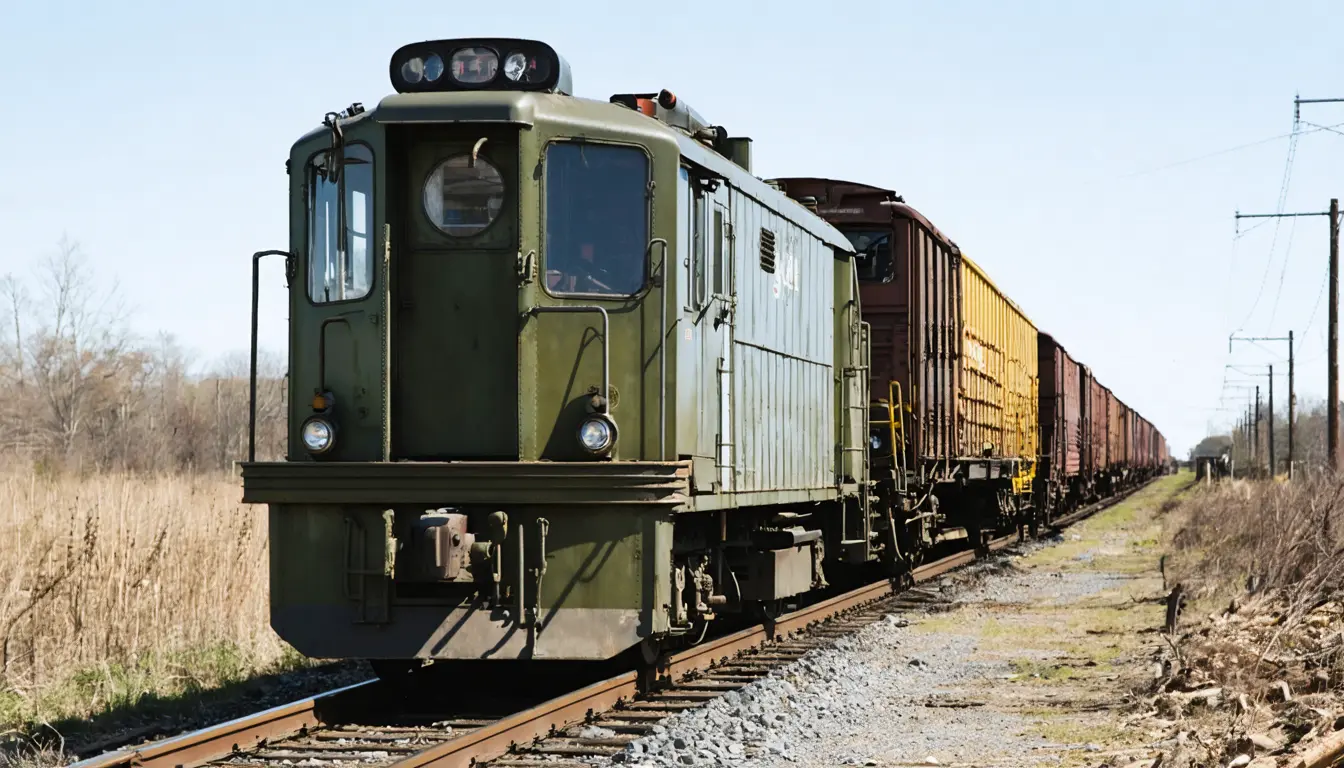
US Army has added two locomotives, its first major rail additions in over a decade, as over a third of TACOM's locomotives exceed a 65-year expected life. Both were built to fit the track at the installation that got them, as TACOM works to cut the over-age share below 20 percent.
The Product Desk
Timeline: July 2015, USAX 6524, a 140-ton locomotive, delivered to Fort Cavazos for $1.84 million. October 2025, Blue Grass accepts USAX 1699, an 80-ton switcher. November 2025, Fort Drum accepts a ballast regulator. February 2026, Crane accepts USAX 4673, a 120-ton locomotive.
- 2015USAX 6524, a 140-ton locomotive, delivered to Fort Cavazos for $1.84 million, claim 9
- 2025Blue Grass Army Depot accepts USAX 1699, an 80-ton switcher, claim 6
- 2025Fort Drum accepts a ballast regulator with snow-removal attachments, claim 8
- 2026Crane Army Ammunition Activity accepts USAX 4673, a 120-ton locomotive, claim 5
| Date | Event | Claim |
|---|---|---|
| July 2015 | USAX 6524, a 140-ton locomotive, delivered to Fort Cavazos for $1.84 million | 9 |
| October 2025 | Blue Grass Army Depot accepts USAX 1699, an 80-ton switcher | 6 |
| November 2025 | Fort Drum accepts a ballast regulator with snow-removal attachments | 8 |
| February 2026 | Crane Army Ammunition Activity accepts USAX 4673, a 120-ton locomotive | 5 |
What happened
- The Crane Army Ammunition Activity locomotive cost $2.9 million, the Blue Grass Army Depot switcher $2.1 million, and Fort Drum's ballast regulator $733,422.
- Fort Drum's ballast regulator, accepted in November 2025, maintains the gravel bed under the track and carries snow-removal attachments to keep deployment railheads usable in winter.
- The last major locomotive delivery TACOM identifies was USAX 6524, a 140-ton unit delivered to Fort Cavazos, Texas, in July 2015 for $1.84 million.
- The Department of Transportation's Volpe National Transportation Systems Center is TACOM's primary procurement agency for the rail modernization effort.
Why it matters
- constraint On any active fleet of 15 or more locomotives, these two deliveries cannot reach the 20 percent goal by themselves, so TACOM will need further buys before the target is in sight.
- cost Installations planning their own replacements now have a recent benchmark for a custom fit, and it sits about 58 percent above the last locomotive the Army bought, in nominal dollars.
- decision Each site with weight-limited or tightly curved track has to choose between buying a locomotive to the old track's limits, as Blue Grass and Crane did, and paying to bring the track up to a standard unit.
Blue Grass Army Depot in Kentucky runs its trains on older track with lower weight limits. Its new switcher, USAX 1699, accepted in October 2025, was built by SpecSys to the physical dimensions of a vintage General Electric 80-ton locomotive so it could work that track [6]. At Crane Army Ammunition Activity in Indiana the limit is geometry. USAX 4673, a 120-ton unit from Knoxville Locomotive Works accepted in February 2026, has special couplers and restricted exterior dimensions to get through tight curves and limited clearances [5].
The program is pitched as replacing locomotives past a 65-year expected life [1]. What the crews actually received is a pair of machines built around the track they already have. We think the Army chose correctly. A standard locomotive that cannot clear a curve, or that is too heavy for the rails, does nothing for the people who move ammunition on that line [4].
Whether the program reaches its target is harder to judge. TACOM wants the over-age share below 20 percent, down from more than a third, a drop of more than 13 percentage points [17]. If each new locomotive retires one over-age unit, two deliveries close that gap only on an active fleet of fewer than 15 locomotives [16]. The Army's October 2026 announcement, as reported, does not give the fleet size or a date for the target [12].
Better visibility into equipment readiness was already on the agenda at the Army Rail Summit in 2026. Officials there discussed the strain decades of demand have put on locomotives, railcars and installation track, and the need for better visibility into equipment and track readiness [11]. The work is routine. Rail moves "much of the service's equipment from home or mobilization stations to training areas and ports of embarkation," according to the Army's Transportation Corps [13].
Custom fitting has a price. The three deliveries total about $5.73 million [14]. In nominal dollars, before any adjustment for a decade of inflation, the Crane locomotive cost about 58 percent more than the 2015 Fort Cavazos unit while weighing 20 tons less [15].
For any team replacing an aging fleet against a share target, two checks sort the decision. The first is a count: over-age units that must retire to hit the target, set against units arriving each year. The second is the receiving site, and whether its track weight, curves or clearances rule out a standard unit. Crossing the two gives four cases. In our view, over-age and site-constrained means a custom build priced like Crane's. Over-age and unconstrained means the cheapest standard unit that does the job. Within service life but constrained is where track maintenance money goes further, and Fort Drum's ballast regulator is spending of that kind [8]. Within life and unconstrained can wait.
What to watch
- A published count of TACOM's active locomotives would show how many more retirements the under-20 percent goal needs.
- A delivery schedule or deadline for the 20 percent target from TACOM or the Volpe Center.
- Any equipment and track readiness measure that comes out of the visibility work discussed at the 2026 Army Rail Summit.
Clarity's read
What the record supports and how the coverage leans. The claims behind it follow.
Reality
- Evidence55
- Adoption30
- Hype gap+15
- Incentives40
- Confidence50
Claim ledger
Ranked by verification strength, evidence, and original report placement.
- [1]
TACOM says more than one-third of its active locomotives have exceeded their expected useful life of 65 years.
ReportedSupportedSource: US Army Tank-automotive and Armaments Command (TACOM), via Interesting EngineeringView cited source - [2]
TACOM's immediate goal is to reduce the proportion of over-age locomotives to below 20 percent, cutting maintenance costs and improving the movement of military equipment.
- [3]
The modernization effort has delivered two new locomotives and a specialized track-maintenance vehicle to three installations; the Army says the locomotives are the first major additions to its rail fleet in more than a decade.
- [4]
Older tracks, tight curves, restricted clearances and rail weight limits can make standard locomotives unsuitable at military installations; the Army selected or configured each asset to meet the needs of the installation receiving it.
- [5]
USAX 4673, a 120-ton locomotive for Crane Army Ammunition Activity, Indiana, accepted in February 2026, was built by Knoxville Locomotive Works with special couplers and restricted exterior dimensions to navigate tight track curves and limited clearances.
- [6]
USAX 1699, an 80-ton switcher for Blue Grass Army Depot, Kentucky, accepted in October 2025, was manufactured by SpecSys using the physical dimensions of a vintage General Electric 80-ton locomotive, allowing it to operate on the depot's older tracks, which have lower weight limits.
- [7]
The Crane locomotive cost $2.9 million, the Blue Grass switcher $2.1 million, and the Fort Drum ballast regulator $733,422.
- [8]
The ballast regulator for Fort Drum, New York, accepted in November 2025, maintains the gravel bed supporting railway tracks and includes snow-removal attachments to help crews maintain deployment railheads through harsh winter conditions.
- [9]
The previous major locomotive delivery identified by TACOM was USAX 6524, a 140-ton locomotive delivered to Fort Cavazos, Texas, in July 2015 for $1.84 million.
- [10]
The US Department of Transportation's Volpe National Transportation Systems Center is TACOM's primary procurement agency for the rail modernization effort.
- [11]
At an Army Rail Summit in 2026, service officials discussed the strain decades of operational demand have placed on locomotives, railcars and installation track infrastructure, and the need for better visibility into equipment and track readiness.
- [12]
Equipment details and procurement costs come from the US Army's October 2026 announcement.
- [13]
The Army's Transportation Corps notes rail is routinely used to move much of the service's equipment from home or mobilization stations to training areas and ports of embarkation.
- [14]
The three deliveries cost about $5.73 million combined.
- [15]
In nominal dollars the Crane locomotive cost about 58 percent more than the 2015 Fort Cavazos locomotive, while weighing 20 tons less.
- [16]
If each new locomotive retires one over-age unit one-for-one, two deliveries can bring the over-age share from above one third to below 20 percent only if the active fleet is under 15 locomotives.
- [17]
Moving the over-age share from more than one third to below 20 percent is a cut of more than 13 percentage points.
Sources
1 independent publisher whose own reporting we read for this story.
- interestingengineering.comUS Army modernizes aging rail fleet with new locomotives and track equipment
1 article · October 11, 2026
Topics and entities
Follow any of these and your For You feed starts watching them — no settings page required.
Topics
- LocomotivesFollow
- Military rail logisticsFollow
- Defense Procurement ContractingFollow