Abnormal vital signs made doctors suspect a physical cause for a teenager's hallucinations; a later spinal fluid antibody test found autoimmune encephalitis
A 16-year-old in California hallucinating a flying green dinosaur was diagnosed with autoimmune encephalitis during a hospital stay of almost two months. It is one patient, so it cannot say how often psychosis with abnormal vital signs has an autoimmune cause.
The Scientist · Science desk
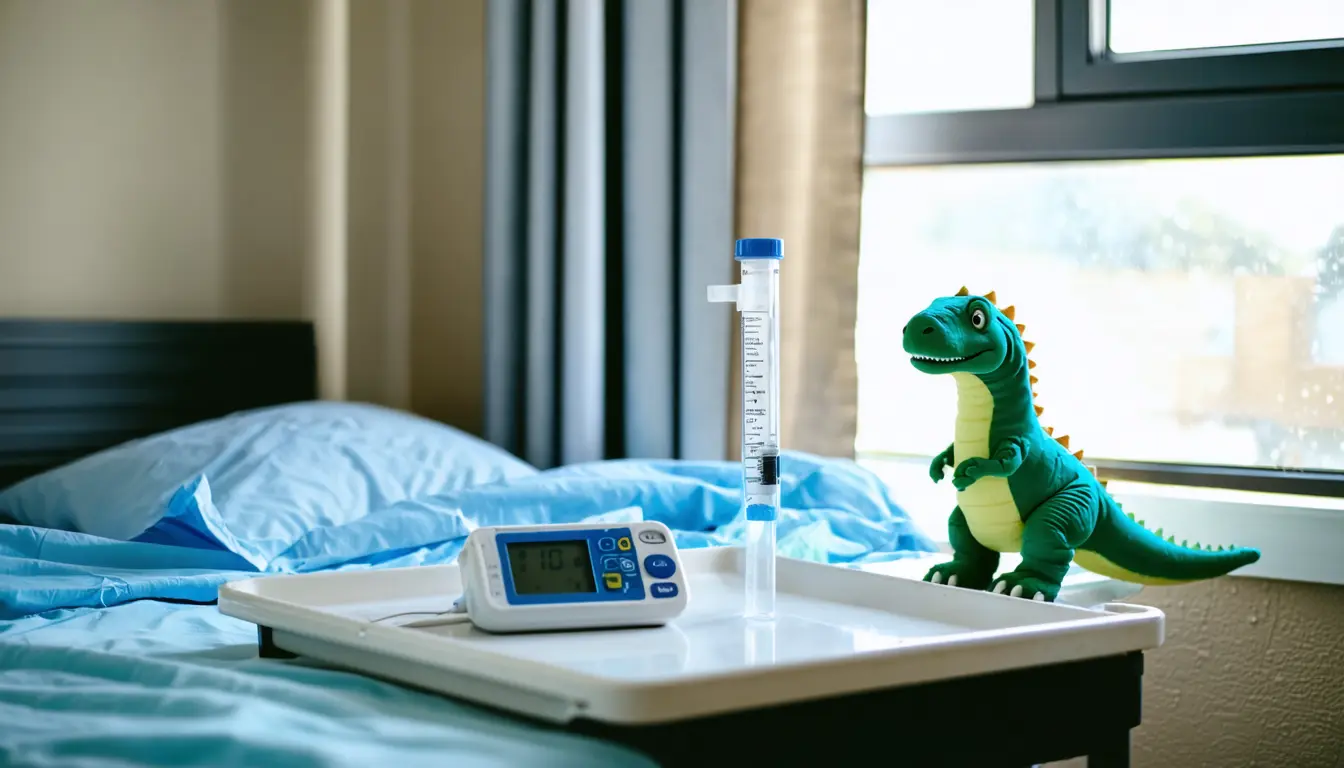
Key figures: the girl said she had had hallucinations since seventh grade, about 4 years. Her parents said she had no psychotic symptoms until 48 hours before they arrived in the ER. She is 16 years old.
| Figure | Value | Note | Claim |
|---|---|---|---|
| Hallucinating since seventh grade, per the girl, about | 4 years | 17 | |
| Psychotic symptoms before the ER, per her parents | 48 hours | none before then, her parents said | 18 |
| Girl's age at referral | 16 years | 1 |
What happened
- Besides the dinosaur, she heard voices telling her to hurt others and felt that she was being followed.
- In the ER she was trembling and sweating, with a racing pulse and shallow, fast breathing, and no fever.
- On her second hospital day she became completely catatonic, and lorazepam resolved it within days.
Why it matters
- constraint Unstable vital signs kept a psychotic patient off the psychiatric ward, so her first care happened on a general pediatric unit.
- capability The diagnosis depended on getting fluid at all: the first puncture failed, and the second needed interventional radiologists.
- decision A positive antibody result sends the team looking for a tumor, since tumors often trigger the condition; MRIs and a PET scan found none.
The history is where the case is least settled. The girl told clinicians she had seen the hallucinations since seventh grade, about four years [17]. Her parents said she had shown no psychotic symptoms until 48 hours before they reached the ER, although they noted that her interest in school and extracurriculars had waned over the past month [18]. The summary does not say which account the clinicians weighted more.
The physical findings set the direction of the workup. According to the doctors' case report, the abnormal vital signs made them suspect the hallucinations were secondary to a physical ailment such as trauma to the brain [4]. The early tests did not find it. A CT scan showed no swelling or hemorrhage, and the first lumbar puncture collected no fluid [5]. The EEG was unremarkable too [6]. The second puncture worked, but the first panels on that fluid looked normal [7]. The cause surfaced only when a later test of the fluid came back positive for autoantibodies against neuronal intermediate filament [9].
In our view, that sequence supports a narrow conclusion. When a psychotic presentation comes with trembling, sweating and a racing pulse, a normal CT and a normal first fluid panel do not close the question. Here the answer came from a test run after those results. This is a single patient, and a news summary of a case report. It also offers no denominator: how many teenagers with psychosis and abnormal vital signs are worked up this way, and how many of them have antibodies.
Treatment also limits what the case can show. She received an intravenous steroid, immunoglobulin, rituximab and five plasmapheresis sessions over the next month [12]. That is four immune-directed treatments [16]. Separately, lorazepam ended the catatonia within days [8], and olanzapine was used for the continuing psychotic symptoms [14]. At discharge she had ongoing prescriptions for olanzapine and lorazepam [15]. With that many interventions in play, the case cannot say which one mattered.
What to watch
- Any follow-up on how she fared after discharge, which the summary does not describe.
- Larger series reporting how often psychosis with abnormal vital signs has an autoimmune cause.
- Whether other cases of NIF-targeting antibodies in teenagers appear in the literature.
Clarity's read
What the record supports and how the coverage leans. The claims behind it follow.
Reality
- Evidence55
- Adoption
- Insufficient
- Hype gap−10
- Incentives
- Insufficient
- Confidence60
Claim ledger
Ranked by verification strength, evidence, and original report placement.
- [1]
A 16-year-old girl in California was referred to an emergency department because she was having hallucinations, including seeing a flying green dinosaur.
- [2]
The teenager also heard voices telling her to hurt others and had a sense that she was being followed.
- [3]
In the emergency room she was trembling and sweating and had a racing pulse and shallow, fast breathing; she did not have a fever, although she did at the hospital that referred her.
- [4]
Because of the abnormal vital signs, the ER doctors suspected the hallucinations might be secondary to a physical ailment such as trauma to the brain, they wrote in a case report.
- [5]
A CT scan showed no signs of swelling or hemorrhage in her head, and the doctors' first lumbar puncture failed to collect any cerebrospinal fluid.
- [6]
An electroencephalogram suggested by pediatric neurologists revealed no further clues.
- [7]
Interventional radiologists performed a successful second lumbar puncture, but the cerebrospinal fluid appeared normal in the initial panels they ran.
- [8]
On her second day in hospital the girl entered a complete catatonic state; she was treated with lorazepam and the catatonia subsided in days.
- [9]
A later test of the cerebrospinal fluid came back positive for autoantibodies that targeted neuronal intermediate filament (NIF), a protein that gives nerve cells structural support.
- [10]
Based on the antibody finding, the patient was diagnosed with autoimmune encephalitis.
- [11]
Autoimmune encephalitis is often triggered by a tumor; the doctors performed MRIs and a PET scan to look for tumors but did not find any.
- [12]
The girl received intravenous infusions of a steroid, immunoglobulin and rituximab, and underwent five sessions of plasmapheresis over the next month.
- [13]
The doctors judged the girl too medically unstable to be referred to the hospital's psychiatric ward, so she was admitted to the general pediatric department.
- [14]
After eight days in hospital, psychiatrists recommended transfer to their ward, but this was not possible because she developed problems feeding herself; her continued psychotic symptoms were treated with olanzapine.
- [15]
The girl was discharged after almost two months in the hospital, with ongoing prescriptions of olanzapine and lorazepam.
- [16]
The patient received four immune-directed treatments: a steroid, immunoglobulin, rituximab and plasmapheresis.
- [17]
The girl reported that she had experienced the hallucinations since seventh grade, about four years.
- [18]
Her parents said she had not exhibited psychotic symptoms until 48 hours before they arrived in the ER, and noted her interest in school and extracurriculars had waned over the past month.
Get this ledger inside ChatGPT. Ask about any of our stories and the answer brings its figure, each claim’s verdict and the sources. Free, no account.
Sources
1 independent publisher whose own reporting we read for this story.
- livescience.comTeenager's rare autoimmune disorder caused her to hallucinate a flying green dinosaur
1 article · October 14, 2026
Topics and entities
Follow any of these and your For You feed starts watching them — no settings page required.