Product1 publisherNot yet confirmed elsewhere2 min readPublished
Amazon's Alexa Tablet 12 Pro climbs toward mid-range on a matte screen built for reading
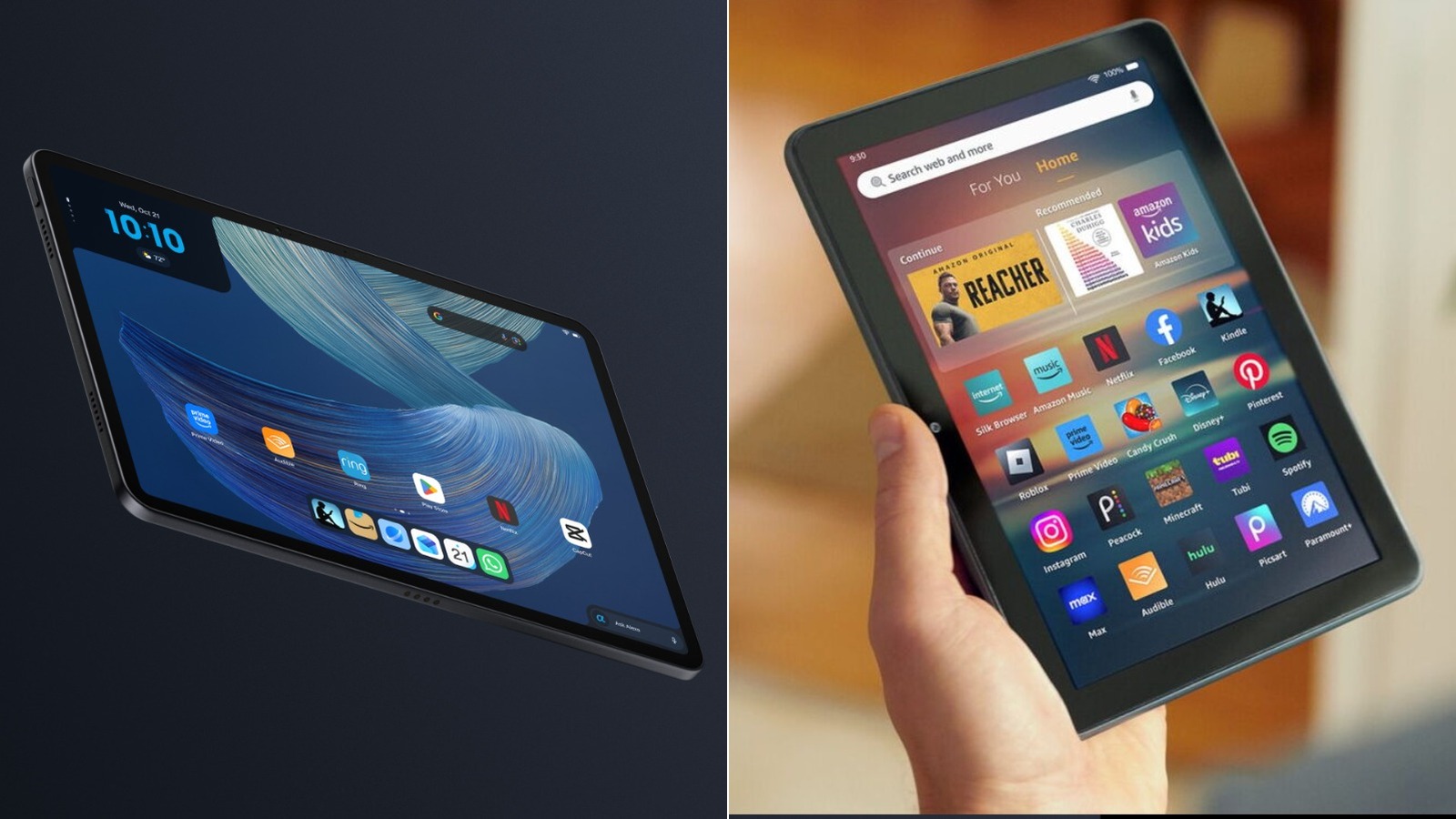
Amazon's Alexa Tablet 12 Pro takes the top of the lineup from the $155 Fire HD 10, offering up to 16GB of RAM and an optional matte 12-inch screen. For people who buy Amazon tablets to read, that screen and a new Kindle mode matter more than the Alexa+ pitch.
The Product Desk
What happened
- The 12 Pro moves to an aluminum body and a 4-nanometer, 8-core MediaTek Dimensity 8400 chip, replacing the Fire HD 10's plastic build and older Helios processor.
- Amazon designed the optional nanomatte panel with Corning, lining its texture up with the pixel grid to reduce glare when reading in bright conditions.
- Every new Alexa tablet, the cheaper models as well as the 12 Pro, gets a dedicated Kindle mode.
- The 12 Pro runs Android with the Google Play Store, and Engadget reports that Amazon has dropped its Fire OS software.
Compiled by The Product DeskSomething wrong?How this is made
Why it matters
- capability With Google Play on the device, a household or school no longer has to check each app against Amazon's own store before committing to an Amazon tablet.
- constraint Buyers who only want to read still get a home screen organised around Alexa, whether or not they ever use the assistant.
- exposure An upgrade bought for reading also brings an assistant that can chat about whatever is on screen and run hands-free, so a reading device now has the AI looking at its screen.
A Fire HD 10 owner paid $155 for the base model. For that they got 32GB of storage, 4GB of RAM and, by Engadget's account, roughly the performance of a cheap Chromebook [7][6]. It was well suited to watching videos and reading books, and Engadget says it was never a productivity machine [6].
Amazon pitches the 12 Pro as a device built around two things, reading and AI [5]. Engadget's account of why people buy Amazon tablets includes only the first. They buy them as a Kindle alternative that can also play video and run Android apps [14]. The AI half is Alexa+. On the 12 Pro it covers smart home controls, chat about what is on screen and a hands-free voice mode [10]. Engadget noted that Amazon would like buyers to be excited about the AI, then wrote that "it's hard to turn down better hardware" [15].
The reading changes are in the panel and in the software. The matte finish is optional. It sits beside a standard glossy panel of the same 12-inch size and 280 pixels per inch [9]. Engadget says Kindle reading is better on the nanomatte version [13]. Kindle mode is Amazon leaning on its first-party advantage, because the Kindle app already runs perfectly well on other brands' tablets [14]. Panos Panay said the mode is designed to "preserve the sanctuary of reading" [2].
The mid-range claim rests on the parts list. Up to 16GB of RAM is four times the base Fire HD 10's 4GB [16]. Engadget places the 12 Pro above Amazon's old bargain tier and below iPads and Galaxy Tabs [4]. Its account does not include the 12 Pro's price or say how much Alexa+ processing happens on the tablet itself [5].
For someone buying tablets for a household or a classroom, two questions sort the decision. Is most of the use reading? Does that reading happen in bright light? Reading in bright light is what the nanomatte 12 Pro was built for, since the finish is meant to cut glare [5][13]. In my view that is the version to buy for a reader in a sunny room. The tradeoff is paying for an 8-core Dimensity 8400 and up to 16GB of RAM that a reading tablet does not obviously need [8]. Reading indoors gets Kindle mode on any of the new Alexa tablets [1]. Outside reading, the light question drops out. For apps and work, the 12 Pro is up against iPads and Galaxy Tabs, and Engadget says it still falls short of them [4]. Video and casual use is what the $155 Fire HD 10 already did [6][7].
What to watch
- The 12 Pro's price, and the premium for the nanomatte panel over glossy, which will decide whether the mid-range label holds on cost as well as on parts.
- Whether Amazon says how much Alexa+ processing runs on the Dimensity 8400 itself and how much runs on its servers.
- Whether the nanomatte finish comes to the cheaper Alexa tablets or stays a 12 Pro option.
Clarity's read
What the record supports and how the coverage leans. The claims behind it follow.
Reality
- Evidence50
- Adoption
- Insufficient
- Hype gap+15
- Incentives60
- Confidence50
Claim ledger
Ranked by verification strength, evidence, and original report placement.
- [1]
All the new Alexa tablets announced will offer a new Kindle mode.
- [2]
preserve the sanctuary of reading
ReportedSupportedSource: Panos Panay, Amazon, describing the purpose of Kindle mode, as reported by Engadget2 sources— create a free account to open themView cited source - [3]
Amazon announced a new series of tablets, with the top-end Alexa Tablet 12 Pro replacing the Fire HD 10 at the top of its lineup.
- [4]
Engadget says Amazon's tablet lineup has always aimed at the bargain bin, not at iPads and Galaxy Tabs; the new hardware still does not reach those but sits in between them and well above its predecessor.
- [5]
Amazon says the Alexa Tablet 12 Pro is built around reading and AI; its marquee features are a nanomatte display meant to imitate paper and a new processor to power Alexa+.
- [6]
The Fire HD 10 base model has 32GB of storage, 4GB of RAM, an old MediaTek Helios chip and a 10.1-inch WUXGA display, giving roughly the performance of a cheap Chromebook; it suits watching videos and reading books but is not a productivity machine.
- [8]
The Alexa Tablet 12 Pro has an aluminum build and a 4-nanometer, 8-core MediaTek Dimensity 8400 chip, with up to 16GB of RAM.
- [9]
The 12 Pro comes with a standard glossy display or a textured nanomatte display; both are 12 inches with 280 pixels per inch.
- [10]
Alexa+ integration on the 12 Pro includes smart home controls, the ability to chat about what is on screen and a hands-free live voice chat mode.
- [11]
The 12 Pro runs Android and adds the Google Play Store; Engadget says Amazon has ditched its Fire OS software.
- [12]
The new home screen drops the storefront-like layout of Fire tablets in favour of a more Alexa-focused experience.
- [13]
The optional nanomatte display was designed with Corning, with a texture aligned to the panel's pixel grid to reduce glare and make text easier to read in bright conditions; the Kindle reading experience is enhanced on it.
- [14]
Engadget says one major reason to buy an Amazon tablet is as a Kindle alternative that can also play video and run Android apps; since the Kindle app runs perfectly well on other brands' tablets, Amazon is leaning on its first-party advantage.
- [15]
it's hard to turn down better hardware
ReportedSupportedSource: Engadget's reviewer, after noting Amazon would like buyers to be enthused about the AIView cited source - [16]
The 12 Pro's maximum RAM is four times the Fire HD 10 base model's RAM.
Sources
1 independent publisher whose own reporting we read for this story.
- engadget.comAmazon Alexa Tablet 12 Pro vs Amazon Fire HD 10: What's changed, and is the upgrade worth it?
2 articles · October 8, 2026
Topics and entities
Follow any of these and your For You feed starts watching them — no settings page required.