ScienceNot yet confirmed elsewhere1 publisher3 min readPublished
Ada Yonath, who mapped the ribosome after peers called the effort fruitless, dies at 87
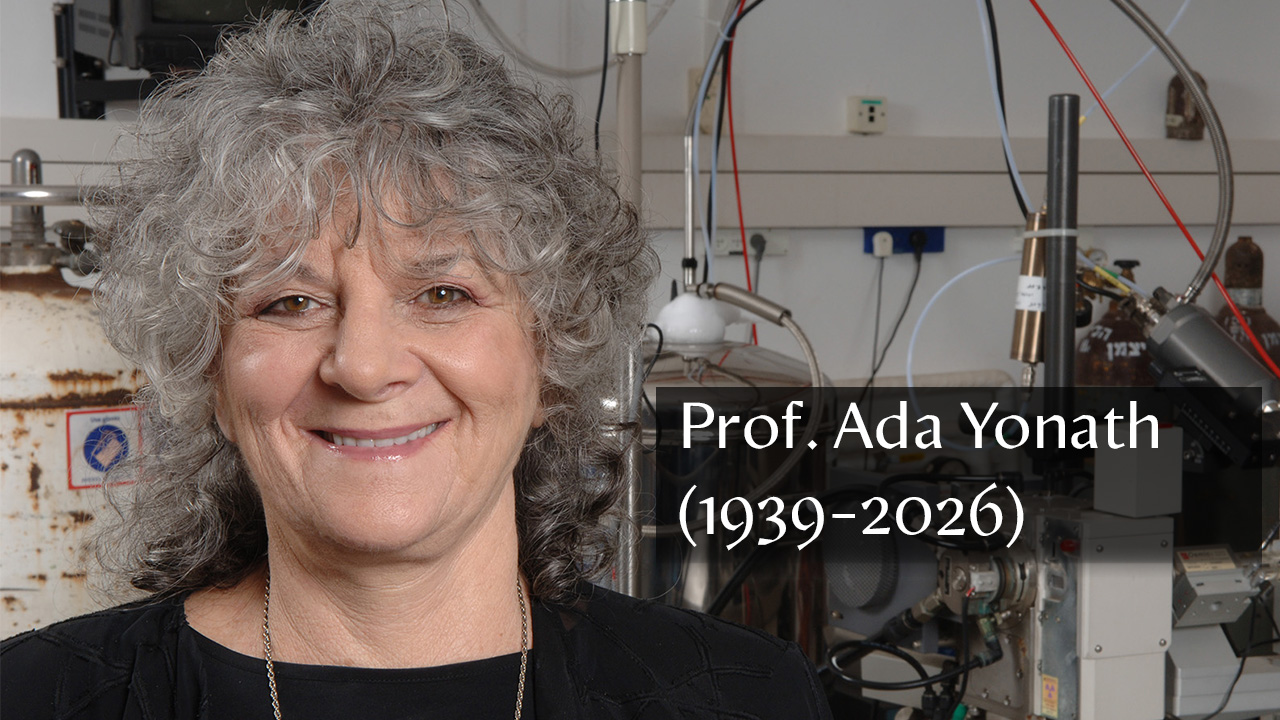
Ada Yonath, the crystallographer who shared the 2009 Nobel prize in chemistry for mapping the ribosome, has died aged 87. She spent almost two decades proving that the cell's protein factories could be crystallised and solved in three dimensions.
The Scientist · Science desk
What happened
- Ribosomes can be as small as 20 nanometres across, irregular in shape and without internal symmetry, which is why many scientists expected her project to fail.
- She needed more than 25,000 attempts before her ribosome crystals finally worked in the mid-1980s.
- In 2001 and 2002 her team mapped a bacterial ribosome in three dimensions.
- She shared the 2009 chemistry prize with Venkatraman Ramakrishnan and Thomas Steitz, and was only the fourth woman to receive it.
- She demonstrated how more than 20 antibiotics function at the ribosome.
Why it matters
- capability Drug designers can work out where an antibiotic will bind on a bacterial ribosome and alter it to spare human ribosomes, in a field where discovery had been hit-and-miss.
- precedent The crystal-freezing method she was early to make work now has its own name, cryo bio-crystallography, so later labs working on fragile molecules start with a tool she had to build.
- cost The payoff took about 30 years from the polar bear article to the prize, a time cost any lab taking on a target its peers dismiss should plan for.
The idea came to her while she was recovering from an accident. In the late 1970s Yonath was laid up after a bicycle accident and doing some "easier" reading [12]. She was then a young scientist at the Weizmann Institute of Science in Rehovot, Israel. An article on polar bears told her that the animals pack their ribosomes in an orderly way in their cells before hibernating [12]. "These stay intact and functional for months. So, if polar bears knew how to do it, we could too," she reasoned, according to the Guardian [13].
She chose her organism to get around the ribosome's fragility. Unlike other parts of the cell, ribosomes have no protective outer membrane and are easily damaged [14]. She reasoned that organisms from harsh environments would have hardier ribosomes that could better survive crystallisation. So she chose Geobacillus stearothermophilus, a bacterium found around thermal vents and in desert sands [14]. Once she had crystals, she froze them at minus 185 degrees Celsius to stabilise their internal structure and protect them from the X-rays [16]. About 15 years separated those first crystals, in the mid-1980s, from the finished three-dimensional maps of 2001 and 2002 [19].
The Nobel committee's citation tied the work to "the development of novel antibiotic drugs in the ongoing medical struggle against ever emerging drug resistance among bacterial pathogens" [7]. Yonath also studied how antibiotic resistance might be overcome, and the Guardian writes that her work paved the way for new products [10]. The obituary does not name a drug that reached patients as a result.
Yonath was born in Jerusalem into an Orthodox Jewish family. Her parents had left Poland in 1933 for Palestine, then under British mandate [8]. Her father, the rabbi and grocer Hillel Lifshitz, died when she was 11, and her mother moved the family to Tel Aviv [8]. At the fee-paying Tichon Hadash high school she taught maths lessons in lieu of fees [8]. After two years of military service she studied chemistry at the Hebrew University, graduating in 1962 [9].
She described the reception her project got in plain terms. "I was met with disbelief, even ridicule in the international scientific community," she said later. "I was called a dreamer, a fantasist, even the village idiot. But when I succeeded, it created an overwhelming internal joy and those who once called me crazy or stupid became supporters." [4]
We think her career is good evidence that a structural target written off as intractable can repay years of patient work, on two conditions. The first is that it is one case. James Watson, one of the discoverers of the DNA double helix, tried to solve the same structure and failed [3], and one success cannot tell anyone how often bets this long end that way. The second is that, on this evidence, the scientific payoff is better documented than the clinical one.
What to watch
- Any antibiotic in clinical use or trials that its developers trace directly to Yonath's ribosome structures; that would document the medical payoff the obituary describes.
- Statements from the Weizmann Institute on her death and on whether her group's work on overcoming antibiotic resistance continues.
Clarity's read
What the record supports and how the coverage leans. The claims behind it follow.
Reality
- Evidence60
- Adoption
- Insufficient
- Hype gap+10
- Incentives
- Insufficient
- Confidence65
Claim ledger
Ranked by verification strength, evidence, and original report placement.
- [1]
Yonath was awarded the 2009 Nobel prize in chemistry, shared with biologist Venkatraman Ramakrishnan and biochemist Thomas Steitz; she was only the fourth woman to receive it.
ReportedSupportedSource: Guardian obituary2 sources— create a free account to open themView cited source - [2]
Many scientists believed her effort to map the ribosome was fruitless because ribosomes are so small, sometimes only 20 nanometres in diameter, irregular in shape and lacking internal symmetry.
ReportedSupportedSource: Guardian obituary2 sources— create a free account to open themView cited source - [3]
James Watson, one of the Nobel prizewinning discoverers of the double-helix structure of DNA, had tried and failed to map the ribosome's structure.
ReportedSupportedSource: Guardian obituary2 sources— create a free account to open themView cited source - [4]
"I was met with disbelief, even ridicule in the international scientific community. I was called a dreamer, a fantasist, even the village idiot. But when I succeeded, it created an overwhelming internal joy and those who once called me crazy or stupid became supporters."
ReportedSupportedSource: Ada Yonath, quoted in the Guardian obituary2 sources— create a free account to open themView cited source - [5]
Many antibiotics work by binding to sites on a bacterium's ribosome; previously making antibiotics was hit-and-miss because they often attacked human ribosomes too; with knowledge of ribosome structures, scientists could deduce where an antibiotic would bind and alter the drug accordingly.
ReportedSupportedSource: Guardian obituary2 sources— create a free account to open themView cited source - [6]
Yonath demonstrated how more than 20 antibiotics function.
ReportedSupportedSource: Guardian obituary2 sources— create a free account to open themView cited source - [7]
The Nobel citation highlighted "the development of novel antibiotic drugs in the ongoing medical struggle against ever emerging drug resistance among bacterial pathogens".
ReportedSupportedSource: Nobel committee citation, quoted in the Guardian obituary2 sources— create a free account to open themView cited source - [8]
Yonath was born in Jerusalem into an Orthodox Jewish family; her parents emigrated from Poland to British-mandated Palestine in 1933; her father, Hillel Lifshitz, a rabbi and grocer, died when she was 11; her mother moved the family to Tel Aviv; at the fee-paying Tichon Hadash high school she taught maths lessons in lieu of fees.
ReportedSupportedSource: Guardian obituary2 sources— create a free account to open themView cited source - [9]
In 1959, after two years of mandatory military service, she took a chemistry degree at the Hebrew University in Jerusalem, graduating in 1962.
ReportedSupportedSource: Guardian obituary2 sources— create a free account to open themView cited source - [10]
Yonath studied how antibiotic resistance might be overcome, and her work paved the way for new products.
ReportedSupportedSource: Guardian obituary2 sources— create a free account to open themView cited source - [11]
Ada Yonath, crystallographer and biochemist, has died aged 87.
- [12]
In the late 1970s, laid up after a bicycle accident and doing some 'easier' reading, Yonath, then a young scientist at the Weizmann Institute of Science in Rehovot, Israel, read that polar bears pack their ribosomes in an orderly way in their cells before hibernating.
- [13]
"These stay intact and functional for months. So, if polar bears knew how to do it, we could too."
- [14]
Ribosomes are fragile, lacking an outer protective membrane; Yonath reasoned that ribosomes of organisms living in harsh conditions would be hardier and better able to survive crystallisation, and attempted to crystallise the thermophile Geobacillus stearothermophilus, found around thermal vents and in desert sands.
- [15]
It took more than 25,000 attempts, but Yonath succeeded with crystallisation in the mid-1980s.
- [16]
Yonath froze the samples at -185C to stabilise internal structure and protect from X-rays, a technique she was an early successful pioneer of, now known as cryo bio-crystallography.
- [17]
In 2001 and 2002, after almost two decades of research, Yonath's team mapped the bacteria's ribosome in three dimensions.
- [18]
Roughly 30 years passed between the late-1970s polar bear article that started the project and the 2009 Nobel prize.
- [19]
About 15 years separated the first successful crystals in the mid-1980s and the 2001-2002 three-dimensional maps.
Sources
1 independent publisher whose own reporting we read for this story.
- theguardian.comAda Yonath obituary
1 article · October 9, 2026
Topics and entities
Follow any of these and your For You feed starts watching them — no settings page required.
Topics
- Structural BiologyFollow
- Nobel Prize in ChemistryFollow
- Antibiotic resistanceFollow
- RibosomeFollow
Entities
- Ada YonathFollow
- Weizmann Institute of ScienceFollow
- Venkatraman RamakrishnanFollow
- Thomas SteitzFollow
- James WatsonFollow
- Geobacillus stearothermophilusFollow
- The Hebrew University of JerusalemFollow
- Max Planck Institute for Molecular GeneticsFollow