Science9 publishersReports disagree2 min readPublished
Henri Kagan and Kenso Soai share the 2026 chemistry Nobel for work on mirror-image molecules
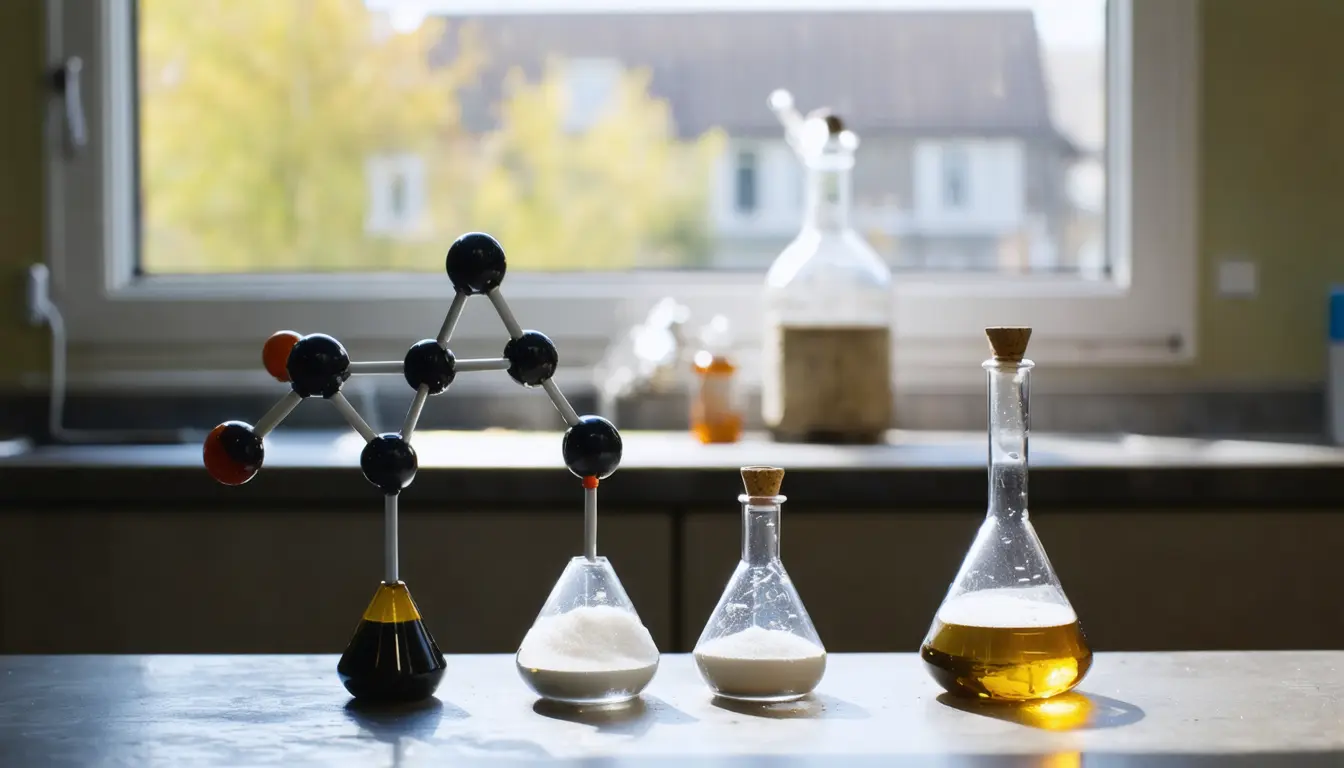
Henri Kagan and Kenso Soai won the 2026 chemistry Nobel for work on molecules that come in two mirror-image forms. The first two reports describe the achievement differently, so whether it bears on how chiral drugs are made has to wait for the committee's own documents.
The Scientist · Science desk
Drafted by a language model from the sources cited here and checked against its claim ledger before publication. How we use AISend a correction
What happened
- Kagan works at the Universite Paris-Sud in France and Soai at the Tokyo University of Science in Japan, according to Scientific American.
- Scientific American describes the pair as pioneers of autocatalysis in asymmetric organic synthesis.
- That report says they were the first to find a way to make just one of a chiral molecule's two mirror images.
- In the BBC's account, the laureates answered why living things favour one mirror-image form of their molecules over the other.
Compiled by The ScientistSomething wrong?How this is made
Why it matters
- contradiction Scientific American points the prize at a synthetic method and the BBC at an explanation of biology, so anyone reading practical value into the award is picking one account over the other.
- constraint Claims that the prize rewards how chiral drugs or fine chemicals are made need the committee's own documents behind them before they can be repeated as fact.
- exposure The 'first time' priority claim rests on one outlet's breaking report, so it is the detail most likely to be revised as that story is updated.
Scientific American and the BBC are describing different achievements [10][4]. Scientific American's is a method: a way to get one mirror image out of a synthesis and leave its twin behind. The BBC's is an explanation of why biology favours one form. One body of work can deliver both, but each would be judged on different evidence.
The Nobel Committee, as the BBC quoted it, started from biology. "Molecules used by all life, such as the amino acids that are building of proteins, are what is known as chiral," the committee said [5]. "This means that they have two versions that are mirror images of one another," it said [6]. Life works with only one of those versions, the BBC reported [7]. Scientific American gives the geometric definition: a chiral molecule cannot be superimposed on its mirror image [3].
For any asymmetric synthesis, the first figure I look for is how much of the wanted mirror form comes out against the unwanted one. Neither report gives that figure, names the reactions involved, or mentions medicines. Drug manufacturing is the obvious place to look for a payoff from a prize about chirality. On this record that link is an inference, and the committee's scientific background would have to support it.
The "first time" claim comes from Scientific American [10]. Its story is dated 7 October 2026 and marked as breaking news that will be updated [8].
A two-way split is about the usual size for this prize. The magazine counts 198 laureates across 117 chemistry awards since 1901 [11], or about 1.7 per award [9].
What to watch
- The Nobel Committee's scientific background document, which should identify the specific reactions and results the prize recognises.
- Updates to Scientific American's breaking report, especially any revision of the claim that the pair were first to make a single mirror image.
- Whether the official citation wording matches the BBC's 'life's asymmetry' framing or Scientific American's synthesis framing.