Accenture's CTO puts large enterprises truly rebuilt around AI at 'close to zero'
Accenture CTO Marc Warner said the number of large enterprises truly reinvented around AI is "basically close to zero". Its own research, as Crypto Briefing reported it, puts the share of firms with AI-led operations at 16% for 2024, so the answer turns on what counts as rebuilt.
The Investor · Invest desk
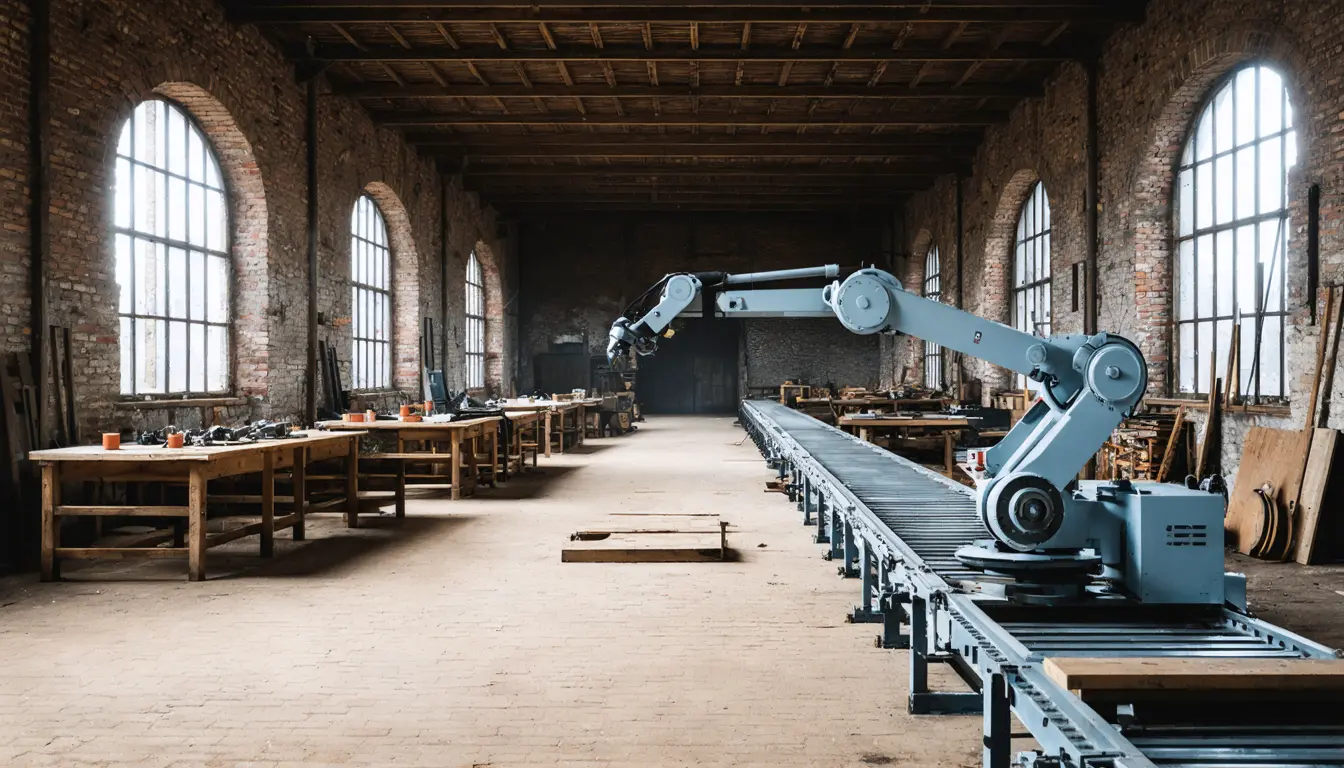
According to Accenture's research as reported by Crypto Briefing, the share of firms with fully modernized, AI-led operations rose from 9% in 2023 to 16% in 2024. These figures are contested.
| Measure | Value | As of | Claim |
|---|---|---|---|
| AI-led firms, per Accenture | 9% of firms | 2023 | 19 |
| AI-led firms, per Accenture | 16% of firms | 2024 | 19 |
What happened
- Warner said most companies have put AI into peripheral work such as marketing, meeting notes and transcription, with coding perhaps a little different because its returns can be measured.
- Mastercard's Greg Ulrich said the biggest returns come from redesigning whole workflows, and that speeding up one step in an 80-step process just builds a backlog at the next.
- Warner called AI transformations "politics projects" and said he had thought of them as technology projects until recently.
- Accenture's research, as Crypto Briefing reported it, found mature AI-led firms posted 2.5x higher revenue growth than less mature peers between 2019 and 2023.
Why it matters
- What it costs cost Companies are paying for edge deployments that cannot change an industry's economics, which Warner said requires targeting core processes that are risky.
- Who has to decide decision Anyone weighing the diagnosis is weighing a seller's view: Accenture sponsored the Fortune event where Warner spoke and sells AI services to the companies he described.
- What it limits constraint Ulrich said tools Mastercard built about a year ago are already "quaint", so a redesign that takes longer than a year is built around tooling that has moved on.
Both figures can be true. Warner said the number of large enterprises or government processes "that have been really, truly reinvented with AI at the absolute core is basically close to zero" [1]. The survey's category is fully modernized, AI-led operations, and it rose from 9% in 2023 to 16% in 2024 [19], a gain of 7 points [21]. We think that category is the wider one and that few firms in it have rebuilt a core process. Two other readings are open: Warner was rounding for effect, or the survey sample is not the large enterprises he meant. The reporting does not define either term.
Ulrich's backlog example has a number inside it. One step in an 80-step process is 1.25% of the sequence [16], and if the steps take equal time the other 98.75% still runs at its old pace until someone redraws it. Ulrich put the constraint in his own words: "The AI agent to automate a piece of this isn't... the long pole in the tent for a lot of this," he said. "It's the rethinking. It's the remapping." [8]
AXA's target is €500 million to €700 million a year of recurring pre-tax value by 2029 [10], or rather €1.25 million to €1.75 million for each of the 400 use cases it started with [17], if every one had survived. They did not: Caillat said the insurer started with about 400 and then narrowed its focus [9], so each remaining case has to carry more. Any interim figure AXA gives would be the first test of whether the value is building toward 2029.
Accenture's own book is growing in the same direction. Its revenue from generative and agentic AI tripled to $2.7 billion [13], from roughly $0.9 billion before [18], and its AI and data workforce nearly doubled over two years to about 77,000 [14]. The window for the growth gap in its research, 2019 to 2023, ends before any return on 2024 spending could show in it [20]. Crypto Briefing, which reported the research, noted that the correlation does not prove AI alone caused the outperformance, since well-run companies may simply be better at adopting new tools [3].
We think the bottleneck is organizational. The evidence for that is executives' accounts from Mastercard and AXA, and the counter-thesis sits in Warner's own remarks: he said he still sees the AI builds themselves as technology projects [6]. If core processes are risky because the models are not yet reliable enough, sponsorship and remapping will not fix it, and a company that redraws a core workflow would still book edge-sized returns. That result would prove the view wrong. Redesigns will also be built on tooling that keeps changing, since Warner said that, by Accenture's calculations, the pace shows no sign of slowing until something approaching 2030 [12].
What to watch
- Any interim figure AXA publishes against its EUR 500 million to EUR 700 million recurring-value target for 2029.
- Whether a company that has redrawn a core workflow reports returns no larger than edge deployments, which would point to the software and not the organization.
- Whether Accenture's generative and agentic AI bookings, which almost doubled, keep rising once the Reinvention Services structure takes effect in October 2026.
Information, not investment advice. This story is general information about companies and markets, drawn from cited reporting. It is not a recommendation to buy, sell or hold any security; check the cited sources before acting.
Clarity's read
What the record supports and how the coverage leans. The claims behind it follow.
Reality
- Evidence35
- Adoption25
- Hype gap+15
- Incentives80
- Confidence70
Claim ledger
Ranked by verification strength, evidence, and original report placement.
- [1]
Marc Warner, Accenture's global chief technology officer, said during a Fortune Brainstorm AI virtual event that the number of large enterprises or government processes "that have been really, truly reinvented with AI at the absolute core is basically close to zero."
- [2]
Accenture is a founding partner of Fortune's Brainstorm AI events and sponsored the event at which Warner spoke.
- [3]
Crypto Briefing noted that the research comes from a firm that profits when clients decide they need to transform, and that the correlation between mature AI operations and higher revenue growth does not prove AI alone caused the outperformance, since well-run companies may simply be better at adopting new tools.
- [4]
Warner said most companies have put AI in peripheral work such as marketing, meeting notes and transcription; coding is perhaps a little different because returns there can be measured.
- [5]
Warner said changing the economics of an industry means targeting core business processes, which are risky.
- [6]
Warner called AI transformations "politics projects" and said he had thought of them as technology projects until recently; he said he still sees the AI builds themselves as technology projects.
- [7]
Mastercard's Greg Ulrich said the biggest returns come from redesigning whole workflows, and described a trap: speed up one step in an 80-step process and the next step simply develops a backlog.
- [8]
"The AI agent to automate a piece of this isn't... the long pole in the tent for a lot of this," Ulrich said. "It's the rethinking. It's the remapping."
- [9]
AXA's Matthieu Caillat said the insurer started with about 400 AI use cases to build enthusiasm, then narrowed its focus.
- [10]
Caillat said AXA's plan for 2027 to 2029 targets EUR 500 million to EUR 700 million a year in recurring pre-tax value from AI by 2029.
- [11]
Ulrich said consulting tools Mastercard built about a year ago are now "quaint, and just not that useful today," so the company is rebuilding them.
- [12]
Warner said that, by Accenture's calculations, the pace of AI progress shows no sign of slowing until something approaching 2030, and that energy constraints in the West could start to bite in the early 2030s.
- [13]
Accenture's revenue from generative and agentic AI tripled to $2.7 billion, while bookings in that area almost doubled.
- [14]
Accenture's AI and data workforce nearly doubled over two years to about 77,000 people.
- [15]
Accenture has reorganized its offerings under a unified "Reinvention Services" umbrella, effective October 2026.
- [16]
One step in an 80-step process is 1.25% of the sequence; the other 79 steps are 98.75%.
- [17]
EUR 500 million to EUR 700 million spread over 400 use cases is EUR 1.25 million to EUR 1.75 million per case.
- [18]
Revenue that tripled to $2.7 billion implies roughly $0.9 billion before.
- [19]
Accenture's research found the share of firms with fully modernized, AI-led operations nearly doubled, from 9% in 2023 to 16% in 2024.
- [20]
According to Accenture's findings, organizations with mature AI-led operations posted 2.5x higher revenue growth than less mature peers between 2019 and 2023.
- [21]
The survey share rose 7 percentage points between 2023 and 2024.
Get this ledger inside ChatGPT. Ask about any of our stories and the answer brings its figure, each claim’s verdict and the sources. Free, no account.
Sources
2 independent publishers whose own reporting we read for this story.
- cryptobriefing.comAccenture CTO says few companies have truly reinvented operations with AI
1 article · October 15, 2026
- fortune.com‘Close to zero’: 4 AI chiefs say no companies have truly changed in response to AI — blame ‘politics projects’
1 article · October 15, 2026
Topics and entities
Follow any of these and your For You feed starts watching them — no settings page required.
Topics
- AI accountability and governanceFollow
- Enterprise AI AdoptionFollow
- AI consultingFollow