Aramco office fire comes with 41% of Saudi departures canceled or idle since Oct. 8
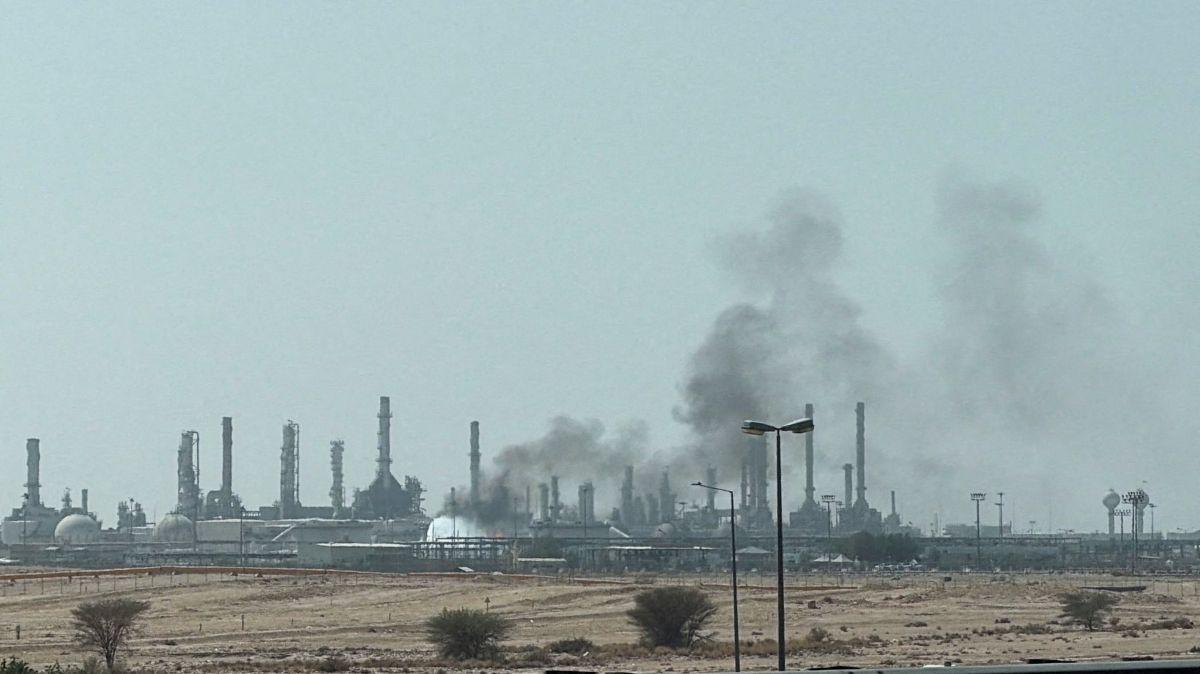
Saudi Arabia's Energy Ministry said a limited fire broke out in an Aramco administrative building in the Eastern Province on Tuesday, with no injuries. The report quantifies flight cancellations but does not mention oil output, so travel is where Gulf-exposed operators can measure risk today.
The Board Room · Leadership desk
Key figures: more than 3,120 flights scheduled to depart Saudi airports since Oct. 8 were canceled or listed as not operating, per Cirium; Cirium's figures imply roughly 7,600 scheduled departures since Oct. 8; the count includes more than 300 flights scheduled to depart Wednesday.
| Figure | Value | Note | Claim |
|---|---|---|---|
| Saudi departures canceled or not operating, over | 3,120 flights | 9 | |
| Scheduled Saudi departures since Oct. 8, roughly | 7,600 flights | implied by Cirium's figures | 16 |
| Wednesday departures in the count, over | 300 flights | included in the Cirium count | 10 |
What happened
- The attack came during an exchange of strikes on Tuesday night between the Iranian-backed Houthis and the Saudi coalition at war with them.
- Saudi Civil Defense said debris from two intercepted Houthi missiles fell on residential areas of Riyadh, injuring four people and damaging 15 homes.
- The Saudi-led coalition carried out new airstrikes on the Houthi-held capital Sanaa on Tuesday, according to the Houthi-run broadcaster Al Masirah and residents.
- Airlines moved a number of planes out of Riyadh on Tuesday on the advice of insurers and government officials, citing the threat of further attacks.
Why it matters
- decision On energy prices the choice is between acting on an office-building fire now and waiting for a report of lost output, and the record so far supports waiting.
- exposure Operators that move staff or time-critical parts through Saudi airports are already exposed, because insurers and airlines are setting the capacity.
- constraint Planning cannot lean on interception: Saudi Arabia is still working out how its air defenses failed to stop a barrage of missiles, so a no-injury report from Aramco does not show the Eastern Province is shielded.
The fire supports a narrower claim than escalation against core oil infrastructure. The ministry named an administrative building, and the ABC News report places the attack inside a night of fighting that it calls "a fresh escalation in the widening Middle East crisis" [1][4]. The ministry statement, as reported, does not say who fired or what struck the building.
Cirium counts more than 3,120 flights scheduled to depart Saudi airports since Oct. 8 as canceled or not operating, about 41% of scheduled departures [9]. That implies roughly 7,600 scheduled departures in the period [16]. The count includes more than 300 flights that had been scheduled for Wednesday [10], and several airlines have suspended service to the kingdom because of Houthi attacks on airports [11].
Osprey Flight Solutions' Matthew Borie, whose firm advises airlines, insurers and countries, said the planes had to be transferred to other Saudi airports so they could keep flying passengers [7]. "It's not abnormal for this to occur especially in this day and age with the types of conflict zone situations that have occurred in the region," Borie said [8]. His comment covered aircraft transfers, not Cirium's count of every scheduled departure over the period.
The other energy target in the record is in Sanaa. The coalition struck the Subaha fuel facility west of the city [18]. Earlier it had urged civilians to leave the Yemeni Oil Company site and nearby storage areas [19]. Maj. Gen. Turki al-Maliki, the coalition's spokesman, accused the Houthis of keeping their missiles and drones at the facility and in its underground fuel depots [20]. The oil company said its storage facilities were empty and that a strike would not affect reserves or supplies for residents [21]. Witnesses said lines of cars formed at some gas stations amid fears of a shortage [22].
The report says it was unclear whether the Yemen strike signaled a military escalation or was a calibrated reply to the recent deadly attacks on Riyadh's airport [23]. Adam Baron, a fellow at the New America institute, said the warning and the attack show "the Saudis' aims of upping the ante and striking deep in the heart of Houthi-controlled territory while attempting to control the narrative by presenting themselves as more careful and humanitarian actors than the Houthis" [24]. He added that it "may be a warning" or "a sign of things to come" [25].
Brig. Gen. Yahya Saree, the Houthis' military spokesman, said in a Telegram post that Riyadh would see a "firm and painful" response to any Saudi attack on Sanaa [12]. Within hours, Saudi Arabia sent out alerts warning of missiles inbound toward Riyadh and the Eastern Province, then quickly said the danger had passed [13]. The report calls the Eastern Province a major oil-producing region [14]. Saree named Riyadh; the Aramco fire was in the Eastern Province [12][1].
In our view, travel and staffing plans this quarter can be set against numbers that exist: Cirium's count and the insurers' advice. Energy-price assumptions can wait for a report that ties an attack to lost output. If a later attack reaches production, the price question arrives with it, and by then the travel decisions will already have been made.
What to watch
- Any Saudi Ministry of Energy or Aramco statement that ties an attack to output or exports at an Eastern Province production site.
- Whether the coalition strikes Sanaa again and whether the Houthis follow Saree's threat with fire on Riyadh or the Eastern Province.
- Cirium's cancellation share and whether the airlines that suspended Saudi service resume it.
Clarity's read
What the record supports and how the coverage leans. The claims behind it follow.
Reality
- Evidence55
- Adoption
- Insufficient
- Hype gap
- Insufficient
- Incentives65
- Confidence58
Claim ledger
Ranked by verification strength, evidence, and original report placement.
- [1]
Saudi Arabia's Ministry of Energy said a limited fire broke out Tuesday in an administrative building at Aramco, described as one of the world's largest oil facilities, that was targeted in an attack in the country's Eastern Province.
- [2]
The ministry said no injuries were reported.
- [3]
The attack came as the Iranian-backed Houthis and the Saudi coalition fighting them exchanged attacks Tuesday night.
- [4]
The report said the fighting marked a fresh escalation in the widening Middle East crisis.
- [5]
Saudi Arabia's Civil Defense said debris from two intercepted Houthi missiles fell on residential areas in Riyadh, injuring four people and damaging 15 homes.
- [6]
Airlines moved a number of their planes out of Riyadh on Tuesday on the advice of insurers and government officials because of the threat of additional attacks.
- [7]
Matthew Borie of Osprey Flight Solutions, whose company advises airlines, insurers and countries on flight threats, said the planes needed to be transferred to other airports in the country so airlines can keep flying passengers to their destinations.
- [8]
"It's not abnormal for this to occur especially in this day and age with the types of conflict zone situations that have occurred in the region," Borie said.
- [9]
More than 3,120 flights scheduled to depart from airports across Saudi Arabia since Oct. 8 have been canceled or listed as not operating, about 41% of scheduled departures, according to Cirium.
- [10]
The Cirium count includes more than 300 flights that had been scheduled to depart Wednesday.
- [11]
Several airlines have suspended service to the kingdom because of the Houthi attacks on airports.
- [12]
Houthi military spokesman Brig. Gen. Yahya Saree said on Telegram that any Saudi attack on Sanaa would be met with a "firm and painful" response in the Saudi capital, Riyadh.
- [13]
Hours after Saree's statement, Saudi Arabia issued alerts for incoming missiles heading for Riyadh and the Eastern Province but quickly said the danger had passed.
- [14]
The Eastern Province is a major oil-producing region.
- [15]
Saudi Arabia is still scrambling to determine how its air defenses failed to intercept a barrage of missiles.
- [16]
Cirium's figures imply roughly 7,600 scheduled Saudi departures since Oct. 8.
- [17]
The Saudi-led coalition carried out new airstrikes Tuesday on the Houthi-held Yemeni capital Sanaa, the Houthi-run broadcaster Al Masirah and residents said.
- [18]
Witnesses reported strong explosions in Sanaa hours after the coalition struck the Subaha fuel facility west of the city.
- [19]
In a rare statement earlier, the coalition had urged civilians in Sanaa to leave the Yemeni Oil Company site, on a hill overlooking the capital, and nearby storage areas ahead of a possible strike.
- [20]
Coalition spokesman Maj. Gen. Turki al-Maliki accused the Houthis of using the facility and its underground fuel depots for their arsenal of missiles and drones.
- [21]
The Yemeni oil company said its storage facilities were empty and that a Saudi strike would not affect oil reserves or supplies for residents.
- [22]
Witnesses in Sanaa said lines of cars formed at some gas stations amid fears of a shortage.
- [23]
It was unclear whether the Tuesday strike in Yemen was a signal of military escalation or a carefully measured response to recent deadly attacks on the Riyadh airport.
- [24]
Adam Baron, a fellow at the Washington-based New America institute, said the warning and the attack show "the Saudis' aims of upping the ante and striking deep in the heart of Houthi-controlled territory while attempting to control the narrative by presenting themselves as more careful and humanitarian actors than the Houthis."
- [25]
Baron said: "It may be a warning -- or it may be a sign of things to come."
Sources
2 independent publishers whose own reporting we read for this story.
- abcnews.comSaudi Ministry of Energy reports limited fire in building at Aramco compound targeted in attack
1 article · October 13, 2026
- scmp.comAramco facility hit as Houthis and Saudi coalition exchange attacks
1 article · October 13, 2026
Topics and entities
Follow any of these and your For You feed starts watching them — no settings page required.
Topics
- Saudi-Houthi conflictFollow
- Red Sea shippingFollow
- Aviation DisruptionFollow
- Gulf energy infrastructureFollow