InvestIndependently confirmed2 publishers2 min readPublished
BP, Shell and TotalEnergies chiefs skip Riyadh's energy congress after the Houthi airport strike
Saudi Arabia kept its World Energy Congress running in Riyadh after Houthi strikes that closed the airport killed 13 and injured over 300. Operators with Gulf travel or freight exposure have a closed airport to plan around and a wider closure to price.
The Investor · Invest desk
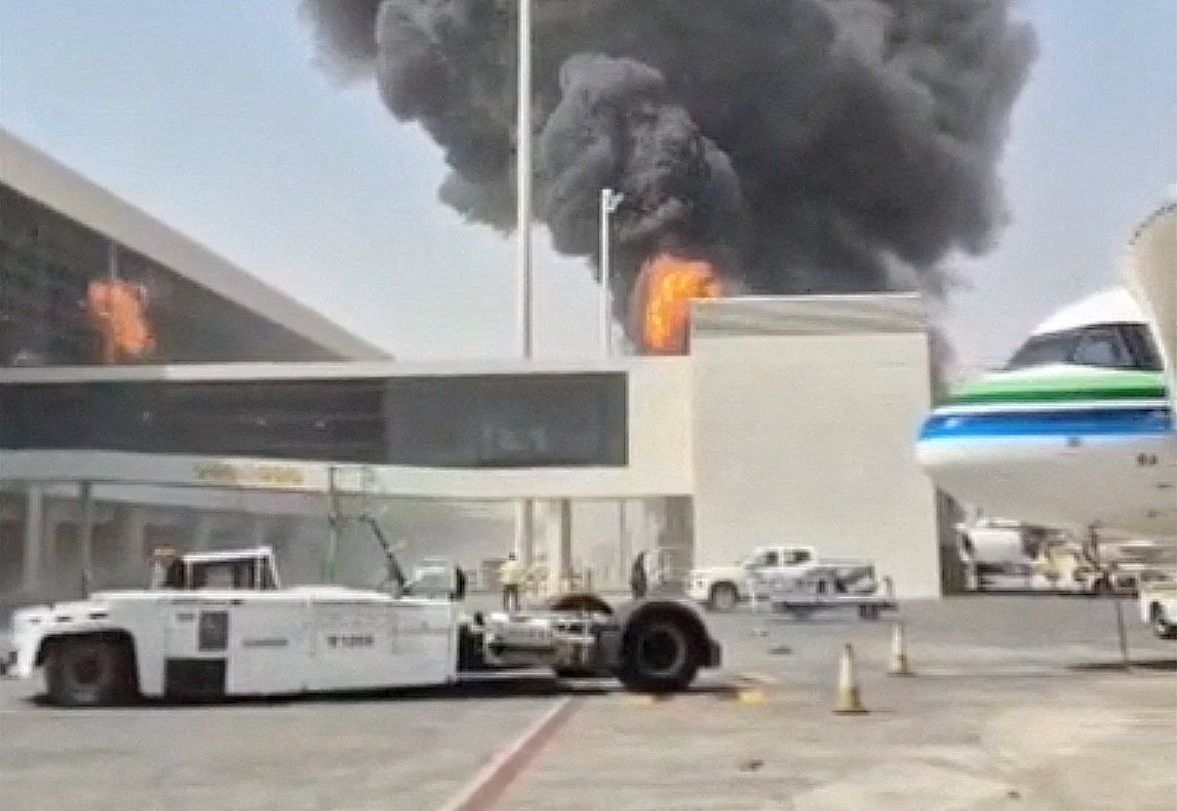
Key figures: per Crypto Briefing, unconfirmed, the strikes on King Khalid International Airport in Riyadh killed 13 people and injured over 300. Separately, four named withdrawals from the Riyadh congress: three chief executives plus the US Energy Secretary.
| Figure | Value | Note | Claim |
|---|---|---|---|
| Killed in the strikes, per Crypto Briefing | 13 people | unconfirmed | 15 |
| Injured in the strikes, over, per Crypto Briefing | 300 people | unconfirmed | 15 |
| Named withdrawals from the congress | 4 withdrawals | three CEOs plus the US Energy Secretary | 13 |
What happened
- Semafor reported that the chief executives of BP, Shell and TotalEnergies, and US Energy Secretary Chris Wright, dropped out of the Riyadh congress because of the strikes.
- The withdrawals left a thinner-than-expected crowd, mostly local executives, to hear the kingdom ask for deeper international cooperation on supplies and trade routes.
- Oil prices ticked down on Tuesday as Saudi oil executives sought to reassure the market after the airport attack.
- Energy Minister Prince Abdulaziz bin Salman has emphasized that the kingdom's energy and industrial-development agenda remains on track.
- Crypto Briefing said market pricing keeps the odds of a nationwide airspace closure by October 31 low, while the year-end likelihood has risen notably.
Why it matters
- contradiction Crude took the reassurance and the executives did not, so the oil price is a poor gauge of how foreign investors judge Gulf security.
- exposure A formal nationwide airspace closure would extend the airport's loss to the whole kingdom, so a Gulf travel or freight plan needs a version that survives it.
- constraint Supply-security cooperation is the Saudi ask, and it needs foreign executives who have just shown that one strike is enough to cancel their travel.
The year-end number is less informative than it sounds. Counting from Oct 13, the date of Semafor's report [3], the Oct 31 window is 18 days and the year-end window is 79 [11]. That is about 4.4 times longer [12], so a market on closure by year-end has to sit at or above one on closure by Oct 31 even if nothing else happens. The signal is the year-end figure against its own earlier level, and Crypto Briefing did not publish the market, the price or the size of the move [16].
The paths from here split. The strikes may stop and the airport reopen; they may spread to other major airports, which Crypto Briefing lists as a development to watch [4]; or they may reach oil infrastructure. We think the exposure worth reviewing is the movement of people and cargo, and that holds in the first two paths and fails in the third, where oil takes the loss too. If the airport reopens and the year-end figure drifts back toward the October one, the review will have cost some staff time and nothing more.
Aramco's chief executive put the limit on Saudi self-reliance in one sentence. Saudi Arabia can build more pipelines and boost storage capacity [9], but "no one nation, even one as capable and confident as ours, can safeguard them alone," Aramco chief executive Amin Nasser said [10]. Semafor places that appeal inside a longer trend: Gulf energy companies increasingly treat international firms and global investors as integral to plans to lock in customers for their hydrocarbon exports, invest in their infrastructure and bind other states into their security [14].
For operators the allocation is narrow. A review would cover which itineraries and shipments depend on Riyadh being open, and what the fallback costs per day if the airport stays shut and the airspace follows. Plans for Gulf investment need no rewrite on this evidence; plans that assume the airport works do. We'd expect the firms that skipped the congress to have run that check already, and the four named withdrawals [13] are the only sign in the sources of anyone acting on it.
What to watch
- Statements on airspace status from the Saudi General Authority of Civil Aviation and Saudi Air Navigation Services.
- Further Houthi strikes on other major airports, or on production or export infrastructure.
- Whether the withdrawn chiefs and ministers reschedule their Riyadh trips.
Clarity's read
What the record supports and how the coverage leans. The claims behind it follow.
Reality
- Evidence45
- Adoption
- Insufficient
- Hype gap+10
- Incentives60
- Confidence50
Claim ledger
Ranked by verification strength, evidence, and original report placement.
- [1]
Saudi Arabia is hosting the World Energy Congress in Riyadh despite recent missile attacks claimed by the Iran-aligned Houthi movement.
ReportedSupportedSource: Crypto Briefing2 sources— create a free account to open themView cited source - [2]
Saudi Energy Minister Prince Abdulaziz bin Salman has emphasized that the kingdom's energy and industrial-development agenda remains on track.
ReportedSupportedSource: Crypto Briefing2 sources— create a free account to open themView cited source - [3]
Semafor's report on the Riyadh congress is dated October 13, 2026, a Tuesday.
ReportedSupportedSource: Semafor article date2 sources— create a free account to open themView cited source - [4]
Crypto Briefing lists further missile strikes on major airports among the key developments to watch.
- [5]
Statements from the Saudi General Authority of Civil Aviation and Saudi Air Navigation Services are indicators of potential airspace closures.
- [6]
Oil prices ticked down on Tuesday as Saudi oil executives sought to reassure the market following the attack on the capital's airport.
- [7]
The CEOs of BP, Shell and TotalEnergies, along with international ministers including US Energy Secretary Chris Wright, dropped out of the Riyadh congress due to the strikes.
- [8]
The withdrawals left a thinner-than-expected crowd, mostly local executives, to hear the kingdom seek deeper international cooperation to secure energy supplies and trade routes.
- [9]
Saudi Arabia can build more pipelines and boost storage capacity.
- [10]
"no one nation, even one as capable and confident as ours, can safeguard them alone," Aramco chief executive Amin Nasser said.
- [11]
Counting from October 13, the October 31 window is 18 days and the December 31 window is 79 days.
- [12]
The year-end window is about 4.4 times as long as the October 31 window.
- [13]
Four named withdrawals: three chief executives (BP, Shell, TotalEnergies) plus US Energy Secretary Chris Wright.
- [14]
Gulf energy companies increasingly see international energy firms and global investors as integral to their plans to lock in customers for hydrocarbon exports, invest in infrastructure, and bind other states into their security.
- [15]
King Khalid International Airport in Riyadh remains closed after strikes that killed 13 people and injured over 300.
ReportedInsufficientSource: Crypto Briefing2 sources— create a free account to open themView cited source - [16]
Market pricing shows the immediate odds of a nationwide airspace closure by October 31 remain low, while the likelihood of a formal closure by the end of the year has seen a notable increase.
ReportedInsufficientSource: Crypto Briefing, describing market pricing without naming the market or giving pricesView cited source
Sources
2 independent publishers whose own reporting we read for this story.
- cryptobriefing.comSaudi Arabia hosts energy summit amid Yemen missile threats
1 article · October 13, 2026
- semafor.comSaudi attacks shake the confidence of foreign investors
1 article · October 13, 2026
Topics and entities
Follow any of these and your For You feed starts watching them — no settings page required.
Topics
- Aviation riskFollow
- Oil MarketsFollow
- Gulf securityFollow
Entities
- World Petroleum CouncilFollow
- Abdulaziz bin Salman Al SaudFollow
- TotalEnergiesFollow
- Houthi MovementFollow
- ShellFollow
- Amin NasserFollow
- BPFollow
- AramcoFollow
- Chris WrightFollow