The $124 trillion transfer pays care providers before it pays Gen X
About one in three American households ever inherits anything, so the $46,200 average that retirement plans quietly lean on describes a household the distribution does not contain, and the middle one receives nothing.
The Investor · Invest desk
What happened
- A Fortune column projects close to $124 trillion of American wealth changing hands by 2048, with about $14 trillion of it reaching Gen X households inside the next ten years.
- The median American who inherits is about 58, an age that keeps rising as parents live longer, so the money lands after tuition and most of a mortgage are behind them.
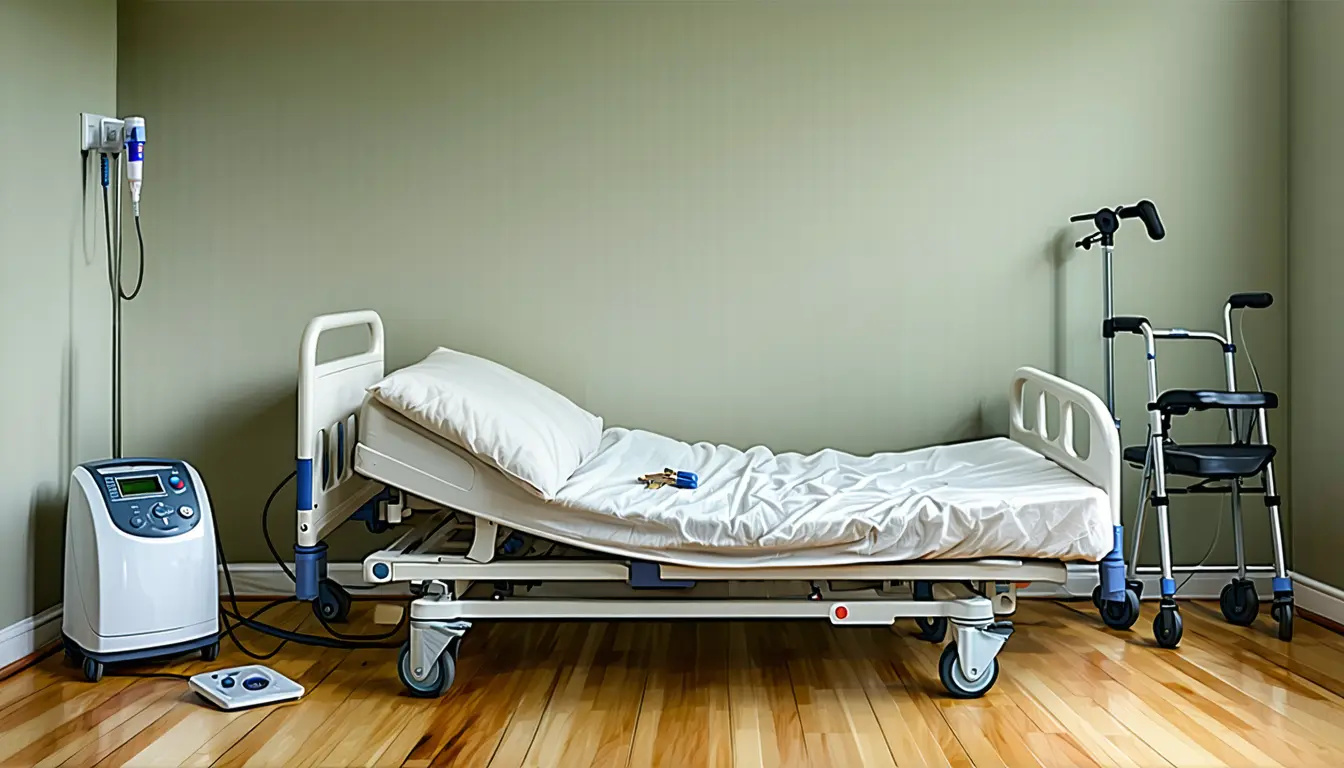
- A private nursing home room now runs a national median near $129,575 a year and assisted living about $74,400, and Medicare does not cover the custodial care that makes up most of a long stay.
Why it matters
- constraint A planning input whose median value is zero cannot be underwritten for a median client, which leaves the savings rate and the number of working years as the only levers a Gen X household can actually pull.
- decision Anyone carrying an unstated inheritance assumption now has to price it at either the recipients-only figure near $138,600 or at nothing, and that choice changes the plan rather than the wording of it.
- exposure The parent's house an heir has mentally earmarked is the same asset the care bill reaches first, so the heir's expectation sits behind a claim whose size nobody in the family ever agreed.
Start with the median, because the mean is the problem. If only about one in three American households ever receives an inheritance [1], then the household in the middle of the distribution receives nothing, and the median American inheritance is zero [13]. The roughly $46,200 average that Federal Reserve data supports [2] is what you get from averaging a lot of zeros against the top percentile's $719,000 [3]; divide that average by the one-in-three receipt rate and the figure for households that actually inherit lands near $138,600 [14], which the column describes, correctly, as a good year of saving rather than a retirement plan [12].
The spread does the rest of the work. Top one per cent households average close to $719,000 received and the bottom half about $9,700 [3][4], call it 74 to one [18], and $9,700 set against a private nursing home room at a national median of $129,575 a year, or about $355 a day, buys roughly 27 days [6][15]. Care sits senior to heirs here, and Medicare does not cover custodial care [8], which is most of what a long stay consists of.
Run the column's ordinary estate. A paid-off $400,000 house and $200,000 in savings, three years of one parent in that private room, and the bill is $388,725, or 65 per cent of everything [9][16]. Substitute assisted living at $74,400 a year [7] and the same three years costs $223,200, 37 per cent of the same estate [17]. The residual is therefore set by the care mix and the length of stay rather than by the size of the estate as the heir imagined it, and because the middle-class estate is usually a house, which cannot be spent in pieces, the funding move is a sale or a loan against it [22]. The column's own conclusion is that the transfer still happens and that it transfers to care providers [10].
The counter-thesis has two decent legs. If your book is the top percentile, then $719,000 arriving at households that were already solvent is real money and the median was never your client [3]; and if stays are short or assisted living rather than skilled nursing, the estate survives largely intact [17]. This is probably wrong in one direction I cannot test from a single piece: all of it is one Fortune column citing Federal Reserve data, written by someone whose career has been building businesses in finance and longevity [11], a position worth disclosing rather than a reason to discount. Note too that inheriting households almost always expect more than they receive, and set the estimate early without revising it down [21], which is the sort of self-reported gap that is easier to describe than to size.
What would prove it wrong: a receipt rate materially above one in three [1], a median inheritance age falling back below 58 [5], or care costs landing somewhere other than the estate [8]. Until one of those turns up, the household that has quietly booked a parent's house into its retirement plan is a household not raising its savings rate, and Gen X comes to this with a fraction of what the boomers had at the same age [23].
What to watch
- Whether the next Federal Reserve survey moves the one-in-three receipt rate in either direction, since the whole median argument rests on it.
- Whether the $129,575 nursing home median rises faster than the house prices that fund it, which decides how much of an estate survives a stay.
- Whether advisors begin writing the inheritance line item down to zero for median clients rather than leaving it unstated.
Clarity's read
What the record supports and how the coverage leans. The claims behind it follow.
Reality
- Evidence42
- Adoption
- Insufficient
- Hype gap+16
- Incentives62
- Confidence46
Claim ledger
Ranked by verification strength, evidence, and original report placement.
- [1]
Only about one in three American households ever receives an inheritance at all.
- [2]
Federal Reserve data puts the average inheritance received across all American households at roughly $46,200.
- [3]
Households in the top one per cent average close to $719,000 received.
- [4]
Households in the bottom half average about $9,700 received.
- [5]
The median American who inherits is about 58 years old, and that median age keeps climbing because parents live longer.
- [6]
A private room in a nursing home runs a national median of about $129,575 a year.
- [7]
Assisted living runs about $74,400 a year.
- [8]
Medicare does not cover custodial care, and custodial care is the bulk of what a long stay involves.
- [9]
On an ordinary estate of a paid-off house worth $400,000 plus $200,000 in savings, three years of nursing care for one parent takes more than half of it, and a second parent or longer stay leaves nothing to pass down.
- [10]
The column concludes that the wealth transfer still happens and that it transfers to care providers.
- [11]
The column's author says they have spent a career building businesses around finance and how long people live.
- [12]
For a median Gen X household, a realistic inheritance is not a retirement plan but a good year of saving, if it comes at all.
- [13]
Because roughly two thirds of American households receive no inheritance, the median American inheritance is zero.
- [14]
Averaged over only the households that do inherit, the mean receipt is about $138,600.
- [15]
At the median nursing home rate of about $355 a day, the bottom half's average inheritance of $9,700 covers about 27 days of care.
- [16]
Three years of a private nursing home room at the median costs $388,725, which is about 65 per cent of a $600,000 estate.
- [17]
Three years of assisted living costs $223,200, or about 37 per cent of the same $600,000 estate.
- [18]
The top one per cent's average receipt is about 74 times the bottom half's.
- [19]
A Fortune column reports that something close to $124 trillion in American wealth is projected to change hands by 2048.
- [20]
About $14 trillion of the projected transfer is expected to reach Gen X households over the next ten years, with Gen X first in line.
- [21]
Households that inherit almost always expect more than they receive, with the estimate formed early and seldom revised downward.
- [22]
For most middle-class families the estate is a house rather than a portfolio, and because a house cannot be spent in pieces, families sell the home or borrow against it when care costs land.
- [23]
Gen X saved a fraction of what the boomers had at the same age.
Get this ledger inside ChatGPT. Ask about any of our stories and the answer brings its figure, each claim’s verdict and the sources. Free, no account.
Sources
1 independent publisher whose own reporting we read for this story.
- fortune.comWhy Gen X should stop planning around an inheritance that may never arrive
1 article · August 30, 2026
Topics and entities
Follow any of these and your For You feed starts watching them — no settings page required.