ProductNot yet confirmed elsewhere1 publisher3 min readPublished
A $22.3m counter-drone contract that buys warning time, not shootdowns
Powerus has been commissioned to wire sensors around Middle East oil and gas fields. The deal detects and classifies; it does not intercept, and nobody has said how many sites it covers.
The Product Desk
What happened
- Powerus has been commissioned for a reported $22.3 million counter-drone detection network covering Middle East oil and gas fields, including hardware, software, installation and maintenance.
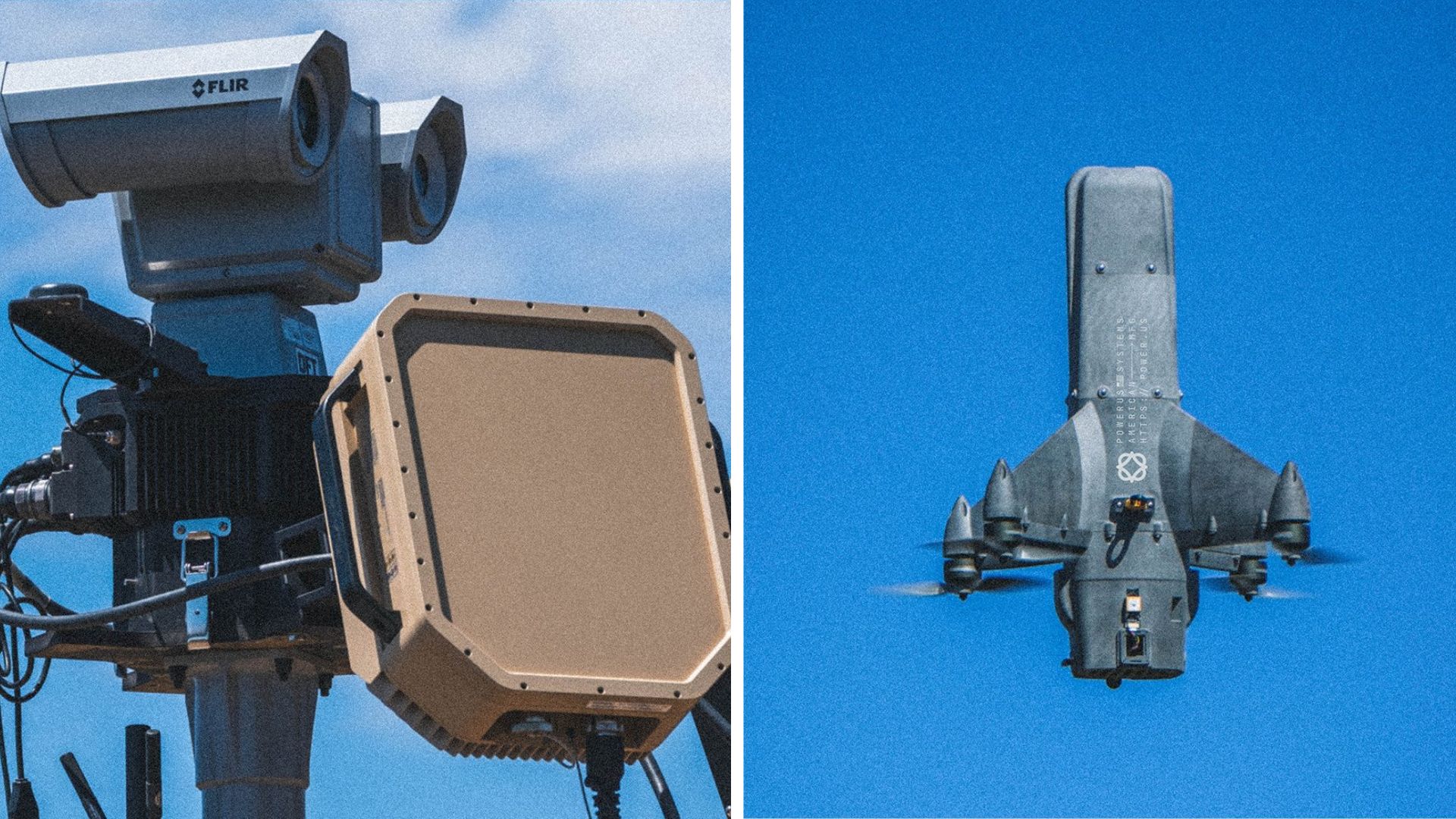
- The build is sensors around one or more sites, fused by software into a single operating picture that tracks airborne objects and their movement.
- The scope is detection and warning; the release mentions no kinetic interception.
- The customer and the country are not named, and Powerus describes the deal as a commercial agreement.
Why it matters
- cost Perimeter air surveillance is being bought on a commercial contract by an asset owner rather than requisitioned from a defence budget, which puts it on an operator's opex line alongside maintenance.
- decision Because the system warns rather than intercepts, the operator must decide to halt production and shelter staff on the strength of a sensor's classification, and wear the cost when the call is wrong.
- capability A civil energy site that already has a fused air picture becomes a plausible customer for a kinetic interceptor later, without re-tendering the sensing layer.
- precedent If Velicovich's read on the market holds, counter-drone vendors will sell detection first and interception as an option, which sets the commercial sequence others copy.
The number that would make this contract legible is the one missing from the release. Powerus has not said how many facilities are covered, how many countries, or what sensors go on the perimeter, and there is no public deployment timetable [12]. So $22.3 million could be a dense net around one very large gas plant or a thin one across several fields in more than one country [1][12]. Spread across the 24 months of maintenance the deal includes, the gross value works out to roughly $929,000 per month of covered term [15]. Whether that is cheap depends on a denominator nobody has published.
What is priceable is the trade the buyer declined. The asymmetry the release leans on is a drone in the tens of thousands of dollars threatening equipment worth hundreds of millions, or drawing a far more expensive missile in reply [13]. This contract does not buy that missile, or any other kinetic answer [10]. At the low end of "tens of thousands," $22.3 million is the sticker price of somewhere between 223 and 2,230 of the airframes the network exists to see coming [16]. Detection-only spending does not escape the exchange-ratio problem. It just moves the loss from ordnance to capital equipment and service contracts.
The reason it can still pencil out is the specific cost structure of a fixed hydrocarbon asset. These sites are large, immobile, hard to conceal, and full of flammable product and high-pressure equipment [5]. An attack that misses can still move prices and force a precautionary closure [6]. In that world, minutes of warning have a cash value independent of whether anything is shot down: a controlled shutdown with people already sheltered is a cheaper event than an uncontrolled one, and it is cheaper still if the operator can rule out a bird before halting production [4][11].
The structure of the deal is worth as much attention as the sum. Powerus says the network can later take Guardian-1, its radar-assisted, operator-controlled interceptor pitched at Shahed-type attack drones [17], and co-founder Brett Velicovich frames the sale as starting with what the customer needs now inside an architecture that expands as requirements do [8]. That is a detection contract sold with a kinetic option attached, to a buyer who is not identified and may be a national oil company, an international major, an infrastructure operator, or an intermediary [18]. The release asserts only that the facilities matter commercially to American energy interests [19].
Velicovich calls the agreement evidence of where the counter-drone market is heading, toward integrated networked protection of critical oil and gas infrastructure [7]. The evidence in front of us supports a narrower reading. One unnamed commercial customer, in a region that has seen Iranian attacks in the Gulf and Ukrainian strikes on Russian energy assets [14], has decided that the first thing worth $22.3 million of its own money is knowing what is inbound.
What to watch
- Whether the customer or host country is ever named, which decides whether this is a national oil company arming its own perimeter or a foreign operator buying inside someone else's airspace...
Clarity's read
What the record supports and how the coverage leans. The claims behind it follow.
Reality
- Evidence26
- Adoption17
- Hype gap+18
- Incentives78
- Confidence33
Claim ledger
Ranked by verification strength, evidence, and original report placement.
- [1]
The contract is reportedly worth $22.3 million and includes hardware, software, installation and 24-hour maintenance.
- [2]
The deal covers installation, commissioning and 24 months of maintenance.
- [3]
The network will consist of sensors around one or more oil and gas sites, with software combining them into one central operating picture, detecting objects in the air and tracking direction and movement.
- [4]
The system is intended to distinguish drones from birds, aircraft and other objects, and possibly identify the drone category.
- [5]
Oil and gas infrastructure is attractive as a target and particularly vulnerable because it tends to be large, fixed and difficult to conceal, and is full of flammable products and high-pressure equipment.
- [6]
Oil and gas sites are economically important enough that even an unsuccessful attack can affect prices and force precautionary closures.
- [7]
Brett Velicovich, Co-founder and President of Powerus, said the commercial contract reflects the direction the company believes the counter-drone market is heading, toward integrated, networked protection of critical oil and gas infrastructure.
ReportedSupportedSource: Brett Velicovich, Powerus2 sources— create a free account to open themView cited source - [8]
Velicovich said Powerus is starting with the capabilities the customer needs today while providing an architecture that can expand as the threat and operational requirements evolve.
ReportedSupportedSource: Brett Velicovich, Powerus2 sources— create a free account to open themView cited source - [9]
U.S.-based Powerus has been commissioned to provide a counter-drone detection network for oil and gas fields in the Middle East.
- [10]
The system appears to be a detection and warning system only; there is no mention of kinetic drone interception capabilities.
- [11]
The system will provide alerts allowing staff to shut down equipment, shelter personnel or call security forces.
- [12]
It is unclear how many facilities and Middle Eastern countries the deal covers, there is little detail on the type of detection sensors, and no deployment timetable is publicly known.
- [13]
A drone costing tens of thousands of dollars can threaten equipment worth hundreds of millions, or force defenders to expend a far more expensive missile intercepting it.
- [14]
Several high-profile drone attacks have occurred in recent years, notably Ukrainian attacks on Russian assets and recent Iranian attacks in the Gulf.
- [15]
Spread across the 24 months of maintenance the deal includes, the $22.3 million gross contract value is about $929,000 per month of covered term.
- [16]
At tens of thousands of dollars per attack drone, the $22.3 million contract equals the purchase price of roughly 223 to 2,230 such drones.
- [17]
Powerus has said the system could later incorporate Guardian-1, a high-speed, radar-assisted, operator-controlled interceptor drone intended particularly for Shahed-type attack drones.
- [18]
Powerus explicitly calls the deal a commercial agreement; neither the customer nor the country is named, and it could involve a Gulf national oil company, an international oil major, an infrastructure operator or an intermediary.
- [19]
The release asserts that the facilities are commercially important to American energy interests.
Sources
1 independent publisher whose own reporting we read for this story.
Topics and entities
Follow any of these and your For You feed starts watching them — no settings page required.
Topics
- Middle East Energy SecurityFollow
- Defense Technology ContractsFollow
- Counter-Drone SystemsFollow
- Sensor Fusion and Airspace AwarenessFollow
- Critical Infrastructure ProtectionFollow