LeadershipNot yet confirmed elsewhere1 publisher2 min readPublished
Cartel drone detections at the US border climb as the military adds sensors
US military officials logged 378 cartel drone detections at the southern border in the past month, a rise they partly credit to having more sensors in place. That leaves the monthly count a weak measure of whether cartels are actually flying more drones.
The Board Room · Leadership desk
What happened
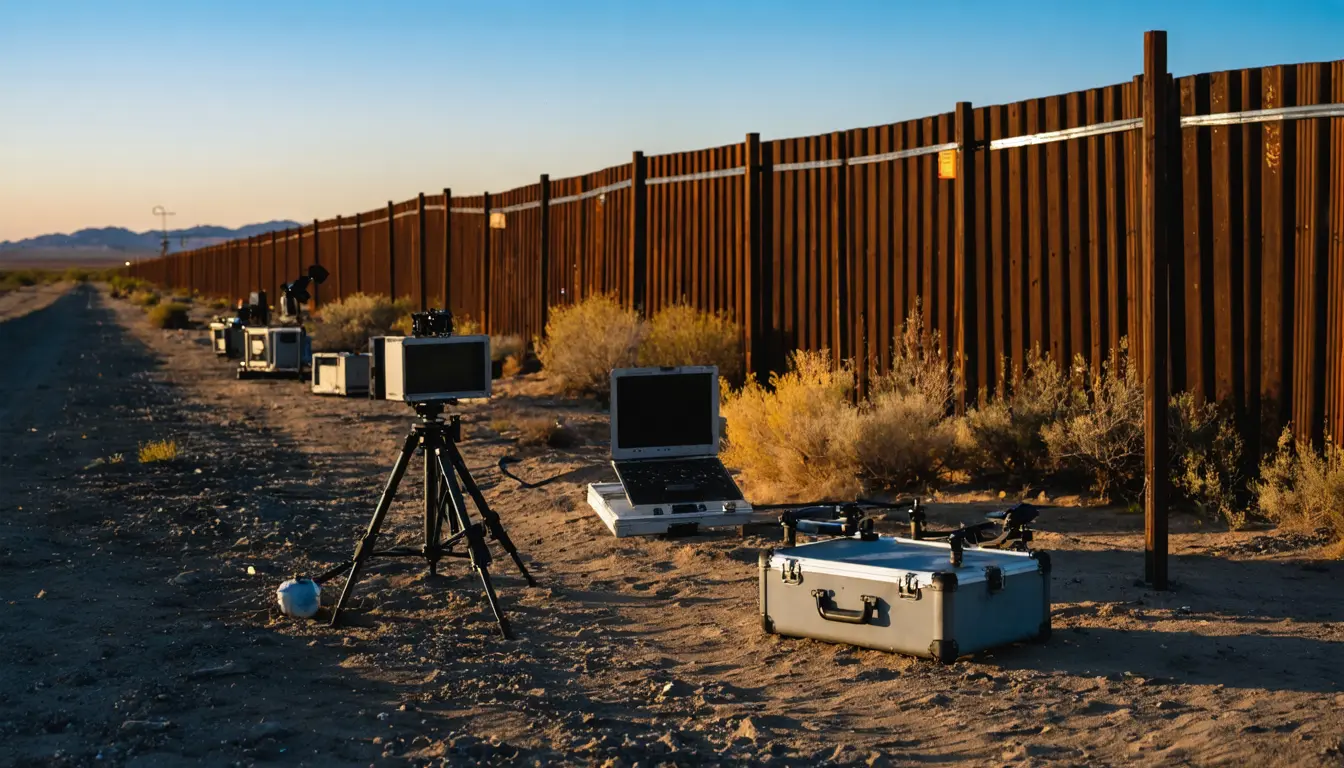
- Northern Command finished its fourth Falcon Peak counter-drone exercise in Arizona late last month, with vendors, the border task force, Homeland Security and an Army-led interagency task force attending.
- Officials say the cartel drones mostly fly surveillance and reconnaissance missions in support of drug trafficking.
- In late August the border task force said it used the Army Multipurpose High Energy Laser to destroy three cartel drones.
- US officials have said no single type of technology will defeat all drones, and current testing is laying groundwork for a larger, layered network of defenses.
Why it matters
- constraint A detection count that rises with sensor coverage cannot by itself justify the next round of spending, because new sensors will push it higher whatever the cartels do.
- decision If no single technology defeats all drones, the hard buying decision becomes integration: how many vendors' sensors and weapons to combine and who is responsible for making them work together.
- cost Lasers move the cost of a kill away from interceptor stocks and toward power generation at the sites where the weapons are fielded.
- precedent Guillot's open offer to test any system at the border gives vendors an operational proving ground, and results there are likely to shape which products end up in a layered network.
Over a month, 378 detections works out to about 13 a day [13]. Brig. Gen. Brian Filler, deputy commanding general for operations with Joint Task Force-Southern Border, described a "very noticeable" rise over recent months. "It's an increasing trend," he told reporters [4]. Brig. Gen. Jason Rueschhoff, Northern Command's operations director, added a qualifier. "We're able to see more than we had previously as well," he said, adding that more detections do not necessarily mean cartels are using more drones [1].
Both officers can be right at once. "We have high electro-optic cameras that can see the drones in flight, and that's how we do some of the positive ID on them and get a sense of what's flying," Filler said, describing the equipment behind the count [11]. As that equipment spreads, a climbing line fits more drones, wider coverage, or both. The figures as reported fit either reading [3][1].
Filler was plain about the targets. "We are seeing largely commercial off-the-shelf available drones. Those drones almost always have a payload of a surveillance device, the camera," he said [5]. Against targets like that, the cost of each shot matters. Business Insider reported that lasers, the weapon behind the three August kills, have emerged as a potentially more sustainable option than traditional interceptors against small drones, though they bring their own power-generation problems [9][10].
According to Business Insider, the officials' view that no single technology will do the job draws on lessons from the US war with Iran and Russia's war with Ukraine [12]. Gen. Gregory Guillot, Northern Command's commander, set open terms for vendors earlier this year. "If you're willing to bring it down to the southern border, we'll put it to use. We'll tell you if it works," he said, calling the border "a literal and a figurative sandbox" [8].
The reporting shows testing and a stated plan for a layered network. It does not report contracts, budgets or award dates that would amount to a change in what the Pentagon buys [7]. In my view, the evidence supports intent at this stage. A procurement shift would need those documents.
The trade-off this quarter sits with whoever funds the next set of sensors. More coverage lets the military see more of the border, and it also pushes the detection count up whether or not cartel activity changes [1]. Next quarter, the program will be judged against a number its own spending helps produce. Holding a few sectors at fixed coverage would give a clean baseline, at the price of seeing less in those sectors for longer.
What to watch
- Whether NORTHCOM or the border task force publishes detection counts by sensor or by sector at constant coverage, separating cartel activity from wider monitoring.
- Contract awards or budget requests for layered counter-drone systems that follow the fourth Falcon Peak exercise.
- Further laser engagements beyond the three August kills, and how power generation is handled at border sites.
Clarity's read
What the record supports and how the coverage leans. The claims behind it follow.
Reality
- Evidence40
- Adoption45
- Hype gap+10
- Incentives55
- Confidence45
Claim ledger
Ranked by verification strength, evidence, and original report placement.
- [1]
"We're able to see more than we had previously as well," Brig. Gen. Jason Rueschhoff, NORTHCOM operations director, said, adding that the increased detections don't necessarily equate to more drones being used by cartels; officials attributed the increase partly to more counter-drone systems being deployed.
ReportedSupportedSource: Brig. Gen. Jason Rueschhoff, NORTHCOM2 sources— create a free account to open themView cited source - [2]
Late last month, US Northern Command completed its fourth iteration of Falcon Peak, an exercise in Arizona to test new counter-drone systems, attended by defense vendors, the Joint Task Force-Southern Border, the US Department of Homeland Security, and the US Army-led Joint Interagency Task Force-401.
- [3]
Officials said that over the past month there had been 378 detections of cartel drones.
- [4]
US military officials said they had seen a "very noticeable" rise in detections of cartel drones over recent months. "It's an increasing trend," Brig. Gen. Brian Filler, deputy commanding general for operations with JTF-SB, told reporters.
ReportedSupportedSource: Brig. Gen. Brian Filler, JTF-Southern Border, on a call with reportersView cited source - [5]
"We are seeing largely commercial off-the-shelf available drones. Those drones almost always have a payload of a surveillance device, the camera," Filler said.
- [6]
The cartel drones are largely operating in an intelligence, surveillance, and reconnaissance role for drug trafficking.
- [7]
US officials have said no single type of technology will defeat all drones; ongoing testing of sensors and systems helps pave the way for developing a larger, layered network of defenses against uncrewed systems.
- [8]
"If you're willing to bring it down to the southern border, we'll put it to use. We'll tell you if it works," Gen. Gregory Guillot, commander of NORTHCOM, said earlier this year, describing the southern border as "a literal and a figurative sandbox" for testing counter-drone systems.
- [9]
In late August, the JTF-SB said it had successfully used a laser weapon, the Army Multipurpose High Energy Laser, to take out three cartel drones.
- [10]
Lasers have emerged as a potentially more sustainable and feasible option for destroying small drones than traditional interceptors, although they present their own power-generation challenges.
- [11]
"We have high electro-optic cameras that can see the drones in flight, and that's how we do some of the positive ID on them and get a sense of what's flying," Filler said.
- [12]
Lessons from tests and global conflicts, including the US war with Iran and Russia's war with Ukraine, have increasingly shown the need for a variety of counter-drone systems because no single technology will be a silver bullet.
- [13]
378 detections over roughly a 30-day month is about 13 detections a day.
Sources
1 independent publisher whose own reporting we read for this story.
Topics and entities
Follow any of these and your For You feed starts watching them — no settings page required.
Topics
- Cartel drone useFollow
- US southern border securityFollow
- Directed-Energy WeaponsFollow
- Counter-Drone SystemsFollow