InvestIndependently confirmed2 publishers2 min readPublished
Ultra raises $62 million to rent warehouse robots that run Physical Intelligence software
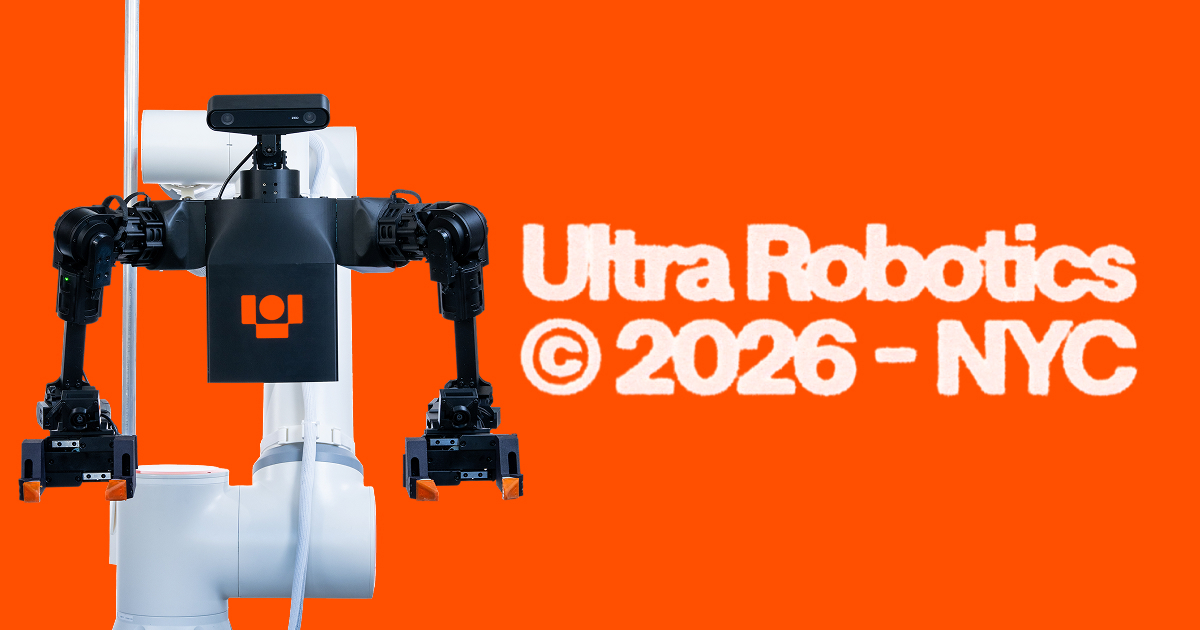
Brooklyn startup Ultra raised $62 million to rent packing robots to warehouses by the month, running AI from Physical Intelligence. Its claimed pricing power leans on software that, Fortune reported, Physical Intelligence also supplies to numerous other robot makers.
The Investor · Invest desk
What happened
- Framework Ventures led the $50 million Series A with Y Combinator participating, following a $12 million seed round led by Y Combinator and Next View.
- Ultra says its robots have packed more than 500,000 orders at warehouse sites across the US.
- At Highline Commerce in Brooklyn, Ultra's robots handle up to 30% of fulfillment volume, Crypto Briefing reported.
- Physical Intelligence, the AI firm supplying the robots' software, reached a $5.6 billion valuation after a $600 million Series B in November 2025.
Compiled by The InvestorSomething wrong?How this is made
Why it matters
- decision Because Ultra licenses its AI from Pi, its new capital goes to building and installing robots, and the cost of training models stays with Pi.
- capability Pi's model updates can improve robots already on warehouse floors, so Ultra can offer existing customers a better machine without shipping new hardware.
- constraint Any rival robot maker can license the same Pi software, so Ultra has to win warehouses on its own hardware and its installation work.
A warehouse that rents from Ultra pays an up-front integration fee to have the robots installed, then a monthly fee for hardware and software support [3]. Jon Miller Schwartz, Ultra's chief executive and co-founder [14], told Fortune's Term Sheet newsletter that this structure is why Ultra has booked significant revenue, since customers do not have to lay out large amounts of capital [4]. He did not say how much revenue, and neither report includes the monthly fee, Ultra's valuation, the terms of the Physical Intelligence deal or who owns the robots at customer sites.
Ownership decides how much cash the model consumes. If Ultra keeps title to the machines, each new site is money spent up front and recovered month by month. In that case the $50 million Series A, about 81% of the total [16], is partly fleet capital. It arrived roughly two years after Ultra's founding in 2024 [11]. Short installs help a lessor. Ultra says its robots go in within a matter of hours [13], and a company that installs in hours spends less on each new site before the monthly fees start.
Physical Intelligence has raised far more money than its hardware partner. Its November round alone was about 9.7 times everything Ultra has raised [17]. Crypto Briefing reported that Pi's pi0.6 model reached 96.4% autonomy during full shifts in real-world warehouse settings, citing deployment data released in February 2026 [18]. If that rate carried over to Ultra's fleet, the robots would still need human help for 3.6% of each shift [20].
Schwartz says the model has gained enough traction that Ultra has been able to raise prices [5]. I think that claim is the strongest support for the leasing model, and the hardest to credit to Ultra alone. A customer paying more each month could be paying for Ultra's hardware and installation work, or for gains in Pi's software that reach the robots through the rental. Fortune's case for the split is that Ultra sticks to building robots while Pi gets out-of-the-lab data to train its models [9]. That data gives Ultra something to bargain with if Pi reprices its software. The view fails if Ultra's price increases stop once rival robots running Pi's software [10] reach the same third-party logistics sites where Ultra's team does its installs [15].
What to watch
- A debt or equipment-financing facility at Ultra would show whether the company or a lender carries the robots installed at customer sites.
- Any disclosure of Ultra's monthly fee or revenue would test Schwartz's claim that the company has been able to raise prices.
- A second named customer handing Ultra a share of fulfillment comparable to Highline Commerce's 30% would widen the evidence beyond one site.
Clarity's read
What the record supports and how the coverage leans. The claims behind it follow.
Reality
- Evidence55
- Adoption35
- Hype gap+25
- Incentives65
- Confidence55
Claim ledger
Ranked by verification strength, evidence, and original report placement.
- [1]
Ultra, a Brooklyn-based startup that leases its devices to warehouses under a monthly 'robots as a service' model, announced it had raised $62 million while deepening a partnership with AI firm Physical Intelligence.
- [2]
Ultra's funding came in two rounds: a $50 million Series A led by Framework Ventures with participation from Y Combinator, and an earlier $12 million seed round led by Y Combinator and Next View.
- [3]
Clients pay an up-front integration fee for Ultra to install the robots, and then an ongoing monthly fee for hardware and software support.
- [4]
In an interview with Term Sheet, Schwartz said Ultra has booked significant revenue, without disclosing how much, because Ultra does not require customers to lay out large amounts of capital to use its robots.
ReportedSupportedSource: Jon Miller Schwartz, interview with Fortune's Term Sheet2 sources— create a free account to open themView cited source - [5]
Schwartz says the model has gotten so much traction that Ultra has been able to raise prices.
ReportedSupportedSource: Jon Miller Schwartz, via Fortune2 sources— create a free account to open themView cited source - [6]
Ultra builds and installs the robots but relies on Physical Intelligence to supply the AI that allows them to learn and improve rapidly in response to any given customer's set-up.
- [7]
Physical Intelligence's valuation reached $5.6 billion after a $600 million Series B in November 2025.
- [8]
Ultra says its robots have packed over 500,000 orders at sites across the US.
ReportedSupportedSource: Ultra, via Crypto Briefing2 sources— create a free account to open themView cited source - [9]
The tie-up lets Ultra focus on its core robot-building competency while Physical Intelligence gets out-of-the-lab data to better train its models.
ReportedSupportedSource: Fortune (Jeff John Roberts)2 sources— create a free account to open themView cited source - [10]
Numerous other robot makers are also using software from Physical Intelligence.
- [12]
At Highline Commerce in Brooklyn, Ultra's robots handle up to 30% of the company's fulfillment volume.
- [13]
Ultra's robots are designed to be installed in a matter of hours.
- [15]
Schwartz and his team go to third-party logistics (3PL) sites to install Ultra's robots, which specialize in packing goods for transit.
- [16]
The Series A is about 81% of Ultra's $62 million total.
- [17]
Physical Intelligence's $600 million Series B is about 9.7 times Ultra's $62 million total raise.
- [18]
Physical Intelligence's pi0.6 model reportedly hit 96.4% autonomy during full shifts in real-world warehouse settings, according to deployment data released in February 2026.
- [19]
Improvements to Physical Intelligence's models could, in principle, make Ultra's existing fleet better without new hardware.
- [20]
At 96.4% autonomy, 3.6% of a shift is not autonomous.
Sources
2 independent publishers whose own reporting we read for this story.
Topics and entities
Follow any of these and your For You feed starts watching them — no settings page required.
Topics
- Vision-language-action modelsFollow
- Warehouse AutomationFollow
- Robots as a serviceFollow
Entities
- UltraFollow
- Physical IntelligenceFollow
- π0.6Follow
- Jon Miller SchwartzFollow
- Framework VenturesFollow
- Y CombinatorFollow
- Next ViewFollow
- Highline CommerceFollow