Invest2 publishers2 min readPublished
Nine-person Halluminate raises $30 million to train AI agents that top out at 51% on deal diligence
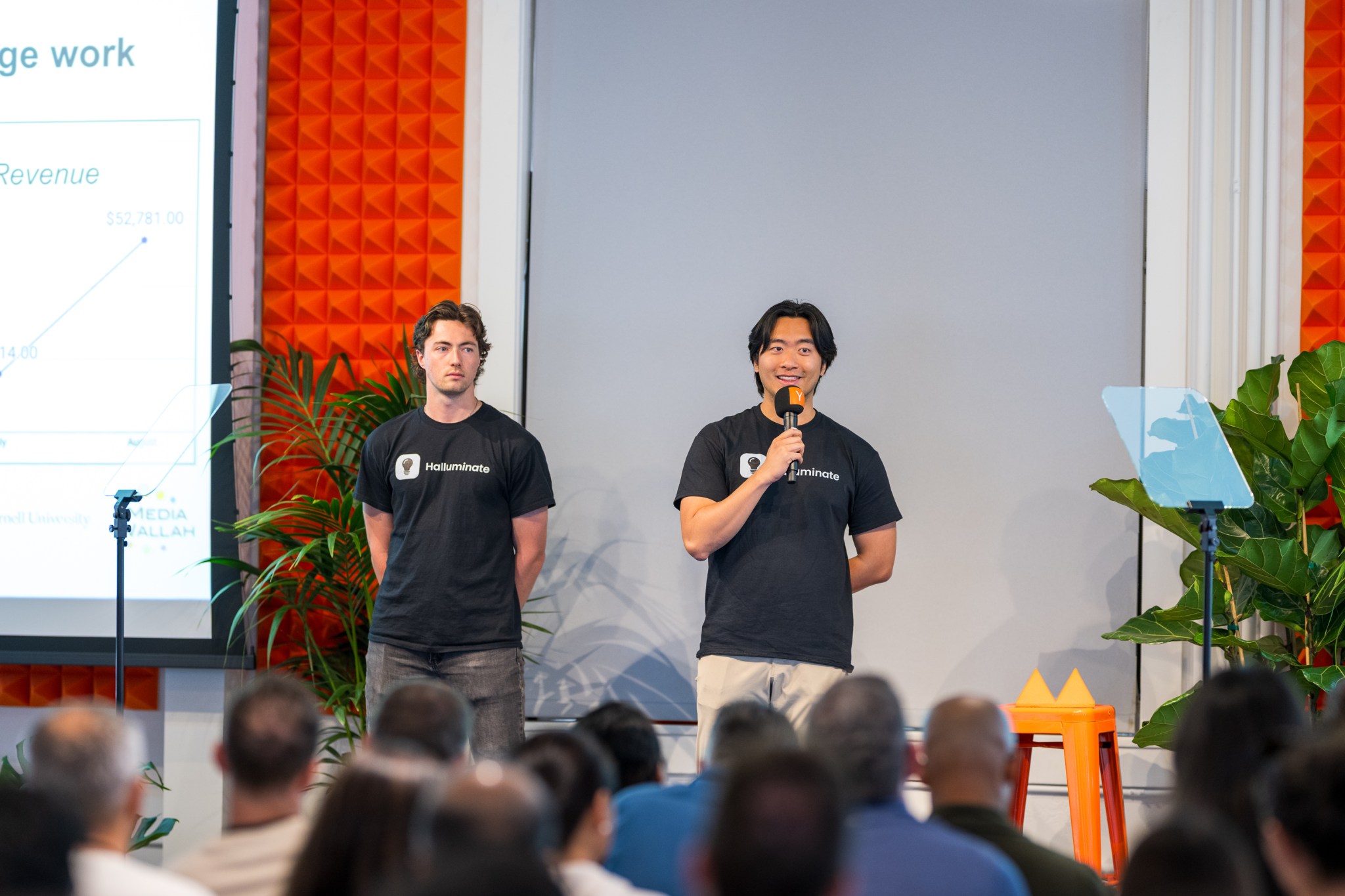
Halluminate raised a $30 million Series A led by Oak HC/FT to train AI agents on deal diligence, where the best of seven frontier models averaged 51%. Its customers are AI labs, so the round is a bet that model makers keep paying a nine-person firm for finance-specific training.
The Investor · Invest desk
What happened
- Halluminate's August benchmark drew its 88 due-diligence tasks from anonymized private-equity deals, with each task written and reviewed by practicing deal professionals.
- Agents across the benchmark left out required changes, used the wrong analytical method or relied on information that had been superseded.
- Chief executive Jerry Wu says four of the top five closed-source US AI labs are paying customers.
- The Series A brings Halluminate's total funding to $38.5 million.
Compiled by The InvestorSomething wrong?How this is made
Why it matters
- constraint Private-equity firms cannot buy Halluminate's environments while it sells only to frontier labs, so better diligence agents reach deal teams only when a lab ships a new model.
- exposure With sales concentrated in a few very large labs, one decision to build comparable environments in-house would cost a meaningful slice of revenue, Crypto Briefing notes, and those buyers hold the pricing leverage.
- precedent Scale AI's February count, nearly half of its new data-training projects involving reinforcement-learning environments, makes further rounds for industry-specific environment builders likely.
The failures behind that 51% are what Halluminate sells to fix [3]. The company benchmarks models on financial tasks to find where they fall short, then turns those failure modes into reinforcement-learning environments for training [4]. One task gave an agent a 160-file data room, 21 emails across nine threads and four meeting notes, and asked it to redline a statement of work [5]. As deal terms changed, the agent had to find the latest instructions and leave alone the provisions meant to stay the same [5].
Crypto Briefing adds the two largest browser-agent companies to the client list [8]. Wu said Halluminate is profitable and has passed the mid-eight figures in annualized run rate, counting quarterly revenue from work already delivered and paid for [10]. If mid-eight figures means at least $30 million, each of the nine employees [1] brings in more than $3 million a year [1]. At that run rate the $30 million round is no more than a year of revenue [1]. Fortune's report does not say how the money will be spent.
Halluminate's own plan assumes the 51% will not last. Wu estimates that the complexity of its environments has to roughly double every six to eight months to keep pushing frontier models, through longer trajectories, harder reasoning tasks and more files [11]. At that pace, two years brings three to four doublings, or environments eight to sixteen times as complex as today's [2]. Wu calls the pressure the "Moore's law of environments" and described the company's IP as its ability to keep producing that complexity "generation after generation" [12].
Oak HC/FT general partner Matt Streisfeld expects the quality of specialized environments to matter more as agents take on work that stretches from hours into days [13]. "When the agent starts getting into long horizon work," he said, "testing work and specialization will really be key" [14].
The round can go a few ways. In Streisfeld's version, the labs keep paying as the environments get harder. In another, a larger data company buys the team, as Mercor agreed to do with Deeptune four months after Deeptune raised a $43 million Series A led by Andreessen Horowitz [15]. The third is that frontier models close the gap without Halluminate's help.
I'd expect the first, because the revenue Wu describes has already been delivered and paid for [10]. Wu's own customer count gives a test for the third: one of the top five closed-source US labs does not pay Halluminate [3]. If that lab's model matches the customers' models on the next run of the benchmark, Halluminate's environments are not what closed the gap.
What to watch
- A first enterprise customer, such as a bank or buyout firm, would show whether the finance environments sell outside the labs.
- Any move into industries beyond finance, which Wu said could come later.