ScienceNot yet confirmed elsewhere1 publisher3 min readPublished
Type VI retrons need a phage to start making the DNA that switches on their toxin
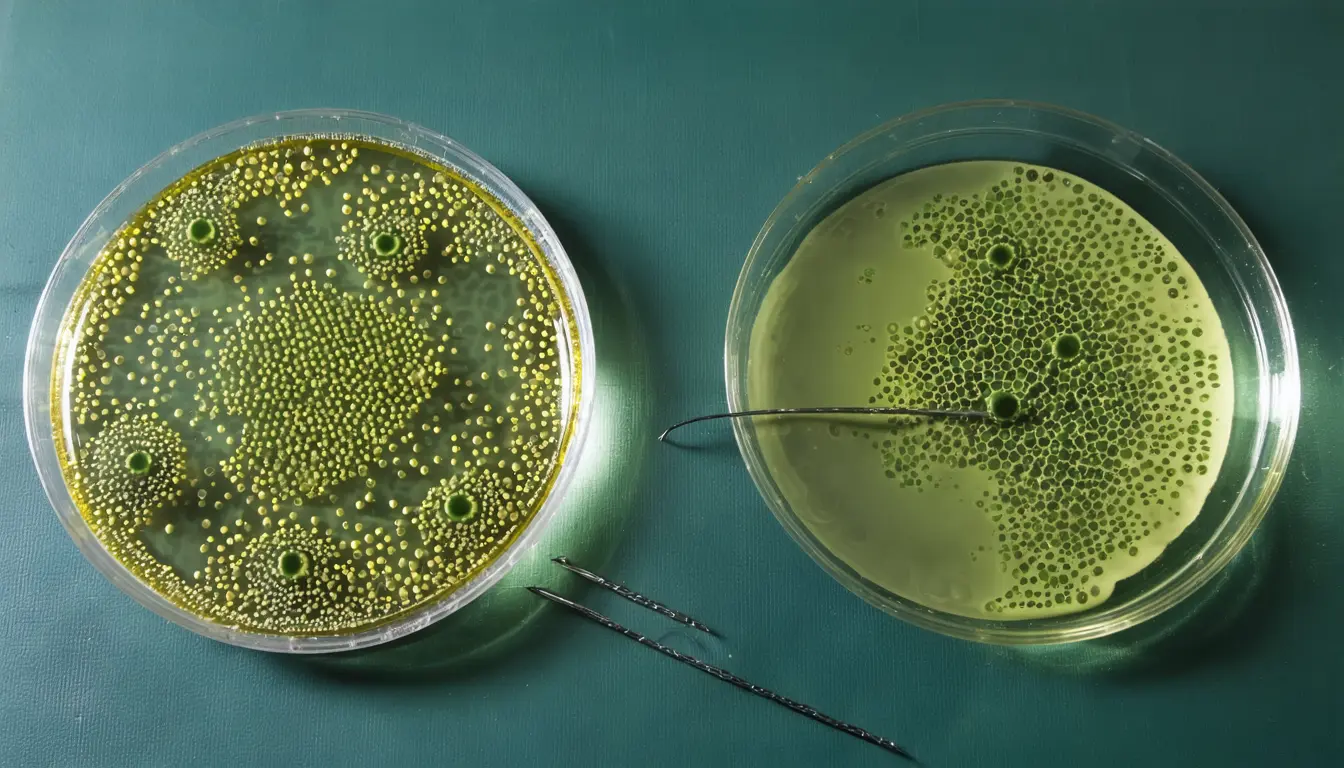
Gladstone researchers report in Molecular Cell a bacterial antiviral defense, type VI retrons, that works in reverse of known systems. Shipman's lab is working to use retrons to rewrite disease-causing mutations in human cells, but the tests described here used bacteria.
The Scientist · Science desk
What happened
- Type VI retrons lacked the usual single-stranded DNA signature, yet bacteria carrying them still defended themselves against phages.
- Once the DNA accumulates, it binds an RNA that had been blocking toxin production, and the release of that block lets toxin output ramp up.
- The toxin appears to be a tiny protein that embeds in the cell membrane, destabilizing the cell and killing it.
Why it matters
- capability Gladstone frames the decoded system as a blueprint for more efficient DNA-editing tools, a use that so far exists as a stated plan from Shipman's lab.
- constraint The efficiency gain is a projection. The tests described used bacteria carrying the retrons, and the account reports no editing result from type VI parts.
- decision Retron surveys that look for single-stranded DNA in uninfected cells would, in our view, miss type VI systems, and Shipman's group needed Spacer-seq to see the DNA at all.
Type VI retrons stood out because a signal was missing. "The way we typically detect retrons inside uninfected cells is by looking for this single-stranded DNA," said Karen Zhang, a Ph.D. student in Shipman's lab and lead author of the study [3]. Type VI retrons did not show it. "It was very odd, and we wondered if they might be broken," Zhang said [4].
The test that settled the question was functional. When the team tested certain bacteria carrying type VI retrons, the cells still defended themselves against phages [5]. A dead system would not have done that, so the missing signature pointed to a different design.
The experiments kept failing after that. "Whenever we tried the experiments we normally use to study retrons, they would fail, so we kept having to think of new ways to figure out how these retrons work," Shipman said [6]. The way through was Spacer-seq, a tool from Shipman's lab that uses components of the CRISPR-Cas immune system to keep a record of gene activity inside a cell [10]. "We had just about given up hope that any DNA was being made when this approach finally revealed a very, very low level of production in uninfected cells," Zhang said [11].
The team reports that type VI retrons do not make noticeable levels of DNA or toxin in uninfected cells [7]. That is a claim about levels, and Spacer-seq did find a very low one. What triggers the retron to start producing the DNA is a phage entering the cell [7].
"This is, by far, the strangest of the retron systems that we or anyone else has come across," Shipman said [13]. In older retrons the toxin is always present in uninfected cells and held in check by small single-stranded DNA molecules until a phage disturbs them [2]. In type VI, the DNA builds up and then interacts with an RNA that had been blocking toxin production, which lets toxin output ramp up [8]. "It's almost the mirror-image version of how we traditionally view retrons, because the DNA switches on toxin production instead of inhibiting an already produced toxin," Zhang said [12]. The toxin appears to be a tiny protein that embeds in the cell membrane and destabilizes the cell [9].
Retrons can efficiently modify and deliver single-stranded DNA, and Shipman's team is working to harness them to rewrite disease-causing mutations inside human cells [15]. Shipman said the type VI system uses "molecular mechanisms that we would never have thought to invent, but that we'll use in future technologies" [17]. The phys.org account quotes only Gladstone researchers and does not describe an editing experiment built from type VI parts. The tests it describes used bacteria carrying the retrons [5].
What to watch
- An editing experiment built from type VI retron parts, with efficiency measured against current retron-based tools.
- Confirmation of the toxin's identity, which the account says only appears to be a tiny membrane-embedded protein.
- Evidence on the question Zhang raised: whether type VI retrons are older or newer than other types, or a stepping stone between them.
Clarity's read
What the record supports and how the coverage leans. The claims behind it follow.
Reality
- Evidence62
- Adoption
- Insufficient
- Hype gap+30
- Incentives
- Insufficient
- Confidence58
Claim ledger
Ranked by verification strength, evidence, and original report placement.
- [1]
Researchers at Gladstone Institutes uncovered a bacterial immune system, called type VI retrons, that operates in reverse of known defenses; the discovery was published in Molecular Cell.
- [2]
In other retrons, a toxin is constantly present in uninfected cells but repressed by small single-stranded DNA molecules; when a phage invades, it perturbs the DNA and the toxin is released.
- [3]
"The way we typically detect retrons inside uninfected cells is by looking for this single-stranded DNA," said Karen Zhang, a Ph.D. student in Seth Shipman's lab and lead author of the study.
- [4]
"It was very odd, and we wondered if they might be broken," Zhang said of type VI retrons appearing to lack the single-stranded DNA signature.
- [5]
When scientists tested certain bacteria containing type VI retrons, the retrons were still able to defend their cells against phages.
- [6]
"Whenever we tried the experiments we normally use to study retrons, they would fail, so we kept having to think of new ways to figure out how these retrons work," Shipman said.
- [7]
Unlike other retrons, type VI retrons do not produce noticeable levels of single-stranded DNA or toxin in uninfected cells; the entry of a phage into a cell is needed to trigger the retron to start producing single-stranded DNA.
- [8]
Once the single-stranded DNA builds up, it interacts with an RNA that has been blocking production of the toxin, releasing the block and allowing toxin production to ramp up.
- [9]
The toxin appears to be a tiny protein that embeds itself in the membrane surrounding the cell, which destabilizes the cell and kills it.
- [10]
Spacer-seq, a tool previously developed in Shipman's lab, harnesses the molecular components of the CRISPR-Cas bacterial immune system to create a record of gene activity inside a cell.
- [11]
"We had just about given up hope that any DNA was being made when this approach finally revealed a very, very low level of production in uninfected cells," Zhang said.
- [12]
"It's almost the mirror-image version of how we traditionally view retrons, because the DNA switches on toxin production instead of inhibiting an already produced toxin," Zhang said.
- [13]
"This is, by far, the strangest of the retron systems that we or anyone else has come across," said Gladstone investigator Seth Shipman, senior author of the study.
- [14]
Zhang said it would be fascinating to explore whether type VI retrons are older or newer than other retrons, or whether they are a stepping stone between different types.
- [15]
Because retrons can efficiently modify and deliver single-stranded DNA, researchers including Shipman and his team are working to harness them to rewrite disease-causing mutations inside human cells with precision.
- [16]
Decoding these systems provides a molecular blueprint that scientists can adapt to engineer more efficient DNA-editing tools for human health and therapies.
- [17]
Shipman said these retrons use "molecular mechanisms that we would never have thought to invent, but that we'll use in future technologies."
Sources
1 independent publisher whose own reporting we read for this story.
- phys.orgNewly discovered antiviral system in bacteria is 'strangest of its kind'
1 article · October 13, 2026
Topics and entities
Follow any of these and your For You feed starts watching them — no settings page required.
Topics
- Bacterial immunityFollow
- Synthetic BiologyFollow
- Gene EditingFollow