Product1 distinct publisher3 min readPublished
The mini takes the new M6 while the Studio stays on M5 Max and Ultra, and every published gain is measured against an M4 baseline. Anyone expensing Apple TV has a fourth price rise to re-forecast.
The Product Desk · Product desk

Compiled by The Product DeskSomething wrong?How this is made
Somebody signed the purchase order for M4 minis as build boxes, and somebody has to say on Monday whether the M6 is worth a swap. Apple picked the comparison for them. The up-to-40% CPU figure and the up-to-4x AI figure are measured against a Mac mini running the 10-core M4 with 32GB of memory and 2TB of storage [7], and because the mini line's previous generation was that M4 machine, those percentages cover two chip generations rather than one [6].
The spec deltas underneath are smaller. The M6 adds two CPU cores and two GPU cores over the M5, 20% more of each [4][2]. Memory bandwidth goes to 170GB/s from 153GB/s, close to 11% [6][1]. The neural engine is the one worth reading twice: two 16-core engines replace one, so 32 cores against 16 [5], a doubling of hardware carrying a claimed 4x on AI tasks [3]. Apple did not break out where the rest of that multiple comes from, and until your own model runs on one, neither can you.
The Studio is a different purchase. Its published gains sit in I/O and display work rather than chip generation: Wi-Fi 7 and Bluetooth 6 through the N1 chip, plus genlock over USB-C and support for eight displays [10]. The M5 Ultra's 36-core CPU splits into 12 super cores and 24 performance cores, and Apple rates it at 1.25x single-threaded and 1.3x multithreaded against the M3 Ultra in the machine it replaces [11]. A quarter more single-thread against a part two generations old is the figure to hold against your slowest compile step, more useful than the core count.
The sort takes two facts you already have in your CI timings: whether the slow job is single-threaded or wide, and whether the machine sits on one desk or serves a queue. Single-threaded on a desk points at the mini, where the per-core generation gain lives. Wide and serving a queue points at the Studio, where 36 cores and the faster storage path do work a rack of small boxes cannot. Wide on one desk is the video room, and that is who genlock and eight displays were specified for. Single-threaded serving a queue is a fleet of minis, and there the M5 Pro option matters, because "Mac mini" on a purchase order now spans two chip generations [3] and the asset tag needs the chip written on it.
The subscription line is smaller and more irritating. Twelve months of the monthly increase comes to $24 a person, while the annual plan carries $20 of it, a $4 gap in favour of annual billing [4], which across 100 reimbursed seats is $2,400 a year added at the monthly rate [5]. That is the fourth increase since the service launched [12]. The change most likely to generate tickets costs nothing: US English Magic Keyboards now show glyphs where the edge keys used to read tab, caps lock, shift and return [13], so the onboarding screenshot that tells a new hire to press caps lock no longer matches the hardware in the box.
If the honest answer to the refresh question is that the M4 boxes are queueing and near the end of their depreciation schedule, that is a replacement-cycle argument, and it wins without borrowing Apple's percentages.
Ranked by verification strength, evidence, and original report placement.
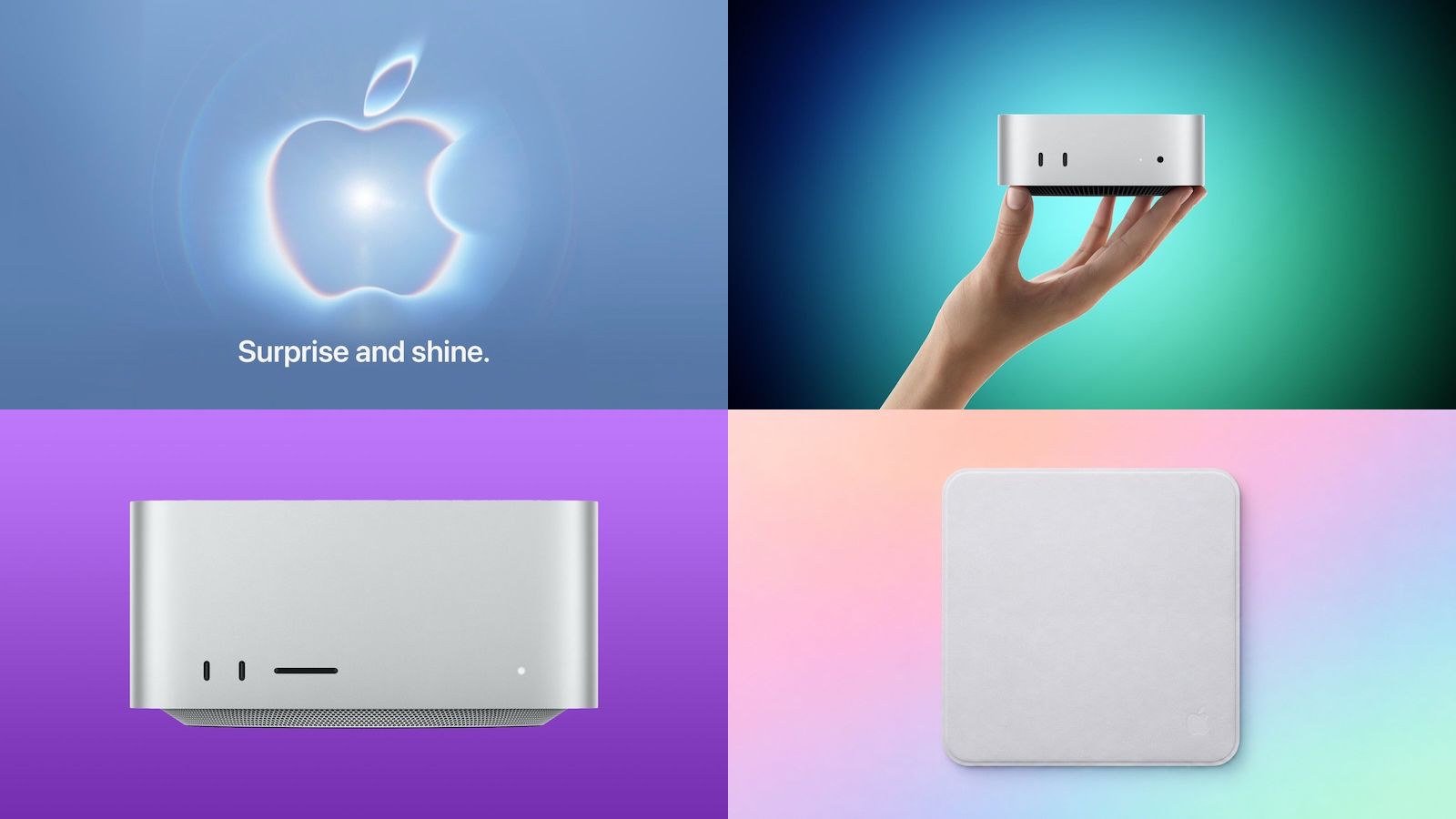
Apple announced it will hold its annual iPhone event on Wednesday, September 9, at the Apple Park campus in Cupertino, California, beginning at 10:00 a.m. Pacific Time, with select members of the media invited, under the tagline "Surprise and Shine".
Apple announced a next-generation Mac mini that can be configured with an all-new M6 chip or with the M5 Pro chip released earlier this year.
The M6 chip has a 12-core CPU and a 12-core GPU, up from a 10-core CPU and 10-core GPU in the M5.
The M6 features the first dual Neural Engine, with two 16-core engines, up from one in previous chips.
The M6 has up to 170GB/s memory bandwidth, up from 153GB/s for the M5.
Apple said the Mac mini with M6 delivers up to 40% faster CPU performance, up to 4x faster performance on AI tasks, up to 2x faster graphics and up to 2x faster storage speeds compared with the previous-generation model with the 10-core M4 chip, 32GB of unified memory and 2TB of storage.
Distinct publishers with included, body-backed reporting in this cluster.
1 article · August 29, 2026
Follow any of these and your For You feed starts watching them — no settings page required.
product
Apple takes the CPU upgrade option off the Mac Studio order page1 distinct publisher
product
Apple's M5 Ultra stops being two Maxes glued together, and that changes how you size a Mac Studio1 distinct publisher
product
Apple gates Thunderbolt 5 behind the $800 step in the new Mac mini1 distinct publisher
product
Apple's M6 is a 2nm inference upgrade with a CPU refresh attached1 distinct publisher
Evidence-backed comparisons of source perspectives and observed adoption signals. Read the methodology
Which Builder, Operator, and Investor concerns the observed source mix emphasized—not a truth score.
Evidence, demonstrated adoption, hype gap, incentives, and confidence are assessed independently, each on its own current evidence. How these are measured.
First-party numbers, faithfully relayed, never checked
Split the facts and the picture clarifies. Core counts, bandwidth, port specifications and the Apple TV price table are the kind of thing Apple publishes and cannot quietly walk back - solid, even from a single relay. The performance figures are a different animal: every multiplier is Apple's, hedged with 'up to', and the mini's are pinned to an M4 machine rather than the M5 it replaces. The foldable's reception is the weakest link, reaching us through Gurman and then through MacRumors from testers nobody names.
One change already billing, the rest still announcements
The price rise is the only item with real-world traction: it started on the day, it touches existing subscribers and it drags Apple One Individual with it. The two Macs are announcements - no ship dates, no configuration prices, no reviews, no benchmark runs from anyone who has touched the hardware. The accessories are shipping but trivial. Nothing in this reporting tells us how many people are buying or paying.
Multipliers outrun the silicon they sit on
The arithmetic is where the overstatement shows. Twice the neural cores, four times the claimed AI speed; 20% more CPU cores and 11% more bandwidth, but a 40% CPU figure - achievable, perhaps, but only against an M4 that Apple selected, not the M5 the M6 actually succeeds. 'Most powerful chip ever' is a marketing superlative repeated without a benchmark. MacRumors is not inflating any of this; it is passing along claims that flatter themselves.
The company sets the numbers and the price
Apple authored nearly every figure in the story - the specs, the baselines, the multipliers, the superlative - and is simultaneously the party raising subscription prices for the fourth time. Nobody adversarial to those numbers appears. On the reporting side, an Apple-dedicated weekly built to end in a newsletter sign-up has an obvious interest in event anticipation and hands-on foldable gossip; that is not distortion, but it explains which items lead.
Confident on prices, provisional on performance
We would stand behind the price table, the port list and the core counts today - they are specific, dated and easy to falsify against Apple's own pages. We would not stand behind any performance claim until something ships and someone measures it, and we would treat the foldable's tester reception as rumour with a good pedigree. One publisher, no contradictions, and no corroboration either.