ProductNot yet confirmed elsewhere1 publisher3 min readPublished Updated
Apple's Mac refresh clears the desktop order before the September 9 phone event
The mini takes the new M6 while the Studio stays on M5 Max and Ultra, and every published gain is measured against an M4 baseline. Anyone expensing Apple TV has a fourth price rise to re-forecast.
The Product Desk
What happened
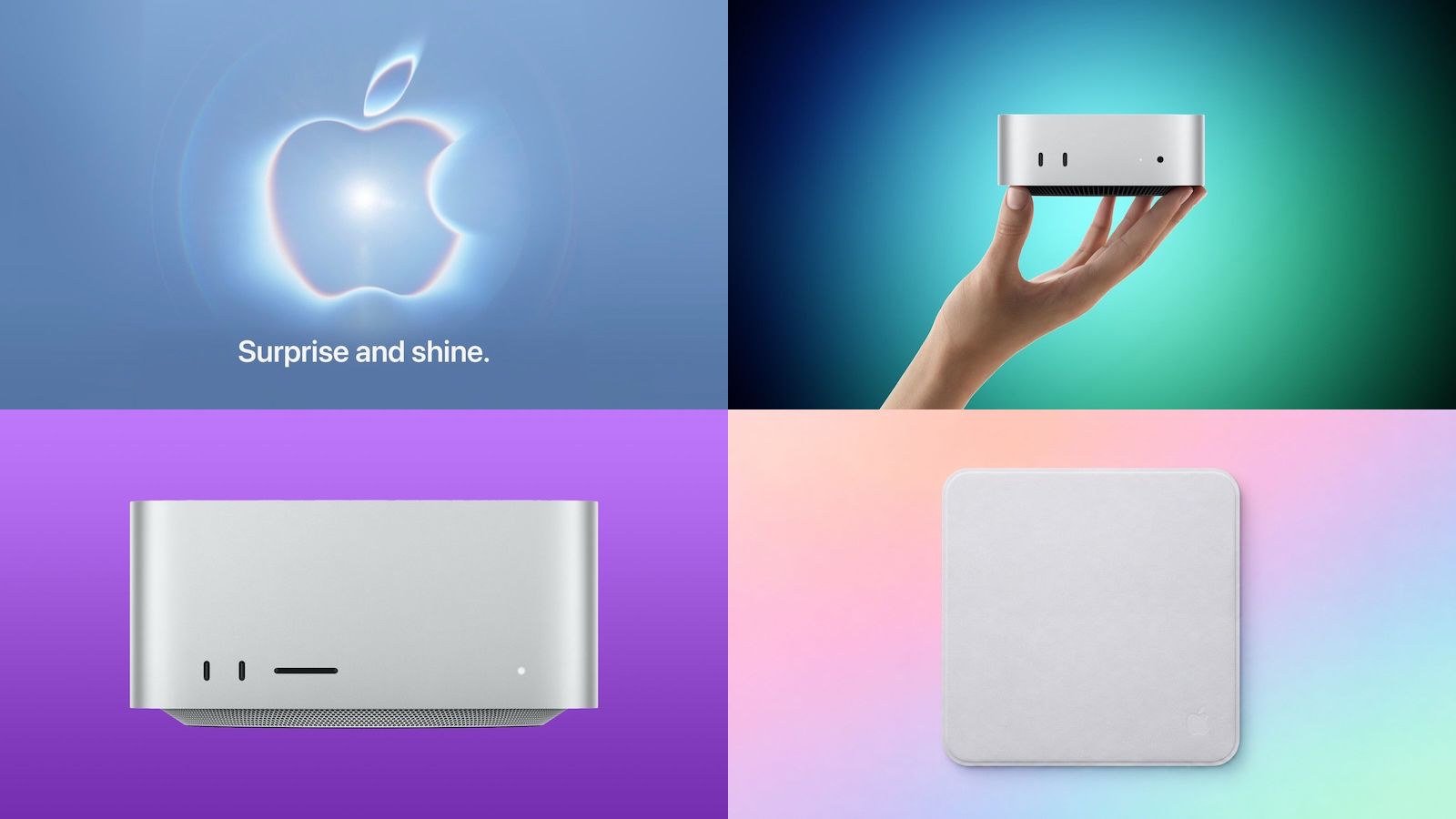
- Apple set its annual iPhone event for Wednesday, September 9 at Apple Park in Cupertino, starting at 10:00 a.m. Pacific under the tagline "Surprise and Shine", with select media invited.
- In the same week it announced a next-generation Mac mini that can be ordered with the all-new M6 chip or with the M5 Pro released earlier this year.
- The new Mac Studio arrives with M5 Max and M5 Ultra chips, a PCIe Gen 6 SSD architecture Apple says is up to twice as fast, and Thunderbolt 5 ports rated at up to 120Gb/s.
- Apple also raised United States pricing for its Apple TV streaming service by $2 a month and $20 a year, the fourth increase since the service launched.
Why it matters
- decision The desktop order no longer waits on the event: the Macs are already announced and September 9 is a phone launch, so a fleet purchase held back for the keynote buys delay rather than information.
- constraint Anyone who wants the newest per-core silicon has to take it in the small enclosure, and anyone who wants 36 CPU cores accepts a previous-generation chip family, which forecloses the config most buyers would have specified.
- cost Teams that reimburse Apple TV pick up $24 per person per year on monthly billing and $20 on annual, so the cheapest response is a billing-cycle change rather than a renegotiation.
- precedent A fourth increase since launch makes an annual re-forecast of this line the base case, which is a different budgeting habit from treating a streaming subscription as fixed.
Somebody signed the purchase order for M4 minis as build boxes, and somebody has to say on Monday whether the M6 is worth a swap. Apple picked the comparison for them. The up-to-40% CPU figure and the up-to-4x AI figure are measured against a Mac mini running the 10-core M4 with 32GB of memory and 2TB of storage [13], and because the mini line's previous generation was that M4 machine, those percentages cover two chip generations rather than one [22].
The spec deltas underneath are smaller. The M6 adds two CPU cores and two GPU cores over the M5, 20% more of each [4][17]. Memory bandwidth goes to 170GB/s from 153GB/s, close to 11% [6][16]. The neural engine is the one worth reading twice: two 16-core engines replace one, so 32 cores against 16 [5], a doubling of hardware carrying a claimed 4x on AI tasks [18]. Apple did not break out where the rest of that multiple comes from, and until your own model runs on one, neither can you.
The Studio is a different purchase. Its published gains sit in I/O and display work rather than chip generation: Wi-Fi 7 and Bluetooth 6 through the N1 chip, plus genlock over USB-C and support for eight displays [9]. The M5 Ultra's 36-core CPU splits into 12 super cores and 24 performance cores, and Apple rates it at 1.25x single-threaded and 1.3x multithreaded against the M3 Ultra in the machine it replaces [10]. A quarter more single-thread against a part two generations old is the figure to hold against your slowest compile step, more useful than the core count.
The sort takes two facts you already have in your CI timings: whether the slow job is single-threaded or wide, and whether the machine sits on one desk or serves a queue. Single-threaded on a desk points at the mini, where the per-core generation gain lives. Wide and serving a queue points at the Studio, where 36 cores and the faster storage path do work a rack of small boxes cannot. Wide on one desk is the video room, and that is who genlock and eight displays were specified for. Single-threaded serving a queue is a fleet of minis, and there the M5 Pro option matters, because "Mac mini" on a purchase order now spans two chip generations [3] and the asset tag needs the chip written on it.
The subscription line is smaller and more irritating. Twelve months of the monthly increase comes to $24 a person, while the annual plan carries $20 of it, a $4 gap in favour of annual billing [20], which across 100 reimbursed seats is $2,400 a year added at the monthly rate [21]. That is the fourth increase since the service launched [14]. The change most likely to generate tickets costs nothing: US English Magic Keyboards now show glyphs where the edge keys used to read tab, caps lock, shift and return [11], so the onboarding screenshot that tells a new hire to press caps lock no longer matches the hardware in the box.
If the honest answer to the refresh question is that the M4 boxes are queueing and near the end of their depreciation schedule, that is a replacement-cycle argument, and it wins without borrowing Apple's percentages.
What to watch
- Configuration pricing and memory ceilings for the M6 mini and the M5 Ultra Studio, which this announcement material does not include.
- Whether Apple ever publishes an M6 mini versus M5 Pro mini comparison, given that one SKU line now spans two chip generations.
- Whether the September 9 event adds any Mac news or stays on phones, including whether the foldable ships without a telephoto lens as Gurman reports.
Clarity's read
What the record supports and how the coverage leans. The claims behind it follow.
Reality
- Evidence55
- Adoption
- Insufficient
- Hype gap+20
- Incentives60
- Confidence60
Claim ledger
Ranked by verification strength, evidence, and original report placement.
- [1]
Apple announced it will hold its annual iPhone event on Wednesday, September 9, at the Apple Park campus in Cupertino, California, beginning at 10:00 a.m. Pacific Time, with select members of the media invited, under the tagline "Surprise and Shine".
- [2]
The September 2026 event is expected to bring the iPhone 18 Pro, iPhone 18 Pro Max and a foldable iPhone that could be called the iPhone Ultra; there will be no iPhone 18 this year because Apple is waiting until spring 2027 for the more affordable models.
- [3]
Apple announced a next-generation Mac mini that can be configured with an all-new M6 chip or with the M5 Pro chip released earlier this year.
- [4]
The M6 chip has a 12-core CPU and a 12-core GPU, up from a 10-core CPU and 10-core GPU in the M5.
- [5]
The M6 features the first dual Neural Engine, with two 16-core engines, up from one in previous chips.
- [6]
The M6 has up to 170GB/s memory bandwidth, up from 153GB/s for the M5.
- [7]
Apple announced new Mac Studio models with the M5 Max and M5 Ultra chips, describing the M5 Ultra as the company's most powerful chip ever.
- [8]
The new Mac Studio has a next-generation SSD architecture built on PCIe Gen 6 that Apple says is up to twice as fast as before, and Thunderbolt 5 ports with up to 120Gb/s of bandwidth.
- [9]
The new Mac Studio gains Wi-Fi 7 and Bluetooth 6 for the first time via Apple's N1 chip, supports genlock over USB-C, and can drive up to eight displays.
- [10]
The M5 Ultra includes an up to 36-core CPU containing 12 super cores and 24 performance cores, and delivers up to 1.25x higher single-threaded and up to 1.3x higher multithreaded performance than the M3 Ultra in the previous-generation Mac Studio.
- [11]
Most of Apple's Magic Keyboards for Mac got updates for the U.S. English versions, replacing text labels on edge keys such as tab, caps lock, shift and return with glyphs.
- [12]
Apple released a new version of its Polishing Cloth priced at $9, half the price of the original.
- [13]
Apple said the Mac mini with M6 delivers up to 40% faster CPU performance, up to 4x faster performance on AI tasks, up to 2x faster graphics and up to 2x faster storage speeds compared with the previous-generation model with the 10-core M4 chip, 32GB of unified memory and 2TB of storage.
- [14]
For the fourth time since launch, Apple increased the price of its Apple TV streaming service in the United States, raising monthly pricing by $2 and annual pricing by $20.
- [15]
According to Bloomberg's Mark Gurman, early testers of Apple's foldable device, referred to internally as the iPhone Ultra, like its pocketability, hinge feel and iPad-like app layouts, but the device lacks a telephoto lens, which could cost Apple some sales given the expected price.
- [16]
The M6's memory bandwidth is about 11% higher than the M5's.
- [17]
The M6 carries 20% more CPU cores and 20% more GPU cores than the M5.
- [18]
The M6's two 16-core Neural Engines total 32 neural cores against 16 in the prior single-engine design, a 2x increase in core count against Apple's claimed up-to-4x AI performance.
- [19]
The newest chip generation ships only in the Mac mini; the Mac Studio's top options remain M5-family parts.
- [20]
At the monthly rate the Apple TV increase costs $24 per subscriber per year, $4 more than the $20 the annual plan absorbs.
- [21]
One hundred reimbursed monthly Apple TV subscriptions add $2,400 a year to a budget after the increase.
- [22]
Apple's own baseline for the new Mac mini is the M4 model, so the published mini gains span two chip generations rather than one.
Sources
1 independent publisher whose own reporting we read for this story.
- macrumors.comThe MacRumors Show: Apple's Surprisingly Big Week of Announcements
2 articles · August 29, 2026
Topics and entities
Follow any of these and your For You feed starts watching them — no settings page required.
Topics
- Foldable SmartphonesFollow
- Mac desktopsFollow
- Streaming Subscription PricingFollow
- Apple SiliconFollow