ScienceIndependently confirmed2 publishers3 min readPublished
A 4 cm fish from a Bihar handpump is the first ever recorded in the Gangetic aquifer
A TikTok clip led researchers to describe Gangaichthys indonepalicus, a new genus. The detection method was a village borewell, which is most of the story.
The Scientist · Science desk
What happened
- Researchers described a new genus and species of underground earthworm eel, Gangaichthys indonepalicus, from alluvial aquifers in the Indo-Gangetic Plain, Bihar, northern India; it is the first subterranean fish recorded from the Gangetic Basin.
- The study was published in ZooKeys (2026), DOI 10.3897/zookeys.1289.188089, with Akshay Khandekar as lead author.
- The investigation began after a short video posted on TikTok in 2024 showed an unusual, tiny fish emerging from a borewell near the border between India and Nepal.
- The research team stated: "The unique morphology of the fish in the video, and the fact that there are no stygobitic fish known from the region, motivated us to track down the species to ascertain its identity."
- The work was carried out by an international team from the Thackeray Wildlife Foundation in Mumbai, Shivaji University in Kolhapur, the Shanghai Synchrotron Radiation Facility at the Chinese Academy of Sciences, and the Zoological Survey of India in Gopalpur-on-Sea.
Why it matters
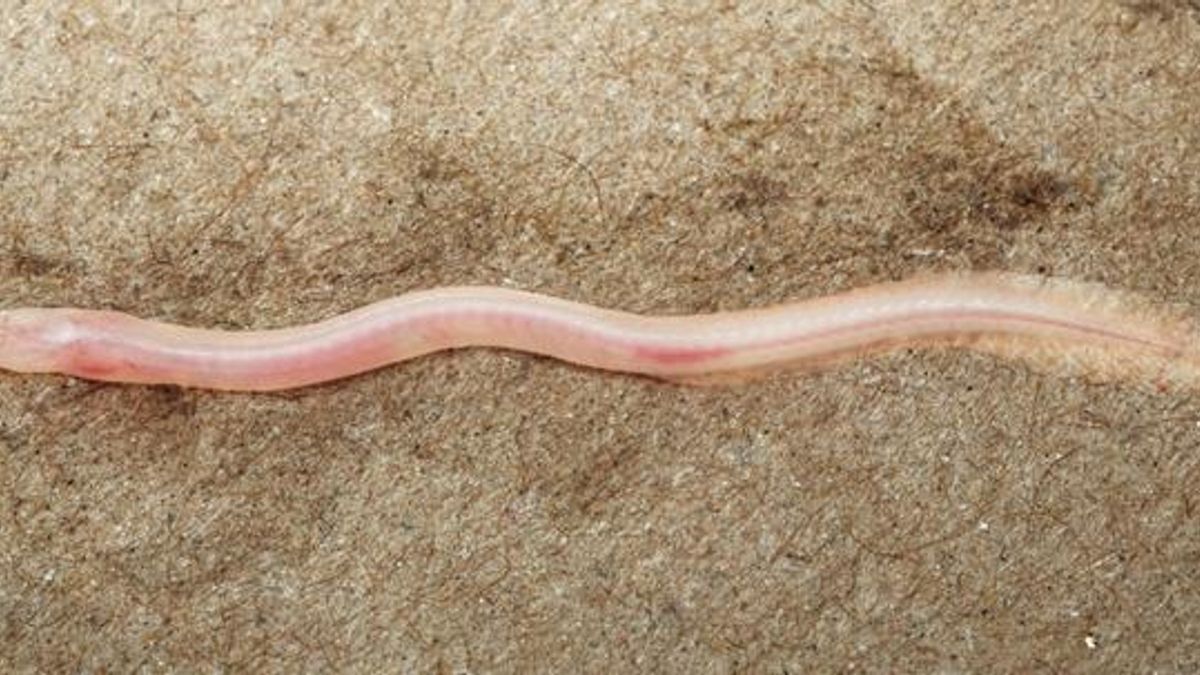
A colorless fish about 4 centimeters long, pulled out of a household borewell in Bihar, has been described as a new genus and species, Gangaichthys indonepalicus, and it is the first subterranean fish on record from the Gangetic Basin [1][8]. The result is less interesting as a new animal than as a measurement of ignorance: the only instrument that found it was a hand pump installed to draw water for people [5].
The trail started with a short video posted to TikTok in 2024 showing an odd, tiny fish emerging from a borewell near the India-Nepal border [3]. According to the research team, two things prompted the chase: the morphology in the clip, and the fact that no stygobitic (groundwater-dwelling) fish were known from the region at all [4]. The work was carried out by an international group from the Thackeray Wildlife Foundation in Mumbai, Shivaji University in Kolhapur, the Shanghai Synchrotron Radiation Facility at the Chinese Academy of Sciences, and the Zoological Survey of India at Gopalpur-on-Sea, and published in ZooKeys with Akshay Khandekar as lead author [15][2].
The field method is the part operators should read. Khandekar says the team had to identify candidate hand pumps and wells and then obtain permission from their owners to extract water for the search, which became more intensive once manual pumping began [5]. The first specimen came up after roughly 2,000 liters had been pumped; it was damaged in transit and died immediately [6]. A second, intact individual, later designated the holotype, came from the same borewell after another 500 liters [7]. That is about 2,500 liters of groundwater hauled by hand to recover two animals, one of them usable [16].
Because there was only one intact specimen, the team used micro-CT imaging to examine the internal anatomy without destroying it [10]. The scans plus genetic analysis placed the fish in Chaudhuriidae, the earthworm eels, but distinctly enough to warrant a new genus [9]. Its features are the standard subterranean set: no pigment, a translucent body, reduced eyes covered by skin, and an apparent absence of ribs [8]. The genus name means fish of the Ganga, and Ishan Agarwal notes this is the first stygobitic fish from the Indo-Gangetic Plain and the Gangetic Basin, a river system that supplies fresh water, food and livelihood to millions and carries religious significance [11][14]. Tejas Thackeray says the epithet indonepalicus reflects the species occurring on the India-Nepal border [12].
The broader claim in the paper's framing is that animals inside aquifers and groundwater channels rarely encounter conventional sampling equipment, so whole lineages can persist undocumented beneath dense human settlement [13]. Agarwal describes a large knowledge gap in Indian biodiversity, both Linnaean and Wallacean, with many species still undescribed, and calls this find symptomatic, with subterranean sampling especially hard [17][18].
What to watch: whether anyone repeats the handpump protocol at scale across the alluvial aquifers of the plain, and how many more Chaudhuriidae or other groundwater taxa turn up when the sampling gear is the same equipment already installed in every village [1][13].
Clarity's read
What the record supports and how the coverage leans. The claims behind it follow.
Reality
- Evidence74
- Adoption
- Insufficient
- Hype gap+12
- Incentives58
- Confidence66
Claim ledger
Ranked by verification strength, evidence, and original report placement.
- [1]
Researchers described a new genus and species of underground earthworm eel, Gangaichthys indonepalicus, from alluvial aquifers in the Indo-Gangetic Plain, Bihar, northern India; it is the first subterranean fish recorded from the Gangetic Basin.
- [2]
The study was published in ZooKeys (2026), DOI 10.3897/zookeys.1289.188089, with Akshay Khandekar as lead author.
- [3]
The investigation began after a short video posted on TikTok in 2024 showed an unusual, tiny fish emerging from a borewell near the border between India and Nepal.
- [4]
The research team stated: "The unique morphology of the fish in the video, and the fact that there are no stygobitic fish known from the region, motivated us to track down the species to ascertain its identity."
ReportedSupportedSource: research team, via press release2 sources— create a free account to open themView cited source - [5]
Akshay Khandekar of the Thackeray Wildlife Foundation said procuring samples was challenging: identifying potential hand pumps (borewells) and wells and obtaining permission from their owners to extract water for the search proved difficult, and became more intensive once manual pumping began.
ReportedSupportedSource: Akshay Khandekar, Thackeray Wildlife Foundation2 sources— create a free account to open themView cited source - [6]
The first specimen emerged after pumping approximately 2,000 liters of water but was damaged during the process and died immediately.
- [7]
The second and only intact specimen, later designated the holotype, was found in the same borewell after pumping an additional 500 liters of water.
- [8]
The fish measures roughly 4 centimeters in length and has reduced eyes covered by skin, an unpigmented translucent body and an apparent absence of ribs.
- [9]
Micro-CT scanning and genetic analysis confirmed the fish represents a completely distinct genus within the earthworm eel family Chaudhuriidae.
- [10]
Micro-CT imaging allowed researchers to examine the fish's delicate internal anatomy without damaging the only intact specimen.
- [11]
Researcher Ishan Agarwal said Gangaichthys means fish of the Ganga, and that this is the first stygobitic fish from the Indo-Gangetic Plain and from the Gangetic Basin.
ReportedSupportedSource: Ishan Agarwal2 sources— create a free account to open themView cited source - [12]
Tejas Thackeray said the specific epithet indonepalicus was chosen because the species occurs on the border between India and Nepal, reflecting its distribution.
ReportedSupportedSource: Tejas Thackeray2 sources— create a free account to open themView cited source - [13]
Animals living inside aquifers and groundwater channels rarely encounter conventional sampling equipment, meaning entire lineages could remain hidden beneath densely populated landscapes.
- [14]
Agarwal described the Ganga or Ganges as one of the most important rivers in India, a source of fresh water, food and livelihood for millions of people, and important in the Hindu religion.
ReportedSupportedSource: Ishan Agarwal2 sources— create a free account to open themView cited source - [15]
The work was carried out by an international team from the Thackeray Wildlife Foundation in Mumbai, Shivaji University in Kolhapur, the Shanghai Synchrotron Radiation Facility at the Chinese Academy of Sciences, and the Zoological Survey of India in Gopalpur-on-Sea.
- [16]
About 2,500 liters of groundwater were pumped by hand from the same borewell in total, yielding two specimens, one of them intact.
- [17]
Agarwal said there is a huge gap in knowledge of Indian biodiversity, both Linnaean and Wallacean shortfalls, with many more species yet to be discovered.
- [18]
Agarwal said the discovery is in some ways symptomatic of general biodiversity research in India, and that sampling subterranean habitats is especially challenging.
Sources
2 independent publishers whose own reporting we read for this story.
- discovermagazine.comCaught on TikTok, This Translucent Earthworm Eel Is a New Species Built for Total Darkness
1 article · August 18, 2026
- phys.orgTikTok video leads to discovery of rare underground eel in India
1 article · August 17, 2026
Topics and entities
Follow any of these and your For You feed starts watching them — no settings page required.