Product1 publisher3 min readPublished Updated
The Z Fold 8's real spec gap is one digit wide, and it is the digit that lets sand in
Samsung spent titanium on the hinge and left the dust digit at 4. A ZDNet reviewer left his foldable at home rather than carry it to a beach, which is the more useful review.
The Product Desk · Product desk
Drafted by a language model from the sources cited here and checked against its claim ledger before publication. How we use AISend a correction
What happened
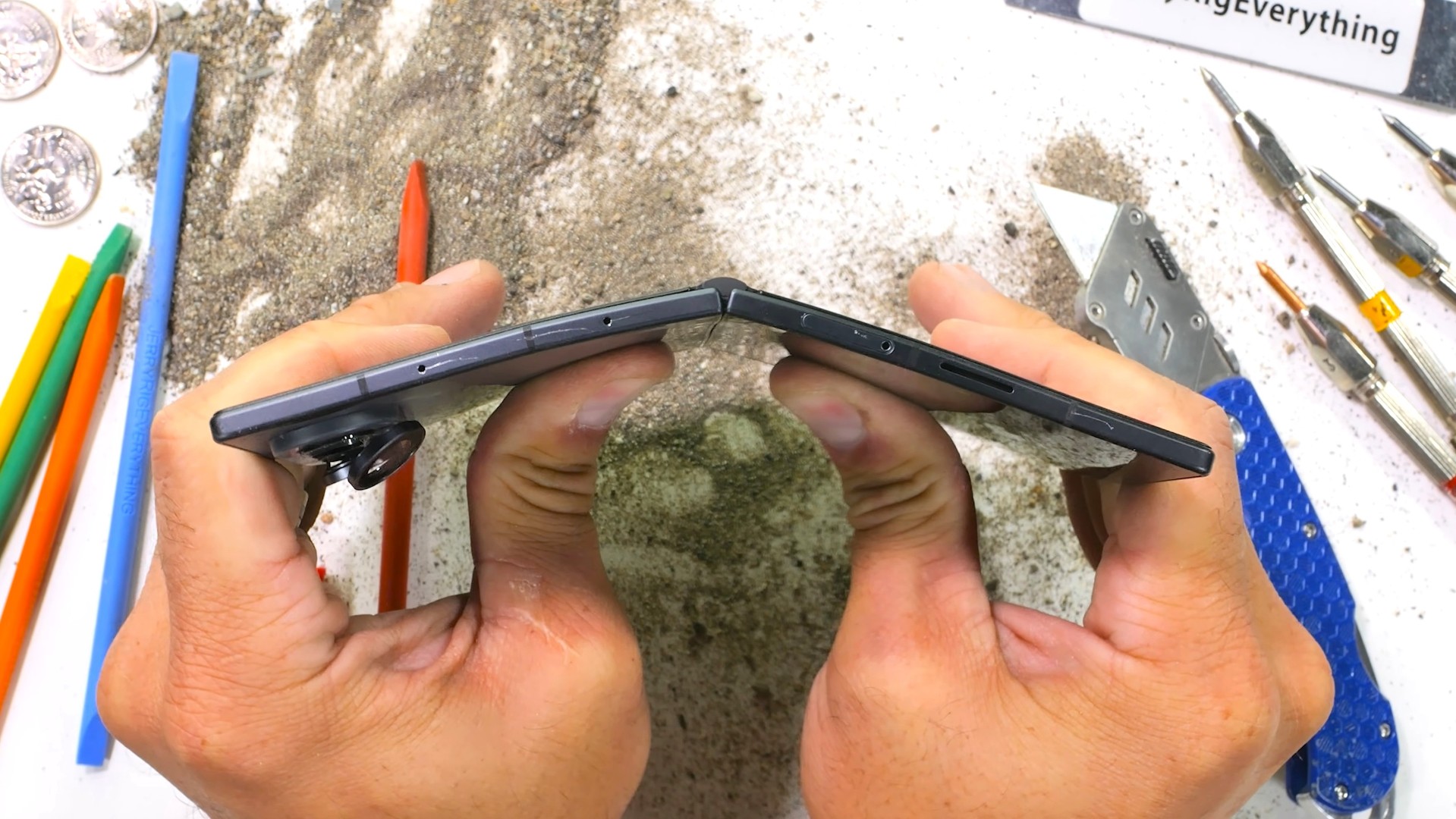
- ZDNet points to a run of owner videos from people who took a Z Fold 8 to the beach and came back with a grinding hinge.
- Facing a beach week, the reviewer left his foldable behind and carried an IP68 Pixel 10 Pro XL instead.
- Google's new foldable drops almost a millimetre and almost 20 grams versus last year's model while keeping the same sealing.
Compiled by The Product DeskSomething wrong?How this is made
Why it matters
- exposure The part left open to fine grit is the hinge, so the buyer discovers the boundary of the rating by crossing it, not by reading it.
- constraint An IP48 foldable quietly restricts where its owner will carry it, which is a strange outcome for a device sold on being the one phone you need.
- decision With a thinner, lighter IP68 foldable now on sale, weight is a weaker excuse for a lower dust rating, and Samsung's next hinge reads as a choice.
- contradiction The durability case rests on owner videos while conceding the crunch may cause no lasting harm, so what is really being compared is tolerance for an unmeasured risk.
An ingress rating is the one line on a foldable's spec sheet that describes where the phone is allowed to go rather than what it can do, and it is usually read as a single number instead of the two it actually is. Read separately, the comparison gets short. The Galaxy Z Fold 8 is IP48 [6]. The Pixel 11 Pro Fold is IP68 [9]. The water digit is 8 on both, so the whole difference between them sits in the solids digit [11].
What a 4 buys, by ZDNet's own description, is tolerance for larger dirt particles, with beach sand explicitly outside the envelope [1]. That matters because of when the buyer finds out. There is no cracked panel to photograph on day one; the reported symptom is a hinge that starts to grind, which ZDNet says shows up in a steady supply of owner videos from people who took a Z Fold 8 to the beach [13]. The component involved is the one that makes the product a foldable at all.
The spend went where it can be printed on a box. Samsung added titanium to the hinge and the inner screen of the Fold 8 and the Fold 8 Ultra [5] while the dust digit stayed at 4 [6]. Titanium is legible on a comparison chart. Particulate sealing is legible only to the person who already lost.
The most persuasive evidence in the piece is not a measurement, it is a choice: a reviewer with foldables on hand took an IP68 Pixel 10 Pro XL to South Carolina instead [7]. He is also straight about the limits of his case, conceding the crunch may not cause long-term damage to the hinge or the screen and that it simply made him nervous [14]. So this is an argument about unquantified risk rather than a documented failure rate, and it is worth saying so plainly.
The usual defence of a compromised seal is that sealing costs bulk, and last year that defence had something behind it, because Google's IP68 foldable was thicker and heavier than the Galaxy Z Fold 7 [2]. This year Google removed almost a millimetre and almost 20 grams from the Pixel 10 Pro Fold [8] without giving up IP68 [9], and added magnetic Qi2.2 charging plus back glass the company describes as nearly impossible to crack [15]. Honor's Magic V6, sold overseas only, carries IP68 and IP69 [10].
One gap in the comparison is worth flagging: ZDNet ranks the Razr Fold on battery and cameras, and the Z Fold 8 on power and design [3], but publishes no ingress rating for the Razr [12]. Two of three US foldables get graded on the spec that this argument turns on.
What to watch
- Whether Samsung raises the dust digit on a future Fold generation or keeps IP48 while adding more hinge materials.
- Whether the Razr Fold's ingress rating, absent from ZDNet's comparison, lands at IP48 or IP68.
- Whether hinge-grit complaints move from owner videos into repair or warranty data anyone can count.