Invest1 publisher3 min readPublished
Beijing's 1.4 billion barrels absorbed the Iran war premium analysts priced at double
Brent averaged about $69 a barrel last year and trades near $100 now, roughly 45% higher, six months into the war on Iran. Bank of America's base case for the second half is $83, with a $150 tail if energy infrastructure is hit.
The Investor · Invest desk
What happened
- Six months into the war Trump launched against Iran in late February, oil prices are still volatile but the doubling that energy analysts warned of has not happened.
- Brent crude averaged about $69 a barrel last year and hovers near $100 now, after briefly touching $126 in late April.
- U.S. Energy Information Administration estimates put China's strategic reserve at about 1.4 billion barrels at the end of last year, the largest oil stockpile in the world.
- As Iran's top buyer and the second-biggest consumer of oil, China drew on that stockpile and cut crude imports sharply once Tehran effectively closed the Strait of Hormuz.
- Bank of America put oil at $83 for the second half, $95 to $120 if violence escalates and chokes traffic, and up to $150 if major energy infrastructure is damaged.
Compiled by The InvestorSomething wrong?How this is made
Why it matters
- constraint Washington's interest in keeping the Beijing trade truce intact now sits alongside an oil position it does not set, because the import cuts holding prices down are Beijing's to reverse at any time.
- exposure American drivers, and the Republicans taking voter anger over pump prices, are exposed to an unannounced inventory decision made by a state oil buyer that publishes no schedule.
- contradiction A second-half average of $83 and a spot price near $100 cannot both hold for long, so either Hormuz traffic recovers on Bank of America's timetable or the forecast gets marked up.
The doubling warning, set against last year's average of about $69, means roughly $138 a barrel [2][4][1]. The market has not been there. At $100, Brent sits about 45% above that average and about $38 under the number the warning implied, and April's $126 print came within about $12 of it before fading [4][2][3].
Bank of America wrote its $83 second-half call "in light of more persistent disruptions to Hormuz" while still expecting shipping through the strait to pick up gradually [20]. Brent trades about $17 above that, some 20% [4]. Of the bank's published scenarios, only the infrastructure-damage spike of up to $150 clears $138; the $95 to $120 escalation band does not [21][5].
The stock behind that gap is Chinese. Beijing spent years and billions on the reserve [11], and Xi made energy self-reliance part of the latest five-year plan [12]. The country's EV fleet and other alternatives took more off its own demand, and the smaller import diet eased global demand, softening the price effect for the United States and Europe [14]. "The Chinese deserve credit," said retired Rear Adm. Mark Montgomery of the Foundation for Defense of Democracies. "They did in 10 years what took us 25 years after the 1973 oil crisis to do: really build a kind of strategic petroleum reserve that could allow you to weather this." [15]
Fortune's account does not quantify the drawdown or the size of the import cut [23], so the barrels released cannot be matched against the $31 the price has added since last year's average [6].
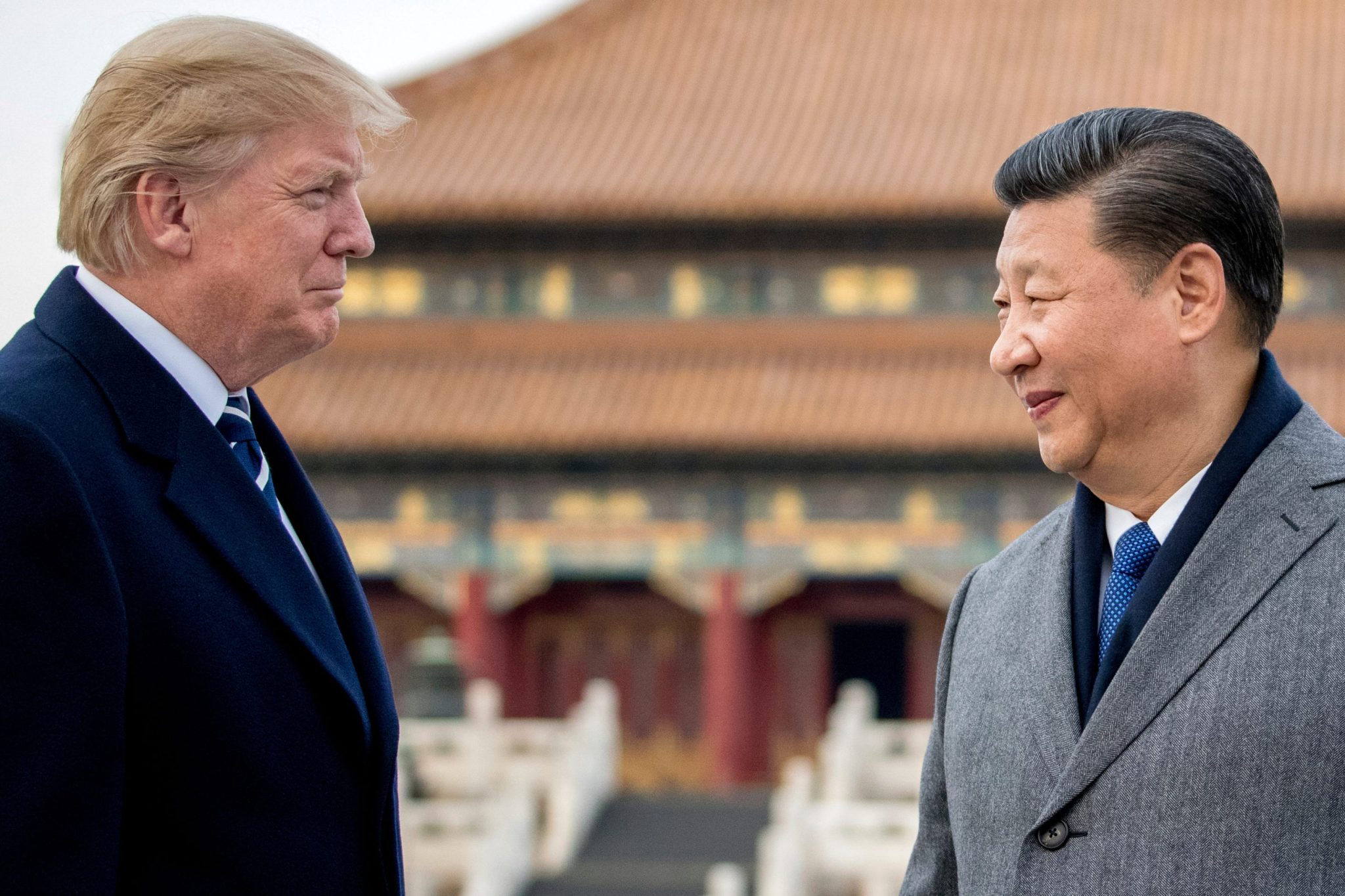
Xi arrives in Washington next week for a state visit, and it is unclear how much the two leaders will discuss Iran [5][6]. Rosemary Kelanic, who runs the Middle East program at Defense Priorities, described the motive as self-interest. "China's doing it because they understand that they're on the train that Trump is driving off a cliff. If oil prices go way up, that hurts the global economy. If it hurts the global economy, it hurts them," she said [10]. Jonathan Czin, a former senior CIA analyst now at Brookings, said Beijing treats the episode as "a vindication of Xi's last five-year plan and his focus on self-reliance" [22]. A drawdown run for those reasons does not stop because a summit goes badly.
This month's pressure came from the water. Iran-backed militia attacks led Saudi Arabia to temporarily shut a pipeline carrying crude across the kingdom to its Red Sea ports [16], the Houthis seized two islands in the southern Red Sea [17], and Gulf talks on reopening Hormuz were put on hold [18]. Trump meets Gulf Cooperation Council leaders on Tuesday in New York, on the sidelines of the General Assembly [19].
In my view the next $20 either way is set in the strait. Prices are already 45% up with the world's largest reserve leaning against them [11][2], and what moved the market this month was a pipeline closure and two island seizures [16][17]. The counter-thesis is that a reserve is a stock, not a supply: if China has run it well below the 1.4 billion barrels booked at year-end, imports have to come back, and a returning Chinese bid pushes the same way a closed strait does. A sustained rebound in Chinese crude import volumes would be the first evidence against what I have written here.
What to watch
- Monthly Chinese crude import volumes: a sustained rebound would mean the stockpile drawdown is ending and a new bid is returning to the market.
- Whether the postponed Gulf talks on reopening the Strait of Hormuz are rescheduled after Trump's meeting with GCC leaders.
- Whether Bank of America marks its $83 second-half forecast up toward the spot price, or holds it on the expectation that Hormuz traffic recovers.