Science1 publisherNot yet confirmed elsewhere3 min readPublished
Australian labour research runs on O*NET without a crosswalk. One now exists, with a warning attached
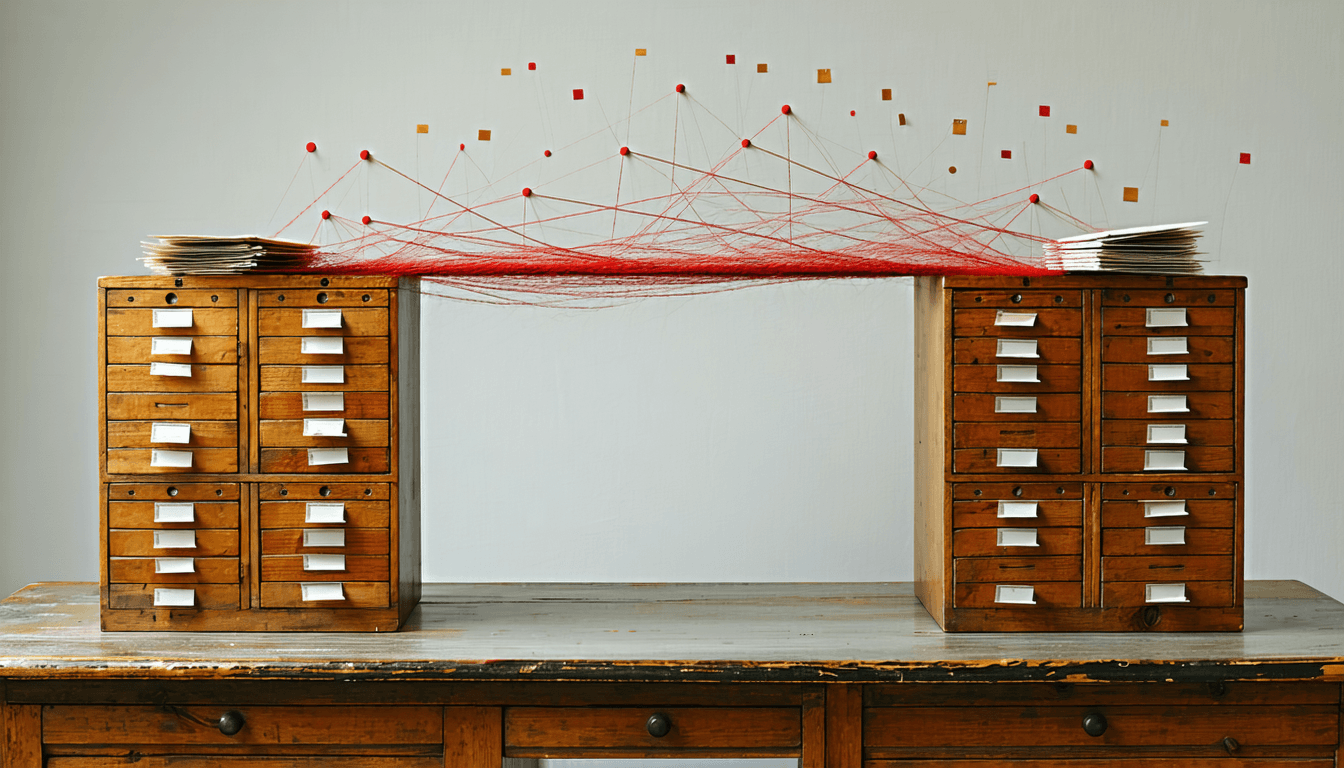
No official O*NET-SOC to ANZSCO correspondence exists. The one just published chains three many-to-many joins, and its author says the European Commission's method is probably better.
The Scientist · Science desk
What happened
- There is no official correspondence table between the O*NET occupational taxonomy and ANZSCO, even though Australian researchers use O*NET data routinely.
- An analyst has published one, built by chaining O*NET-SOC through ISCO-08 or ESCO and then OSCA to ANZSCO, with problems appearing at each step.
- The post tells readers to be suspicious of the table it produces and names the European Commission's approach as the probably better method.
Compiled by The ScientistSomething wrong?How this is made
Why it matters
- exposure Australian work that borrows O*NET similarity measures is exposed to a mapping decision made by whoever ran the join, since the source says analyst judgement is unavoidable and no agency has ruled...
- constraint With about 3.5 categories collapsing into each O*NET occupation at the first join alone, fine-grained occupation-level findings are more than the data can carry; group-level claims or hand-checked...
- decision Anyone starting an Australian O*NET project now chooses between a table its own author recommends against leaning on and rebuilding the European Commission's method from scratch.
- cost The OSCA transition means this rebuild cost recurs, and it lands on individual researchers rather than on a statistical agency.
The problem is arithmetic before it is taxonomy. The best SOC-to-ISCO correspondence the author could find maps 3,349 categories onto 958 O*NET occupations, and none of the matches are one-to-one [8]. That works out at roughly 3.5 source categories per O*NET occupation [19], and it happens at the first of three joins. ISCO-08 correspondences are published only at unit group level, so OSCA occupations arrive bundled into large groups on the way through [9].
The bundling does not run in one direction, which is what stops the chain being fixed by more careful joining. Engineering Technologist is assigned to several ISCO-08 groupings at once [7]. The ISCO/ESCO category for sports, recreation and cultural centre managers picks up two O*NET jobs, while O*NET's legislators splits across more than one ISCO/ESCO category [10]. On the Australian side, Production Manager (Manufacturing) carries more than one ANZSCO grouping [6]. Many-to-many at every step means the person building the table is deciding, not deriving. The author says so directly: analyst judgement is required to make the match fit the use case, and anyone working on trucking occupations, for instance, should confirm by hand that the data has been sensibly assigned [11].
That instruction is the part with teeth for anyone citing O*NET-derived numbers in an Australian paper. If the mapping requires judgement, the mapping is a result, with as much claim on the methods section as the model that consumes it.
The pointer to the European Commission's approach is unusual enough to sit with [4]. A crosswalk arrives carrying a note from its own author that a better method probably exists elsewhere and has not been reproduced here. Whoever picks up the table inherits that note, whether or not they pass it on.
Then there is decay. OSCA is the new standard and the successor to ANZSCO [12], which the author expects will give this crosswalk a short useful life [13]. The underlying correspondence tables were sourced from O*NET and the ABS on 21 August 2026 [14], so the artefact is pinned to a date and will drift at both ends. The author's own guess at why no official table exists is that OSCA is new and that O*NET-SOC does not match cleanly to ANZSCO or to the intermediate tables anyway [16]. The same mismatch turns up whenever datasets use different definitions of industries, administrative boundaries or products [17].
Worth noting how the work was made: the code was written largely with Claude, while the write-up was left more or less alone [15]. For a data-cleaning and joining exercise, that is the reverse of the usual concern. The thing a reader needs to review is the joins, and the joins came out of a machine. The whole exercise began as groundwork for a 2025 advisory project mapping occupational transition pathways in India [1], where the viability of a move between jobs was judged partly on how similar the two occupations were, conditional on geography, wage differentials and education [2].
What to watch
- Whether the ABS or O*NET publishes an official correspondence between O*NET-SOC and OSCA, which would retire the ad hoc mappings currently in circulation.
- The author's promised follow-up replicating ANZSCO-based research, which would show how far the mapping choices move the results.
- Whether the European Commission methodology the post prefers is documented in enough detail for someone else to apply it to OSCA.
Clarity's read
What the record supports and how the coverage leans. The claims behind it follow.
Reality
- Evidence55
- Adoption12
- Hype gap−20
- Incentives30
- Confidence58
Claim ledger
Ranked by verification strength, evidence, and original report placement.
- [1]
In 2025 the author served as an adviser for a project to map occupational transition pathways in India.
- [2]
The India project's methodology leaned heavily on studies using O*NET occupational profile data, with the viability of a transition pathway determined in part by how similar two jobs are, conditional on geography, wage rate differentials and education.
- [3]
There is no official crosswalk between the O*NET occupational taxonomy and ANZSCO, despite Australian researchers frequently using the O*NET database.
- [4]
The post tells readers to be suspicious of relying on the crosswalk it builds, and suggests a better methodology is probably the one applied by the European Commission.
- [5]
The crosswalk is assembled in steps: ANZSCO to OSCA, ISCO-08 (or ESCO) to OSCA, and SOC to ISCO-08 (or ESCO), with problems arising at every step from SOC to ANZSCO.
- [6]
In most cases ANZSCO occupations have been assigned to one or more OSCA group, but the opposite also occurs, such as Production Manager (Manufacturing), which has been assigned more than one ANZSCO grouping.
- [7]
Engineering Technologist is assigned to several ISCO-08 groupings at the same time.
- [8]
One of the best SOC-to-ISCO crosswalks maps 3,349 occupations to 958 occupations in the O*NET, and these are not 1:1 matches.
- [9]
Because ISCO-08 groupings are only provided at the unit group level, in most cases OSCA occupations are bundled into large groups.
- [10]
The ISCO/ESCO job Sports, recreation and cultural centre managers is assigned two jobs from the O*NET, while the O*NET occupation legislators is assigned to more than one distinct ISCO/ESCO occupation category.
- [11]
The author writes that the judgement of the analyst is required to decide how to match one standard with the other to suit the use case, giving the example that research on trucking occupations should confirm the data drawn on is sensibly assigned.
- [12]
The Occupation Standard Classification for Australia (OSCA) is a new standard and the modern successor of the ANZSCO.
- [13]
The author states that because OSCA succeeds ANZSCO, this crosswalk and post will have a short shelf-life.
- [14]
The correspondence tables used were originally sourced from the O*NET and the ABS on 21/8/2026.
- [15]
The author states Claude was heavily leaned on to write the code for the post, while the write-up is more or less untouched by AI.
- [16]
The author suspects official correspondence tables do not exist because OSCA is a new standard and because the O*NET-SOC taxonomy does not cleanly match ANZSCO or the intermediate correspondence tables.
- [17]
The same definitional mismatch problems arise when connecting datasets that use different definitions for industries, administrative boundaries and/or products.
- [18]
The author plans a future post that uses the ANZSCO standard and replicates research using it.
- [19]
The best available SOC-to-ISCO crosswalk collapses an average of about 3.5 source categories into each O*NET occupation.
Sources
1 independent publisher whose own reporting we read for this story.
- r-bloggers.comThe boring part first: Building a crosswalk from O*NET-SOC to ANZSCO
1 article · August 20, 2026
Topics and entities
Follow any of these and your For You feed starts watching them — no settings page required.
Topics
Entities
- O*NETFollow
- ANZSCOFollow
- OSCAFollow
- ISCO-08Follow
- ESCOFollow
- SOCFollow
- Australian Bureau of StatisticsFollow
- European CommissionFollow
- ClaudeFollow
- tidyverseFollow
- R-bloggersFollow