Product3 publishers3 min readPublished
Apple's $1,999 folding iPhone puts two apps side by side with a drag
Apple's first folding iPhone starts at $1,999 and unlocks with a side-button Touch ID sensor instead of Face ID. Keynote demos showed a drag docking a second app beside the first. App teams inherit that part.
The Product Desk · Product desk
What happened
- Apple unveiled the iPhone Duo, its first folding iPhone, at Wednesday's Surprise and Shine event, with a starting price of $1,999.
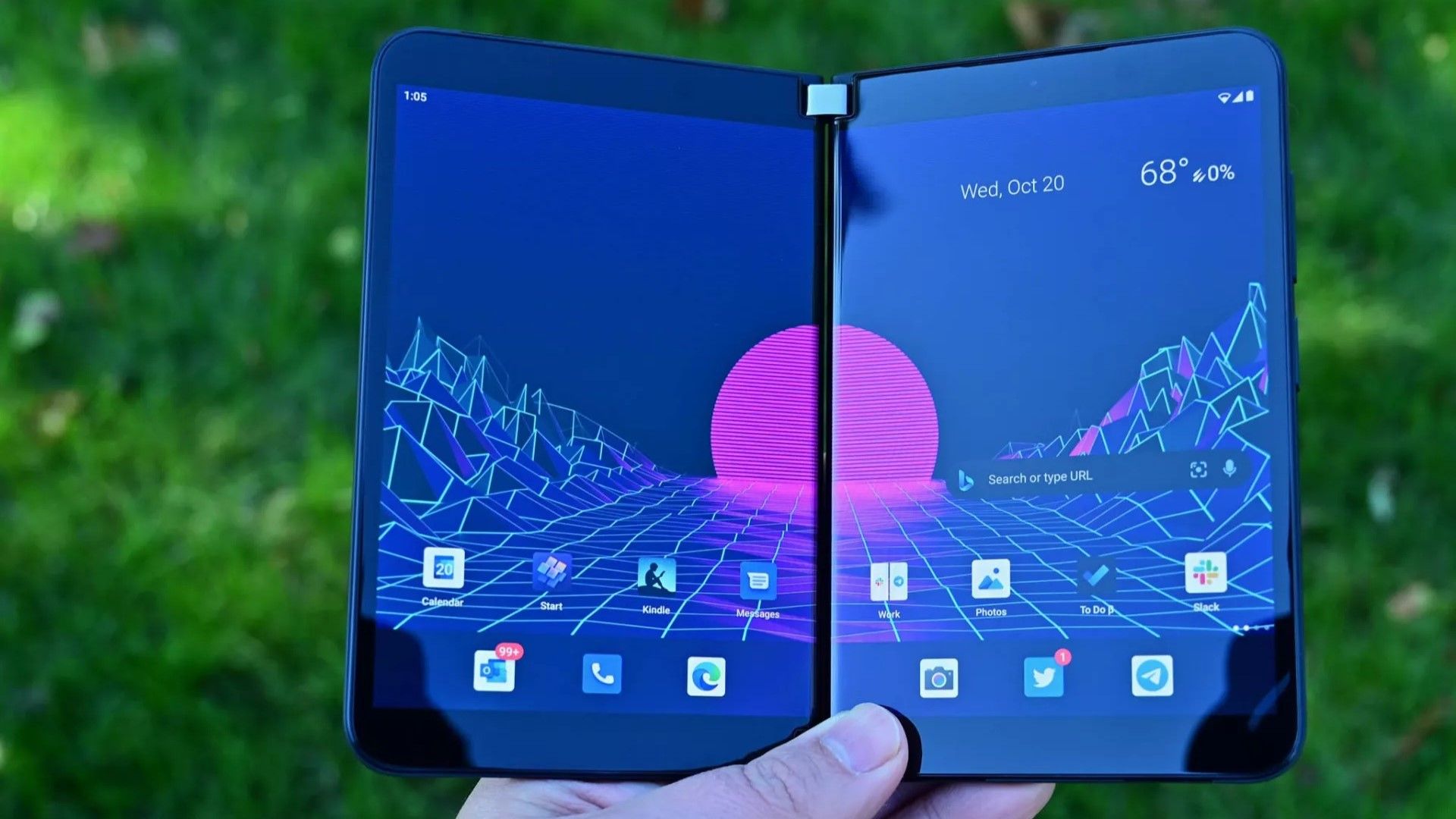
- Windows Central says the keynote demos showed a user dragging an app to one side to dock it, with the home screen filling the other half and tapped links opening in a browser beside the app.
- The Duo takes pen input via the Apple Pencil, a feature Windows Central traces back to the Surface Duo.
Compiled by The Product DeskSomething wrong?How this is made
Why it matters
- cost Any product whose onboarding copy, help pages and support scripts say Face ID now owns a string-and-screenshot cleanup, plus a QA device that authenticates by side button.
- constraint Teams that pushed primary actions to the bottom right for thumb reach have built for a hand this device does not favour, on a body wide enough that reach zones stop being a rounding error.
- capability Note, sketch and markup apps that never handled pencil events on iPhone get a stylus surface in a phone-sized device, without an iPad in the bag.
- decision Case and grip makers have to choose between cutting tooling on a hinge with no published durability figure and waiting for teardowns, and Apple did not announce a ship date to plan around either.
Steve Moser had worked out his problem with the folding iPhone before he had held one. "My left hand has learned to operate a smart phone and my right hand does everything else," he wrote in a post quoted by Cult of Mac [6]. Cult of Mac reports that Apple put the Touch ID sensor on the right side of the Duo, moved many navigation elements to the right of a redesigned Home Screen, and that on a wider body some left-handed users may find the device unusable [3][5]. The publication attributes the sensor move to the passport-like design, which also brought a hole-punch front camera in place of Face ID [3].
The split is the behaviour that reaches the most product teams, and the detail worth reading closely is who starts it. Most single-screen foldables treat the unfolded panel as a tablet screen and make the user enter a separate multitasking view first, Windows Central notes [12]. On the Duo demos, the drag alone docks the app, with no separate multitasking view, and the Home Screen sits on the other half until the user picks something [11].
Critics say Apple is late to book-style folding phones. Cult of Mac reports that many pointed out Samsung has been releasing them for seven-plus years, and Samsung Mobile US replied to the launch with "Let us know when you're done reheating our leftovers" [8][7]. Apple opened the Duo segment by saying "others have created foldables that just feel like two phones awkwardly stuck together" [13]. Windows Central says that is a nod to the Surface Duo, which Microsoft launched in 2020 with two internal screens and no outer display, and killed two years later [9][10]. So the multitasking model Windows Central credits has been off the market roughly four years [21].
Apple framed the iPhone and the Duo as "personal hubs" for AI [25]. CNET reports that no Siri home display appeared at the event, and that the Duo can be tented to show a calendar or an alarm clock [15][16]. CNET's writer says the tented phone is not big enough to serve as a second TV screen and its speakers do not compare with room-filling home displays [16].
Teams tell themselves foldable support is a size class, handled once in a layout pass. The demos describe someone halving the window while a form is half filled in. Two failure modes are worth separating. A broken layout is visible in a screenshot and gets fixed in a sprint. Lost state on resize arrives weeks later as a support thread about a vanished draft, and the screens to look at first are the ones holding unsaved input.
What to watch
- Whether the drag-to-dock split behaviour seen in the demos ships intact in the build users get, given Siri AI arrives in beta when OS 27 drops Monday.
- Whether Apple ships the Siri home display CNET says was absent, with more iPad mini news expected potentially in October.
- Whether the shipping Home Screen layout offers any left-handed option for the navigation elements Cult of Mac says moved to the right.