Invest1 publisherNot yet confirmed elsewhere2 min readPublished
Seoul answers Ukraine's diesel complaint by pointing to its 1,402-item export-control list
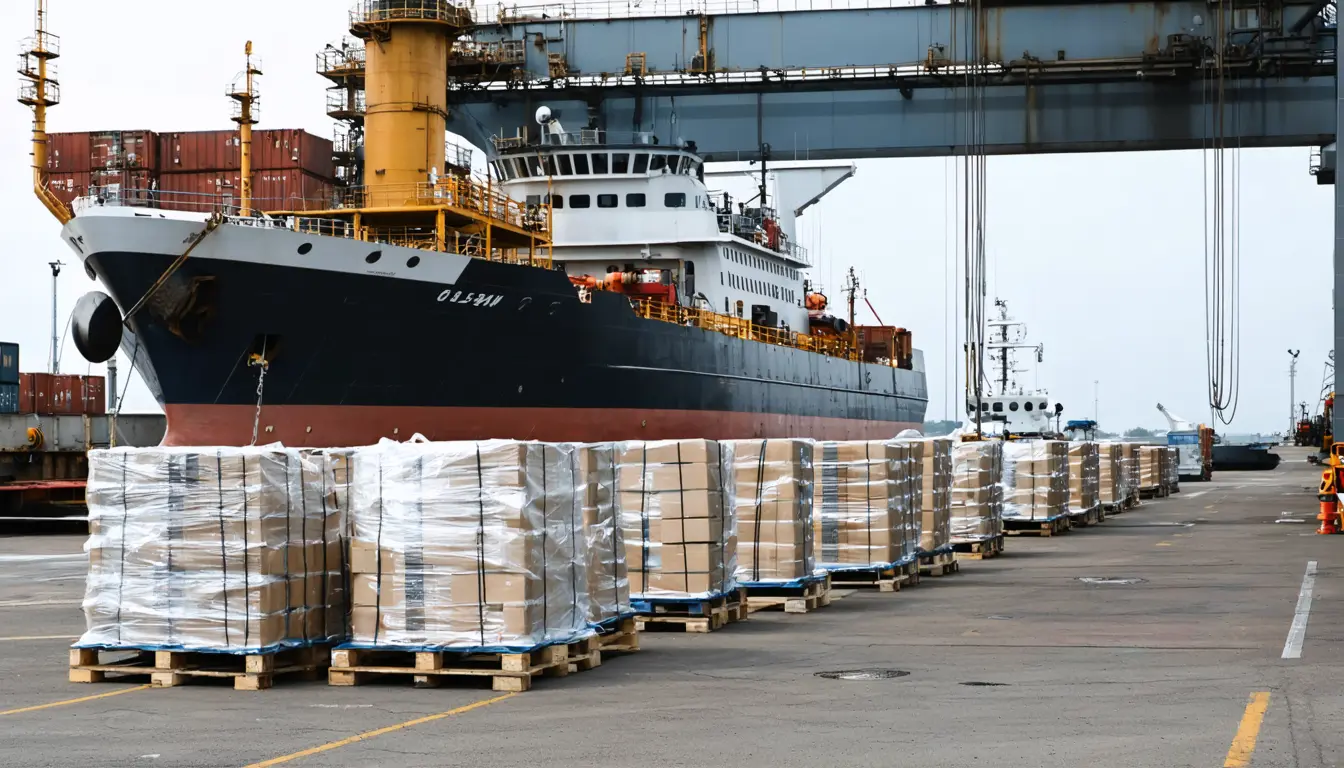
Ukraine's sanctions adviser Vladyslav Vlasiuk criticized South Korean fuel shipments to Russia after the Guardian tracked over 176,000 tons in July and August. Any cost to the refiners shipping from Ulsan and Yeosu would come through Seoul's own export-control list, and the government's reply leaves open whether diesel is on it.
The Investor · Invest desk
What happened
- Most of the cargo was diesel, the product the Guardian said is in shortest supply in Russia because of Ukrainian attacks.
- South Korea's foreign ministry said its Foreign Trade Act controls cover strategic goods plus 1,402 non-strategic items with possible military use, and are strictly enforced.
- Vlasiuk also faulted Seoul for staying out of the price cap on Russian crude, buying Russian coal and LNG, and considering renewed crude and naphtha imports.
- The Kyiv Post said the rise in fuel shipments began around July, when President Lee Jae-myung pledged $100 million for Ukraine's reconstruction.
- Seoul's Presidential Office had demanded a formal explanation and apology from Kyiv in late September over its disclosure of two North Korean prisoners' transfer.
Compiled by The InvestorSomething wrong?How this is made
Why it matters
- exposure Korean refiners carry a cost only if Seoul moves: putting diesel on the control list would subject a Far East trade of roughly 88,000 tons a month to the same controls as the 1,402 items.
- contradiction Seoul's claim of strict control and the Guardian's tonnage can both be true if diesel sits off the list, so Kyiv is in effect asking Seoul to widen it.
- precedent Seoul has already widened catch-all controls on Russia and Belarus once, with Kyiv's approval, so adding refined fuel would extend an instrument Seoul already uses.
Seven tankers making 14 voyages over two months means each one averaged two loaded trips [11], at about 12,600 tons a cargo [10]. Spread across July and August, the flow from Ulsan, Yeosu and other ports into Vladivostok and the rest of Russia's Far East comes to roughly 88,000 tons a month [2][12].
The buyers had reason to pay for it. In June, Russia's refineries processed less crude than at any point in two decades, and diesel production was almost 30% below the level of a year before [5]. Around July, Ukraine's General Staff claimed that 43% of Russian refining capacity was out of action [15]. Kyiv argues that Korean fuel gives Moscow breathing room while Ukraine steps up strikes on Russian oil facilities [9].
Seoul's defence covers less ground than it appears to. The foreign ministry's answer is about how strictly it enforces a list [4]. The shipments raise a question about what is on it. The reporting does not say whether diesel is among the 1,402 controlled non-strategic items, and it shows no government proposing sanctions on Korean refiners [4].
Seoul could extend its controls to refined fuel, and the refiners would give up a route the seven tankers ran at two voyages apiece over July and August [11]. Or it could leave the list alone. Doing nothing is easier while the two governments are still arguing over the transfer of two captured North Korean soldiers [13][14]. The third path runs through a government with leverage over Korean trade taking up the Guardian's data.
I think Seoul leaves the list alone. The only government pressing in this record is Ukraine's, and nothing in it gives Kyiv a say over a Korean export licence. The counter-case is that Vlasiuk's post was itemised, setting credits for Seoul's existing controls against complaints about fuel and energy purchases [6][7]. That format lets Seoul fix one item and leave the others. Diesel would be the cheapest item for Seoul to concede, because it costs refiners an export market while the coal and LNG complaints touch Korea's own energy imports [7]. I would be wrong if a government that enforces the Russian crude price cap cites the Guardian's tonnage.
What to watch
- Whether South Korea's foreign ministry states if diesel and other refined products fall within the 1,402 controlled non-strategic items.
- Port records and tracking data for September onward from Ulsan and Yeosu, to see whether the tankers kept up two voyages apiece.
- Any settlement of the prisoner-disclosure row between Seoul and Kyiv, since it would remove Seoul's main political reason to set the fuel complaint aside.
Clarity's read
What the record supports and how the coverage leans. The claims behind it follow.
Reality
- Evidence45
- Adoption
- Insufficient
- Hype gap+15
- Incentives60
- Confidence50
Claim ledger
Ranked by verification strength, evidence, and original report placement.
- [1]
Vladyslav Vlasiuk, the Ukrainian presidential adviser on sanctions, said on the 6th that the shipments stood in stark contrast to South Korea's sanctions policy toward Russia, referring to reports that Korea had supplied diesel and other fuels to Russia.
- [2]
Seven tankers carried more than 176,000 tons of petroleum products in 14 separate shipments from Ulsan, Yeosu and other South Korean ports to Vladivostok and other parts of Russia's Far East in July and August.
ReportedSupportedSource: The Guardian, based on port records and vessel-tracking data, as reported by Seoul Economic DailyView cited source - [3]
Most of the fuel sent to Russia was diesel, the product in shortest supply in the Russian market because of Ukrainian attacks.
- [4]
South Korea's Ministry of Foreign Affairs told the Guardian that under the Foreign Trade Act it had broadened its export-control list to cover not only strategic goods but also 1,402 non-strategic items that could be used for military purposes, and that it enforces those controls strictly.
- [5]
Russian refinery runs fell in June to their lowest level in 20 years, and diesel output dropped nearly 30% from a year earlier.
- [6]
On X, Vlasiuk cited as positives Seoul's expansion of catch-all export controls covering Russia and Belarus and its sanctions on Russian vessels and entities involved in military cooperation with North Korea.
ReportedSupportedSource: Vladyslav Vlasiuk post on X, as reported by Seoul Economic DailyView cited source - [7]
As negatives, alongside the petroleum product shipments, Vlasiuk noted that South Korea had not joined the price cap on Russian crude, continued to buy significant volumes of Russian coal and liquefied natural gas, and had considered resuming imports of Russian crude and naphtha.
ReportedSupportedSource: Vladyslav Vlasiuk post on X, as reported by Seoul Economic DailyView cited source - [8]
The Kyiv Post said the increase in fuel imports began around July, the period when President Lee Jae-myung pledged $100 million for Ukraine's reconstruction at the NATO summit.
- [9]
Ukraine is stepping up strikes on Russian oil facilities to choke off Moscow's revenue, and Kyiv argues that Korean fuel supplies give Russia breathing room.
- [10]
The shipments averaged about 12,600 tons of petroleum products each.
- [11]
Each of the seven tankers averaged two loaded voyages over July and August.
- [12]
The flow from Korean ports to Russia's Far East averaged roughly 88,000 tons a month in July and August.
- [13]
South Korea's Presidential Office on the 28th of last month demanded a formal explanation and apology, saying Ukraine had unilaterally disclosed the confidential agreement on the transfer of two captured North Korean soldiers to South Korea.
ReportedContestedSource: South Korean Presidential Office, as reported by Seoul Economic DailyView cited source - [14]
Ukraine maintains that it notified Seoul in advance of the contents of Zelensky's U.N. speech and that the address did not reveal the soldiers' identities.
- [15]
Around July, Ukraine's General Staff claimed it had knocked out 43% of Russia's refining capacity.
ReportedInsufficientSource: Ukraine's General Staff, as reported by Seoul Economic DailyView cited source
Sources
1 independent publisher whose own reporting we read for this story.
- en.sedaily.comUkraine Aide Criticizes Korean Fuel Shipments to Russia
1 article · October 6, 2026
Topics and entities
Follow any of these and your For You feed starts watching them — no settings page required.
Topics
- South Korea–Ukraine relationsFollow
- Russia Sanctions RegimesFollow
- Export Controls and Technology AccessFollow
- Refined fuel tradeFollow
Entities
- Vladyslav VlasiukFollow
- South Korea Ministry of Foreign AffairsFollow
- The GuardianFollow
- The Kyiv PostFollow
- Agence France-PresseFollow
- Lee Jae-myungFollow
- Volodymyr ZelenskyFollow
- Foreign Trade Act (South Korea)Follow