InvestNot yet confirmed elsewhere1 publisher3 min readPublished
Blumenthal staff report ties 84% of 846 sanctioned wallets to Tether's USDT
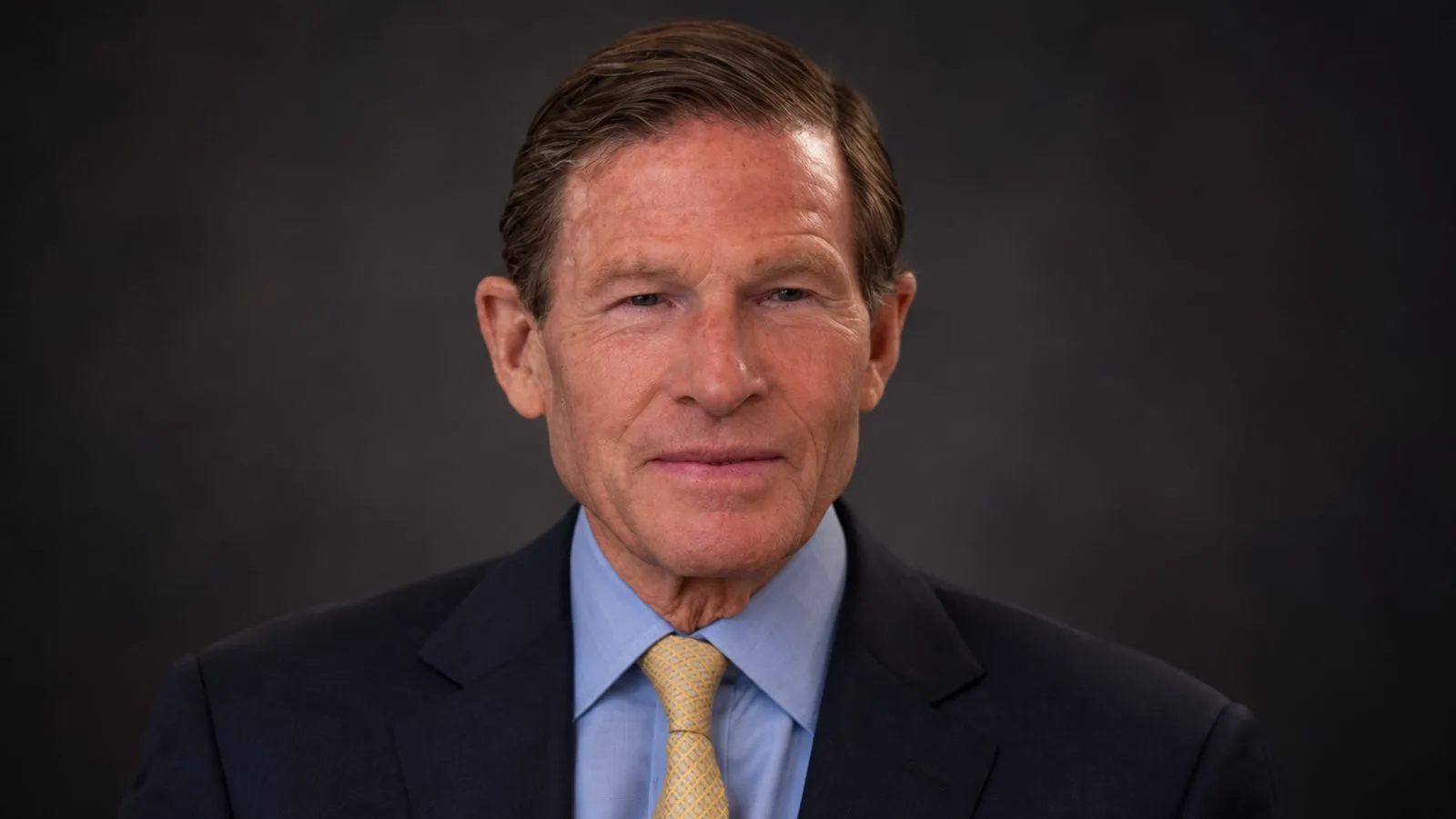
Senator Richard Blumenthal's staff found that 84% of 846 sanctioned, terror-linked wallets relied heavily on Tether's USDT. He wants Treasury and Justice to examine Tether's sanctions and money-laundering controls, though neither agency has yet announced an inquiry.
The Investor · Invest desk
What happened
- The 84% blends two lists: 87% of wallets designated by Israel's counter-terror financing bureau used USDT, against 57% of those designated by the US Treasury's OFAC.
- Cantor Fitzgerald owns 5% of Tether and manages a substantial portion of its US reserves, estimated at more than $100 billion.
- Tether says it cooperates with law enforcement and that it helped freeze about $550 million of Iran-affiliated USDT during 2026.
Why it matters
- constraint On the report's own percentages, OFAC's list holds only a few dozen USDT wallets, so a US enforcement case would start from a far narrower base than the 84% headline suggests.
- exposure Cantor's dual role pulls the inquiry toward Tether's reserves, where a finding would touch every USDT holder and settler, including those whose own counterparties are clean.
- decision Institutions with heavy USDT balances have to decide whether to trim them before any agency acts; cryptobriefing.com expects caution and weaker institutional adoption.
Those two rates can only blend to 84% if the lists are lopsided. Assume the report's percentages measure the same thing and no wallet appears on both lists. Then about 90% of the 846, or roughly 761 wallets, would be Israeli designations, which leaves around 85 on OFAC's list and roughly 48 of those using USDT [17]. The headline count of heavy USDT users comes to about 711 [12]. The cryptobriefing.com account does not give a per-list count, and "relied heavily" in the headline figure may be a stricter test than "used" in the breakdown [3][4].
The split matters for a US case. The officials Blumenthal wrote to are Treasury Secretary Scott Bessent and Attorney General Todd Blanche, and OFAC is the Treasury's own sanctions office [8][2]. On their own list they would have a few dozen wallets to work from, against about 711 in the headline figure [12][17].
Tether's answer is the freeze. A single company issues USDT and can freeze tokens at specific addresses [10]. Tether says it helped freeze roughly $550 million this year, about 91% of what the two smugglers alone moved, a shortfall of about $53 million [13]. The periods differ: the freezes are a 2026 total, and the report's review window opened in June 2021 [2][9]. A freeze stops tokens still sitting at an address, and the $603 million had already passed through Hezbollah- and Houthi-linked networks [5][10].
Cantor Fitzgerald is the name that reaches holders who never go near a sanctioned address. The report's worry is that a firm with both an ownership stake and a custodial role may not be the most neutral party to scrutinise how the product is used [7]. Cantor has two interests in Tether: it is a 5% shareholder, and it manages a large part of US reserves estimated above $100 billion [6]. In cryptobriefing.com's assessment, if the self-dealing questions gain traction, the scrutiny could reach how those reserves are managed as well as how the tokens are used [15].
I see three plausible paths. The agencies could leave the letter unanswered. Treasury could open a sanctions inquiry, and Tether, with a freeze tool already in daily use, would have a ready way to show cooperation [10]. Or the inquiry could widen to the reserves and to Cantor; cryptobriefing.com says systemic findings could push stricter rules on wallet screening, freezes and reporting across all stablecoins [16].
I think the second path is the likeliest to produce anything. The OFAC subset gives a US agency its own data, and freezing more costs Tether far less than any change to who holds its reserves. The case against that view is that this is one senator's staff report, and a senator's letter is not an indictment [1][11]. If neither Treasury nor Justice has said anything by the end of 2026, the view is wrong [11].
What to watch
- A per-list breakdown of the 846 wallets, which would confirm or overturn the estimate that only about 85 sit on OFAC's list.
- Whether Tether expands its freezing activity or publishes more detail on its sanctions screening.
- Whether Cantor Fitzgerald addresses its dual role as Tether shareholder and reserve manager.
Clarity's read
What the record supports and how the coverage leans. The claims behind it follow.
Reality
- Evidence40
- Adoption
- Insufficient
- Hype gap+20
- Incentives55
- Confidence35
Claim ledger
Ranked by verification strength, evidence, and original report placement.
- [1]
On September 28, 2026, Democratic Senator Richard Blumenthal released a staff report arguing that Tether's USDT has become a primary payment rail for Iran-linked networks and sanctioned entities tied to terrorist proxies.
- [2]
Blumenthal's staff reviewed 846 wallets designated by the US Treasury's Office of Foreign Assets Control (OFAC) and Israel's National Bureau for Counter Terror Financing; the review window ran from June 2021 to August 2026.
- [3]
84% of the 846 wallets relied heavily on USDT, making Tether's token the predominant asset moving through the flagged addresses.
- [4]
Among wallets flagged by Israel, 87% used USDT; among OFAC-designated wallets, the figure was 57%.
- [5]
Two sanctioned Iranian oil smugglers moved over $603 million in USDT through networks connected to Hezbollah and Houthi factions.
- [6]
Cantor Fitzgerald holds a 5% equity stake in Tether and manages a substantial portion of Tether's US reserves, which are estimated above $100 billion.
- [7]
Blumenthal points to concerns over potential self-dealing; as framed in the report, a firm with both an ownership interest and a custodial role may not be the most neutral party when scrutinizing how the product is used.
- [8]
Blumenthal formally asked Treasury Secretary Scott Bessent and Attorney General Todd Blanche to open inquiries into Tether's operations, focused on sanctions compliance and anti-money laundering practices.
- [9]
Tether says it cooperates with law enforcement and claims it helped freeze around $550 million in Iran-affiliated USDT during 2026.
- [10]
USDT is issued by a central company that can freeze tokens at specific addresses, and Tether points to that capability as evidence it cooperates with authorities.
- [11]
A letter from a senator is not an indictment, and Treasury and the Justice Department have not announced any investigation in response.
- [12]
About 711 of the 846 wallets relied heavily on USDT.
- [13]
Tether's roughly $550 million of 2026 freezes equals about 91% of the more than $603 million the two smugglers moved, a gap of about $53 million.
- [14]
Investors, particularly those with heavy USDT exposure, may respond with increased caution, and heightened scrutiny may affect USDT's liquidity and adoption among institutional investors.
- [15]
If questions about self-dealing gain traction, the scrutiny could extend to how Tether's reserves are managed, not just how its tokens are used.
- [16]
If probes uncover systemic issues within Tether's operations, regulators could push stricter operational rules across all stablecoins on wallet screening, freezes and reporting.
- [17]
If the percentages measure the same thing and the lists do not overlap, about 90% of the 846 wallets (roughly 761) were Israeli designations, leaving about 85 on OFAC's list, of which roughly 48 used USDT.
Sources
1 independent publisher whose own reporting we read for this story.
- cryptobriefing.comSenator Blumenthal probes ties between Tether and Cantor Fitzgerald
1 article · October 8, 2026
Topics and entities
Follow any of these and your For You feed starts watching them — no settings page required.
Entities
- TetherFollow
- USDTFollow
- Richard BlumenthalFollow
- Cantor FitzgeraldFollow
- Office of Foreign Assets ControlFollow
- Scott BessentFollow
- Todd BlancheFollow
- National Bureau for Counter Terror FinancingFollow