InvestNot yet confirmed elsewhere1 publisher3 min readPublished
Bessent says the US could seize $1 billion of Iran-linked crypto within a week
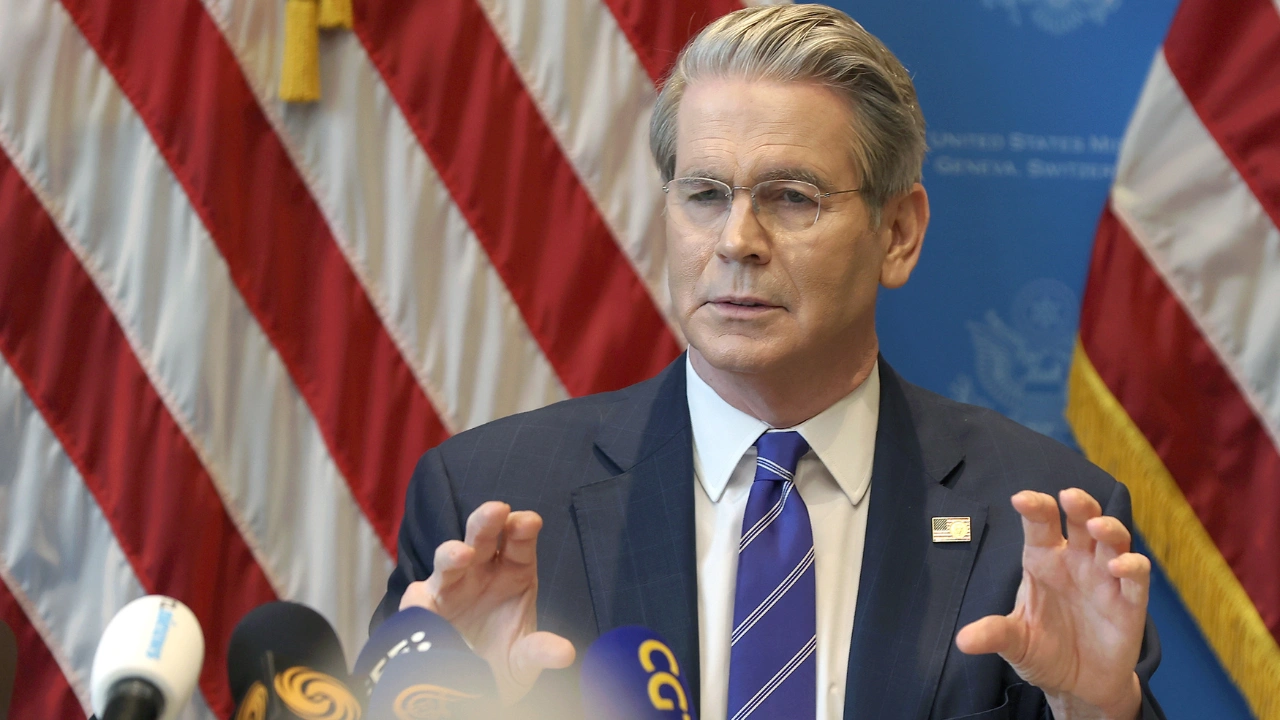
Scott Bessent said the US could seize up to $1 billion in Iran-linked crypto this week, nearly twice the $550 million Tether says it helped freeze this year. How much work falls on issuers and exchanges depends on whether that figure is new money or USDT already frozen at blocked addresses.
The Investor · Invest desk
What happened
- Bessent gave no details on wallets or the legal process and did not show that any action had started, though he said the government knows where the assets are held.
- Elliptic linked $507 million in USDT directly to the Central Bank of Iran and said the bank was using it to prop up a collapsing rial.
- Operation Economic Outcast, launched August 24, named digital assets as one of five sanctionable Iranian sectors and designated nearly 60 entities, individuals and vessels.
Compiled by The InvestorSomething wrong?How this is made
Why it matters
- exposure If the target looks like the Senate's sample, where 84% of Iran-linked wallets ran almost entirely on USDT, most of a $1 billion seizure would again fall on Tether's token, as the April and July freezes did.
- precedent A seizure would turn balances that Iran still nominally controls into US government property, which goes further than the freezes that made up this year's enforcement against Iran-linked stablecoins.
- constraint The September forfeiture case covers about 6% of the target, so seizing $1 billion in a week needs either a much larger legal action or assets that are already frozen.
A freeze and a seizure are different legal acts. Frozen tokens stay under the control of the Iranian-held addresses but cannot be transferred or redeemed, while a seizure transfers ownership to the government [5]. Measured against Tether's tally, Bessent's target is about 1.8 times as large [13].
Tether's figure sits in very few places. More than $344 million came from two addresses in April and over $130 million from four TRON wallets in July [6]. That puts about $474 million in six addresses, with roughly $76 million spread across other tranches [14]. Separately, Elliptic linked $507 million in USDT directly to the Central Bank of Iran, which it said the bank was using to prop up a collapsing rial [7].
The week can go three ways, and the first two depend on whether the two pools overlap. If the $1 billion includes the USDT already frozen, Treasury's step is to turn balances that are already stuck into government property, only about $450 million is newly identified [15], and most of the work lands on prosecutors. If the $1 billion comes on top, the extra assets are probably in USDT as well. Richard Blumenthal led a Senate Permanent Subcommittee on Investigations review that examined 846 Iran-linked wallets and found that 84% of them, about 711, used Tether's token for almost all of their transactions [8][16]. The third outcome is that the deadline slips.
Bessent has a record of meeting the Iran deadlines he sets, Cryptopolitan reported [19]. On August 13 he told Newsmax to "watch this space for more announcements coming next week because we are going to apply measures like have never been seen in the history of the economic isolation of a country" [10]. Operation Economic Outcast arrived on August 24 [9], 11 days later [18].
I think the first outcome is the most likely. The civil forfeiture case federal prosecutors filed in September seeks about $61 million in crypto tied to Iranian oil sales [12], roughly 6% of Bessent's figure [17]. Moving $1 billion in a week is easier when the tokens already sit at blocked addresses. Bessent himself makes the counter-case: he told reporters the government already knows where the assets are held [3]. He may mean addresses Tether has not frozen yet. This view is wrong if a filing lists wallets beyond the six from April and July, or names balances held at an exchange or in a token other than USDT.
For issuers and exchanges, the cost depends on which of those it is. Bessent did not give details on wallets or the legal process, or show that any action has started [4]. Until Treasury acts, then, platforms cannot add the target addresses to their screening lists. The campaign behind the threat is broad. Operation Economic Outcast named digital assets as one of five Iranian sectors open to sanctions, alongside technology, gold, aviation and shipping, and designated nearly 60 entities, individuals and vessels, according to an analysis by Pillsbury Winthrop Shaw Pittman [9]. Bessent described the strategy as an "absolute isolation operation" [11].
What to watch
- Whether a seizure filing lists the six USDT addresses frozen in April and July or new ones, which shows whether the $1 billion is new money.
- Whether any filing names balances at an exchange or in a token other than USDT, which would put the screening burden beyond Tether.
- Whether the week passes with no action, measured against the 11 days between Bessent's August 13 promise and the August 24 launch.
Clarity's read
What the record supports and how the coverage leans. The claims behind it follow.
Reality
- Evidence40
- Adoption
- Insufficient
- Hype gap+35
- Incentives55
- Confidence40
Claim ledger
Ranked by verification strength, evidence, and original report placement.
- [1]
Treasury Secretary Scott Bessent said the US could seize up to $1 billion in Iran-linked cryptocurrency this week.
- [2]
Tether says it has helped the US freeze roughly $550 million in Iran-linked USDT this year.
- [3]
Bessent told reporters that the US government already knows where the assets are held and could move on them within a week.
- [4]
Bessent did not provide any details about wallets, the legal process, or proof that Treasury has already initiated actions.
- [5]
Frozen funds remain under the control of the Iranian-held addresses but cannot be transferred or redeemed; a seizure transfers ownership of the assets to the government.
- [6]
Tether's freezes came in tranches including more than $344 million from two addresses in April and over $130 million from four TRON wallets in July.
- [7]
Elliptic linked $507 million in USDT directly to the Central Bank of Iran, which the analytics firm said the central bank was using to prop up a collapsing rial.
- [8]
A Senate Permanent Subcommittee on Investigations review led by Richard Blumenthal found that 84% of 846 Iran-linked wallets it examined transacted almost entirely in USDT.
ReportedSupportedSource: Senate Permanent Subcommittee on Investigations, as reported by CryptopolitanView cited source - [9]
Operation Economic Outcast began on August 24, named digital assets as one of five Iranian economic sectors open to sanctions alongside technology, gold, aviation and shipping, and designated nearly 60 entities, individuals and vessels, according to Pillsbury Winthrop Shaw Pittman.
ReportedSupportedSource: Pillsbury Winthrop Shaw Pittman analysis, as reported by CryptopolitanView cited source - [10]
"watch this space for more announcements coming next week because we are going to apply measures like have never been seen in the history of the economic isolation of a country."
ReportedSupportedSource: Scott Bessent to Newsmax on August 13, as reported by CryptopolitanView cited source - [11]
Bessent described the strategy as an "absolute isolation operation" against Tehran.
- [12]
Federal prosecutors filed a civil forfeiture case in September seeking about $61 million in crypto tied to Iranian oil sales.
- [13]
Bessent's $1 billion target is about 1.8 times Tether's roughly $550 million in Iran-linked freezes this year.
- [14]
The April and July tranches total about $474 million across six addresses, leaving roughly $76 million of Tether's $550 million in other tranches.
- [15]
If the $1 billion includes the roughly $550 million already frozen, about $450 million would be newly identified.
- [16]
84% of 846 wallets is about 711 wallets.
- [17]
The $61 million forfeiture case is roughly 6% of Bessent's $1 billion target.
- [18]
Operation Economic Outcast launched 11 days after Bessent's August 13 Newsmax remarks.
- [19]
Bessent has a history of delivering on past deadlines he set for Iranian sanctions action.
Sources
1 independent publisher whose own reporting we read for this story.
- cryptopolitan.comBessent puts a one-week clock on a $1 billion Iran crypto seizure
1 article · October 9, 2026
Topics and entities
Follow any of these and your For You feed starts watching them — no settings page required.
Topics
Entities
- Scott BessentFollow
- TetherFollow
- USDTFollow
- US Department of the TreasuryFollow
- Financial Crimes Enforcement NetworkFollow
- EllipticFollow
- Central Bank of IranFollow
- Operation Economic OutcastFollow
- Senate Permanent Subcommittee on InvestigationsFollow
- Richard BlumenthalFollow
- Pillsbury Winthrop Shaw PittmanFollow
- TronFollow