ScienceNot yet confirmed elsewhere1 publisher2 min readPublished
Rose petals fall outside the geometry that explains most flower shapes, a Hebrew University lab finds
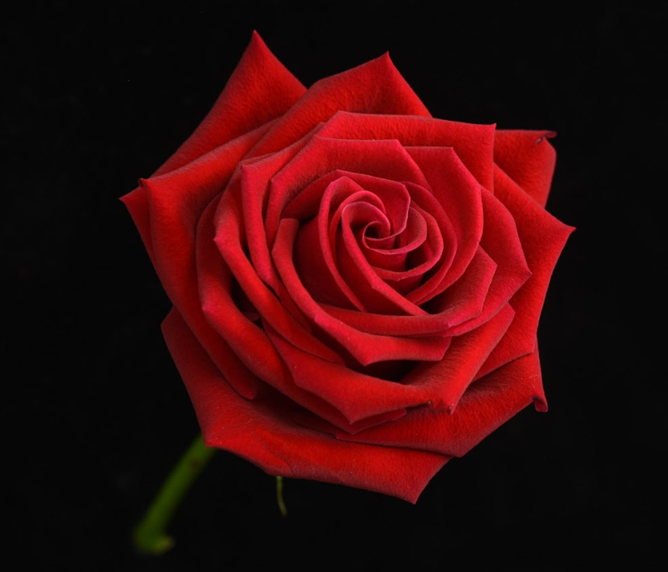
Eran Sharon's lab at Hebrew University of Jerusalem says rose petals curl by a different geometry than other plants, Scientific American reports. Strips cut from the petals point to a cone-like structure that should carry no internal tension.
The Scientist · Science desk
What happened
- Rose petals are not simply wavy or curved; they have almost triangular tips, a form the newsletter calls distinct among flowers.
- To find the cause, the team dissected petals, devised theoretical models, ran computer simulations and carried out experiments with rubber surfaces.
- The researchers also cut petals into fine strips, once along the horizontal axis and once along the vertical, to make the mechanical pressure visible.
- The longitudinal strips curled up, which suggests the petal preferentially curves in that direction.
- Segments cut along the horizontal axis stayed unchanged.
Why it matters
- decision A stress-only model of a rose petal will not produce isolated points, since Gauss incompatibility covers only smooth, periodic patterns, so modelers need another ingredient.
- capability Strip cutting is a simple test of which direction tissue tends to bend: on a carrot the lengthwise cut shows stored pressure, and on a petal the same move showed a preferred direction of curl.
- constraint The result concerns petal shape, so it cannot be cited for or against golden-ratio claims about how petals are arranged.
Scientific American's Proof Positive newsletter [16] lays out the standard account of flower shape first, and it starts from uneven growth. Petals "want" to curl because their tissue grows at different rates, but external factors such as tissue that is not elastic enough prevent it. The resulting mechanical stress is called Gauss incompatibility, and the newsletter says it produces virtually all flower shapes [5]. Its picture is flattening the surface of a sphere onto a plane, which cannot be done [6].
Lollo Rossa lettuce is the simple case. When the edge of a leaf grows faster than its center, the leaf curls or waves [12]. A rose petal, with its pointed tips, needed a different test.
The strip result is what makes the cone explanation attractive. A flat sheet of paper can easily be rolled into a cone or a cylinder, the newsletter notes. A petal with that conical structure is therefore compatible with flat geometry and should create no internal tension [11].
Arrangement has its own explanation in the same piece. Online videos link the arrangement of a plant's petals to the golden ratio or the Fibonacci sequence, the newsletter says, and it rejects the idea that nature has a particular affinity for mathematics [14]. Its account is optical: the most sunlight reaches petals when the angle between them is irrational, so no petal sits directly above another [15].
All of this comes from one newsletter essay, so the "completely different geometric cause" is the author's summary of the lab's work [3]. The passage on the strip test ends at the cone inference, and the newsletter cites no paper.
What to watch
- A paper or preprint from Sharon's lab giving petal counts, rose varieties and what the rubber-surface experiments showed.
- An account of what produces the isolated points on a rose petal.
- Reports of the same lengthwise-curl, crosswise-flat strip pattern in other flowers with pointed petals.
Clarity's read
What the record supports and how the coverage leans. The claims behind it follow.
Reality
- Evidence50
- Adoption
- Insufficient
- Hype gap+10
- Incentives
- Insufficient
- Confidence50
Claim ledger
Ranked by verification strength, evidence, and original report placement.
- [1]
Physicist Eran Sharon's lab at the Hebrew University of Jerusalem studied why rose petals curl.
- [2]
Sharon and his team dissected rose petals, devised theoretical models, created computer simulations and conducted experiments with rubber surfaces.
- [3]
The newsletter says the team discovered that the shape of rose petals has a completely different geometric cause than that of other plants.
- [4]
Rose petals are not simply wavy or curved but have almost triangular tips; such irregular segments are distinct among flowers.
- [5]
Because of differing growth rates, petals 'want' to curl, but this is prevented by external factors such as tissue not being elastic enough; this 'Gauss incompatibility' leads to mechanical stresses that produce virtually all flower shapes.
- [6]
The situation is like trying to flatten the surface of a sphere onto a plane, which is impossible.
- [7]
Gauss incompatibility can only explain smooth and periodic patterns, but the shape of rose petals is neither periodic nor smooth: there are isolated locations where a point is formed.
- [8]
The researchers cut the petals into fine strips, once along the horizontal axis and once along the vertical axis, to visualize the mechanical pressure acting on the petals, similar to cutting carrots to reveal their internal pressure.
- [9]
The longitudinal strips of the rose petals curled up, suggesting the petal preferentially curves in this direction.
- [10]
When cut along the horizontal axis, the petal segments remained unchanged.
- [11]
The newsletter says this means a petal has a kind of conical structure, which is compatible with a flat geometry and therefore shouldn't create any internal tension, since a flat sheet of paper can easily be rolled into a cone or a cylinder.
- [12]
If the edge of a leaf grows faster than its center, this can lead to a curled or wavy shape, as with Lollo Rossa lettuce.
- [13]
When a carrot is quartered lengthwise, the structure is weakened and the insides of the pieces bend outwards, making visible the pressure that existed inside the carrot.
- [14]
Online videos explain that the arrangement of a plant's petals is related to the golden ratio or the Fibonacci sequence; the newsletter says the reason isn't that nature has a particular affinity for mathematics.
- [15]
The most sunlight reaches petals when they form an angle with one another that is irrational, which ensures no petal is directly above another.
- [16]
Proof Positive is Scientific American's newsletter exploring the joys and peculiarities of math.
Sources
1 independent publisher whose own reporting we read for this story.
- scientificamerican.comThe mathematical secret behind why rose petals curl
1 article · October 13, 2026
Topics and entities
Follow any of these and your For You feed starts watching them — no settings page required.
Topics
Entities
- Gauss incompatibilityFollow
- The Hebrew University of JerusalemFollow
- Eran SharonFollow
- Scientific AmericanFollow