ScienceNot yet confirmed elsewhere1 publisher2 min readPublished Updated
Karolinska study maps how a plasticizer byproduct alters human ovarian cells
Karolinska Institute researchers exposed human ovarian tissue to MEHP, a byproduct of the plasticizer DEHP, and gene activity shifted across the cell types they sequenced. The detailed, cell-by-cell picture came from a single donor's tissue.
The Scientist · Science desk
Evidence map. Supported: gene expression differed between control and MEHP groups across cell types, and in most cells the change was dose-dependent. Insufficient: the senior author's views that more cell types than follicles are affected and nerve cells are especially sensitive.
- Supported Across all seven cell types, gene expression was significantly different between the control and the MEHP exposure groups, suggesting the byproduct can change normal cell function, though replication in many more individuals is needed., claim 1
- Supported In most cells, the gene-expression difference followed a dose-dependent pattern., claim 2
- Insufficient evidence Our results show that phthalates affect considerably more cell types in the ovary than the egg cells and follicles that have traditionally been the focus of research., claim 19
- Insufficient evidence The most unexpected finding was that cells from the ovary's nervous system appeared to be particularly sensitive to the exposure., claim 20
| Claim | State | Claim number |
|---|---|---|
| Across all seven cell types, gene expression was significantly different between the control and the MEHP exposure groups, suggesting the byproduct can change normal cell function, though replication in many more individuals is needed. | Supported | 1 |
| In most cells, the gene-expression difference followed a dose-dependent pattern. | Supported | 2 |
| Our results show that phthalates affect considerably more cell types in the ovary than the egg cells and follicles that have traditionally been the focus of research. | Insufficient evidence | 19 |
| The most unexpected finding was that cells from the ovary's nervous system appeared to be particularly sensitive to the exposure. | Insufficient evidence | 20 |
What happened
- The samples came from seven donors, five who gave tissue during gender-affirming ovary removal and two during biopsies taken at elective cesarean sections.
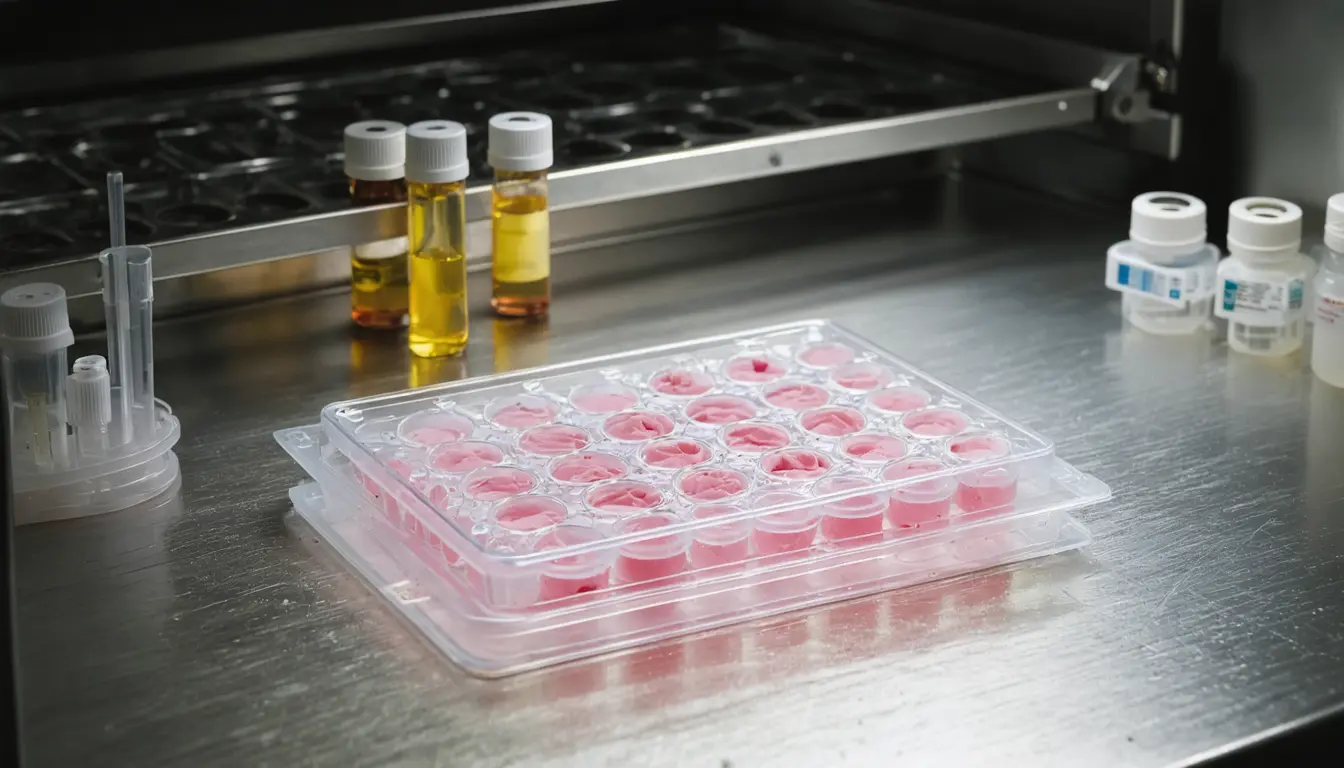
- Lab-grown tissue was exposed over six days to a solvent control, a realistic 20.51 nanomole-per-liter dose of MEHP, or a dose a thousand times stronger.
- None of the donors had a history of ovarian disease and none currently smoked, though a few had smoked in the past.
Why it matters
- exposure DEHP is in food packaging, medical tubing, cling wrap and many household plastics, so exposure to the byproduct this study tested is common rather than exotic.
- capability Reading one donor's tissue cell by cell let the team catch MEHP effects in supporting cells that earlier follicle-focused work did not examine.
- constraint On seven donors, with the deep sequencing from one of them, the team cannot say whether human ovaries respond this way in general, and it calls for the work to be repeated in many more people.
- decision Tighter DEHP limits for medical equipment, cosmetics and food packaging stay a policy choice, and the report says they would need harm shown to outweigh benefit, a bar a tissue map does not clear alone.
The two MEHP doses in the eBioMedicine experiment were a factor of 1,000 apart. [6][15][18] The lower one, 20.51 nanomoles per liter, is what the authors call an epidemiologically relevant concentration, roughly what people actually carry. [16] Both doses changed gene activity against a solvent control over six days, and in most cell types the change grew with the dose. [15][2]
The broadest result rests on one person's tissue. The team from the Karolinska Institute and its affiliated hospital ran single-cell sequencing on a 23-year-old who had had a gender-affirming oophorectomy. [7][17] Gene expression differed significantly from the control across all seven cell types it resolved: oocytes, granulosa, stromal, perivascular, endothelial, immune and glial cells. [1][14] That spread is what the authors emphasize. "Our results show that phthalates affect considerably more cell types in the ovary than the egg cells and follicles that have traditionally been the focus of research," said Pauliina Damdimopoulou, the reproductive biologist who led the study. [19]
The glial cells caught them off guard. "The most unexpected finding was that cells from the ovary's nervous system appeared to be particularly sensitive to the exposure," Damdimopoulou said. [20]
The study records shifts in gene activity in lab-grown tissue, not whether eggs mature or ovaries function worse. [6][1] Five of the seven donors had been on androgen therapy for three to eight years, which can change the ovary, so their tissue may not represent the general population. [13][11] The detailed single-cell map came from just one of them. [17]
Lab and animal studies already link MEHP to endocrine disruption and possible effects on fertility. [5] DEHP itself is easy to take in: it crosses the intestinal lining, mostly from food and water, and enzymes convert it to MEHP in the body. [4] Rules on it are patchy, aimed mostly at children's toys, with medical equipment, cosmetics, food packaging and household goods treated inconsistently. [8] Science Alert notes that DEHP in medical equipment can save lives, so wider restrictions would need evidence that the harm outweighs the benefit. [9]
What to watch
- Whether the single-donor gene-activity pattern holds up when the team repeats the sequencing in tissue from many more people.
- Whether regulators tighten DEHP rules for medical equipment on mechanism data like this or hold out for fertility-outcome evidence.
- Whether follow-up work connects the ovarian nerve-cell sensitivity to any real effect on egg development.
Clarity's read
What the record supports and how the coverage leans. The claims behind it follow.
Reality
- Evidence35
- Adoption
- Insufficient
- Hype gap+30
- Incentives
- Insufficient
- Confidence40
Claim ledger
Ranked by verification strength, evidence, and original report placement.
- [1]
Across all seven cell types, gene expression was significantly different between the control and the MEHP exposure groups, suggesting the byproduct can change normal cell function, though replication in many more individuals is needed.
- [2]
In most cells, the gene-expression difference followed a dose-dependent pattern.
- [3]
DEHP, the most common phthalate, is added to materials to make them flexible and is used in PVC pipes, cling wrap, shower curtains, medical tubing, eyelash glue and many other everyday items.
- [4]
DEHP is readily absorbed through the lining of the intestines, especially from food or water, and human enzymes convert it into MEHP (mono-(2-ethylhexyl) phthalate).
- [5]
Many in vitro and animal studies have shown that MEHP can disrupt the endocrine system, potentially affecting fertility.
- [6]
Research published in eBioMedicine maps how MEHP exposure affects the cellular machinery of human ovarian tissue.
- [7]
The study was conducted by a team from the Karolinska Institute and its affiliated hospital in Sweden.
- [8]
Restrictions on DEHP vary widely by country; they generally cover children's toys, while rules for medical equipment, cosmetics, food packaging and household items are inconsistent.
- [9]
The report notes that DEHP in medical equipment can save lives, so scientists would need strong evidence of harm outweighing the benefits for DEHP to be restricted more widely.
- [10]
Prior research in this area focused on the egg-producing follicles, the ovarian cells directly involved in reproduction.
- [11]
The team studied ovarian tissue from seven individuals: five donated during gender-affirming ovary removal, and two were collected as biopsies during elective cesarean section.
- [12]
None of the donors had a history of ovarian disease, and none were current smokers, though a few had smoked in the past.
- [13]
The donors who had gender-affirming surgery had been on androgen therapy for three to eight years, which can cause changes to the ovaries, so their tissue may not be fully representative of the general population.
- [14]
Once removed, the tissue was grown in a lab; the samples spanned oocytes, granulosa cells, stromal cells, perivascular cells, endothelial cells, immune cells and glial cells.
- [15]
Each sample was exposed over six days to one of three treatments: an MEHP-free solvent control, 20.51 nM of MEHP, or 20.51 x 1000 nM of MEHP.
- [16]
The authors call the 20.51 nM dose an 'epidemiologically relevant' concentration, a more realistic exposure level.
- [17]
Single-cell sequencing was run on one donor's tissue, from a 23-year-old who had undergone gender-affirming oophorectomy.
- [18]
The high dose, 20.51 x 1000 nM, equals 20,510 nM, which is 1,000 times the 20.51 nM realistic dose.
- [19]
Our results show that phthalates affect considerably more cell types in the ovary than the egg cells and follicles that have traditionally been the focus of research.
ReportedInsufficientSource: Pauliina Damdimopoulou, reproductive biologist and the study's senior author2 sources— create a free account to open themView cited source - [20]
The most unexpected finding was that cells from the ovary's nervous system appeared to be particularly sensitive to the exposure.
ReportedInsufficientSource: Pauliina Damdimopoulou, reproductive biologist and the study's senior author2 sources— create a free account to open themView cited source
Sources
1 independent publisher whose own reporting we read for this story.
- sciencealert.comMounting Evidence Shows a Common Plastic Chemical Can Affect Human Ovaries
1 article · October 9, 2026
Topics and entities
Follow any of these and your For You feed starts watching them — no settings page required.
Topics
- Endocrine-disrupting chemicalsFollow
- Reproductive toxicologyFollow
- Chemical regulationFollow
- Single-Cell SequencingFollow