ProductIndependently confirmed4 publishers3 min readPublished
Plaud's cellular earbuds hand the recording-consent problem to employers
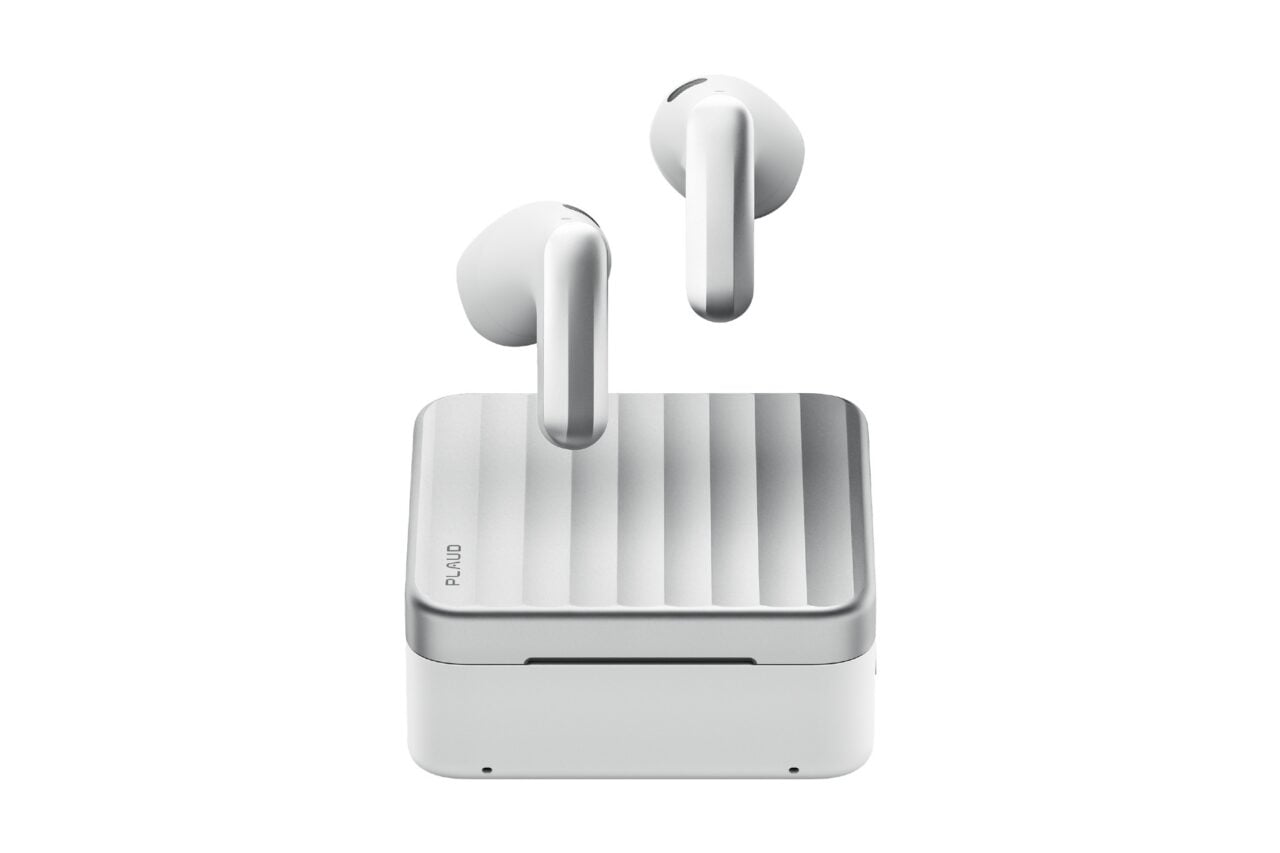
The Plaud One Explorer Edition records the room from its charging case over its own 4G connection, which means the recorder that turns up in your Monday standup never touches the office Wi-Fi or a phone your IT team manages.
The Product Desk
What happened
- Plaud opened preorders for the One Explorer Edition, a $249.99 pair of earbuds packaged with a microphone-equipped charging case that doubles as a table recorder for group meetings.
- An embedded eSIM with 4G LTE keeps both the earbuds and the case online without a paired smartphone, and captured conversations upload automatically from anywhere for transcription.
- Shipping is set for the fourth quarter of 2026, alongside a Plaud App 4.0 update that extends the same Plaud Intelligence platform to the company's existing recorder hardware.
Why it matters
- constraint Device enrolment and network egress rules cannot reach a recorder that carries its own SIM and never needs the office Wi-Fi, so the only remaining lever is what the employee was told.
- decision Whoever chairs a meeting has to decide in advance whether a charging case on the table counts as a recorder that gets declared, because the room's only cue is a small light.
- exposure The people Plaud is selling to spend their days inside clients' and colleagues' confidences, which makes the counterparty the one newly captured without a platform prompt to warn them.
- cost An employer approving these in bulk is budgeting against per-task pricing the vendor openly says it has not finished setting, so the true running cost lands after the hardware is bought.
Put the case in the middle of a table and you have a conference microphone with its own cellular modem. Plaud says that case holds a mic with enough range to pick up a whole group conversation [5], and recording can be started from the buds, the case or the app, with a light on the case that comes on while it runs [6]. That light is the entire disclosure mechanism available to the room. A recording bot at least appears in a participant list; a small white box next to the water jug does not.
The eSIM is what moves the problem. With 4G LTE on board, the buds and case stay connected without a phone, and conversations upload automatically from anywhere [4]. Nothing in that path needs a managed handset or the office network. The storage confirms the intent: 16MB per bud, 32MB for the pair [15], against a claimed six hours of in-person recording plus up to 25 more from the case, so 31 hours per charge cycle [16][27]. Even encoded at 8 kbps, 31 hours of audio is roughly 112MB [28]. The audio leaves fast, over a carrier link, to Plaud's servers.
What teams tell themselves users do: record on purpose, once, with the host's agreement. What people do with a button in their ear is press it on the way into the room and work it out afterwards. And the buyer Plaud describes is precisely the person who sits inside other people's confidences. Digital Trends reports the target as people whose jobs are largely conversational, such as a sales chief drafting a client follow-up or a consultant turning a workshop into a report [19].
The commercial side is unfinished, by Plaud's own account. Each agent task spends Plaud Credits, $200 arrive with the unit, and those credits sit on top of whatever subscription is already being paid [10]. Transcription is Pro at $100 a year or Unlimited at $240 [12], above a free tier of 300 minutes a month [13], and a single full charge can produce more recording than six months of that free allowance [29]. Year one for an Unlimited buyer is $489.99 before a single extra credit [23]. Plaud told Gizmodo it is "intentionally using this Explorer phase to learn how customers use Agent before finalizing the longer-term credit structure" [11]. That is fine for one person spending $250 to find out; it is awkward for anyone raising a purchase order for forty units.
Plaud's own copy says the agent "produces finished work products, from emails to documents and presentations" [18]. Gizmodo, which has not seen it run, calls the idea that any AI is ready to take the wheel to that extent highly debatable [24]. After the Q4 2026 ship date [3], the number worth tracking is not preorders but the share of Explorer buyers still paying for Pro or Unlimited a year later, and how often a drafted email goes out unedited. As earbuds, six hours of playback with ANC off is below par by Gizmodo's reckoning [26]; as a recorder the numbers read better, which tells you which product was designed first.
For your own policy, the sorting test is whether it names platforms or names behaviour. Two axes: does the capture depend on a system you administer, and does the audio cross a network you can see. Anything you can enforce with tooling needs a yes on at least one. Plaud One is a no on both, which leaves the handbook and a light on a plastic box. If your rule currently reads "no recording without consent" and the enforcement behind it is a greyed-out record button in a meeting client, Q4 2026 is when that gap becomes somebody's Friday.
What to watch
- The final Plaud Credits pricing, which the company says it will set only after the Explorer phase, and whether agent tasks end up metered per output.
- Whether the Q4 2026 ship date holds and whether App 4.0 lands the same agent behaviour on the older Note and NotePin at the same time.
- The first employer policy that names personal cellular recorders rather than meeting-platform record buttons.
Clarity's read
What the record supports and how the coverage leans. The claims behind it follow.
Reality
- Evidence44
- Adoption10
- Hype gap+38
- Incentives72
- Confidence63
Perspective Coverage
4 publishers- Builder
- Builder 35%
- Operator
- Operator 35%
- Investor
- Investor 30%
Claim ledger
Ranked by verification strength, evidence, and original report placement.
- [1]
Plaud Inc., maker of AI-enabled note-taking devices, introduced the Plaud One Explorer Edition, a pair of earbuds and a charging box that connect people to AI agents for work and everyday digital tasks.
- [2]
The Plaud One Explorer Edition is available for pre-order at $249.99 and includes $200 in credits.
- [3]
Plaud says shipments of the One Explorer Edition will begin in the fourth quarter of 2026.
- [4]
The case includes a built-in eSIM with 4G LTE to keep itself and the earbuds connected without relying on a smartphone, and users can upload conversations automatically from anywhere.
- [5]
The charging case contains a microphone that gives it a fair listening range, so it can be placed in the middle of a table during a meeting to capture an entire group conversation.
- [6]
Recording can be triggered from the earbuds, the case, or the app, and a light on the case illuminates when recording is in progress.
- [7]
The earbuds and case support call recording and online meeting recording, not just in-person conversation.
- [8]
Plaud Agent has native integrations with Gmail, Google Calendar, Notion and Slack.
- [9]
PCMag lists Microsoft Teams among the third-party tools that can be connected to Plaud Agent.
- [10]
Each agentic task requires Plaud Credits; Explorer Edition customers get $200 in credits, and those credits sit on top of existing subscriptions, so subscribers who run out must buy more.
- [11]
Plaud told Gizmodo it is "intentionally using this Explorer phase to learn how customers use Agent before finalizing the longer-term credit structure."
- [12]
Plaud's transcription plans include a Starter plan with a base level of transcription plus Pro and Unlimited tiers costing $100 and $240 per year respectively.
- [13]
A free tier of Plaud's AI service includes 300 minutes per month, with an extended tier coming at an as-yet unknown price.
- [14]
Plaud's system can tap into predefined workflows called Skills and role-specific collections called Plugins.
- [15]
Each earbud has 16MB of storage, for a total of 32MB between both.
- [16]
Plaud claims six hours of in-person recording or three hours of phone-call recording through the earbuds, with the included charging case extending recordings by up to 25 hours.
- [17]
Users can instead connect the earbuds to a third-party agent such as Anthropic's Claude or OpenAI's ChatGPT.
- [18]
Plaud says Plaud Agent "produces finished work products, from emails to documents and presentations," and that those artifacts are ready to edit, share or export the moment they are generated.
- [19]
Digital Trends reports Plaud is targeting the One Explorer Edition at people whose jobs are largely conversational, giving examples of a sales chief asking it to write a client follow-up and a consultant turning a workshop into a report.
- [20]
CEO Nathan Xu said Plaud is "the only company that is model agnostic and a truly open platform," arguing that an OpenAI device made with Jony Ive would probably mandate OpenAI models.
- [21]
Plaud's existing devices include the Note, a wallet-sized recorder that attaches to the back of a smartphone, and the NotePin, a pill-like microphone worn on a lapel or lanyard.
- [22]
The new Plaud Intelligence features will be rolled out across Plaud's existing hardware via the Plaud App 4.0 update, released in the same Q4 2026 timeframe as the One Explorer Edition.
- [23]
A buyer taking the Unlimited transcription tier pays $489.99 in year one before purchasing any credits beyond the $200 included.
- [24]
Gizmodo writes that whether any AI is ready to take the wheel to this extent is highly debatable, and that its writer will have to see Plaud Agent in action to believe it.
- [25]
Co-founder and CEO Nathan Xu said AI agents become truly useful when they understand the context in which human intent is formed, and that context lives in conversation.
- [26]
Gizmodo says the Plaud One's rated six hours of music playback with ANC off is fairly subpar by most people's wireless earbud standards.
- [27]
Plaud's stated figures imply about 31 hours of in-person recording per full charge cycle of buds plus case.
- [28]
31 hours of audio at a low 8 kbps encoding is roughly 112MB, far more than the 32MB of on-device storage, so recordings must move off the device rather than sit on it.
- [29]
One full charge cycle of recording capacity is about 6.2 months' worth of the free tier's monthly transcription allowance.
Sources
4 independent publishers whose own reporting we read for this story.
- digitaltrends.comPlaud One AI earbuds can remember conversations and help get the work done afterwards. - Digital Trends
1 article · August 27, 2026
- gizmodo.comPlaud’s First Wireless Earbuds Crank AI Productivity to Max Volume
1 article · August 27, 2026
- pcmag.comNew Plaud One Headphones Are Part Wireless Earbuds, Part AI Recorder | PCMag
1 article · August 27, 2026
- siliconangle.comPlaud unveils wearable earbuds with built-in agentic AI interface - SiliconANGLE
1 article · August 27, 2026
Topics and entities
Follow any of these and your For You feed starts watching them — no settings page required.
Topics
- AI Wearables PositioningFollow
- Cellular Devices Outside IT ControlFollow
- Agentic AI AssistantsFollow
- Recording Consent and Workplace PrivacyFollow
- Credit-Based AI MonetizationFollow
- Always-On Meeting RecordingFollow