Science2 publishers3 min readPublished
Blood from 52 space station astronauts suggests their gut bacteria start fermenting protein within weeks
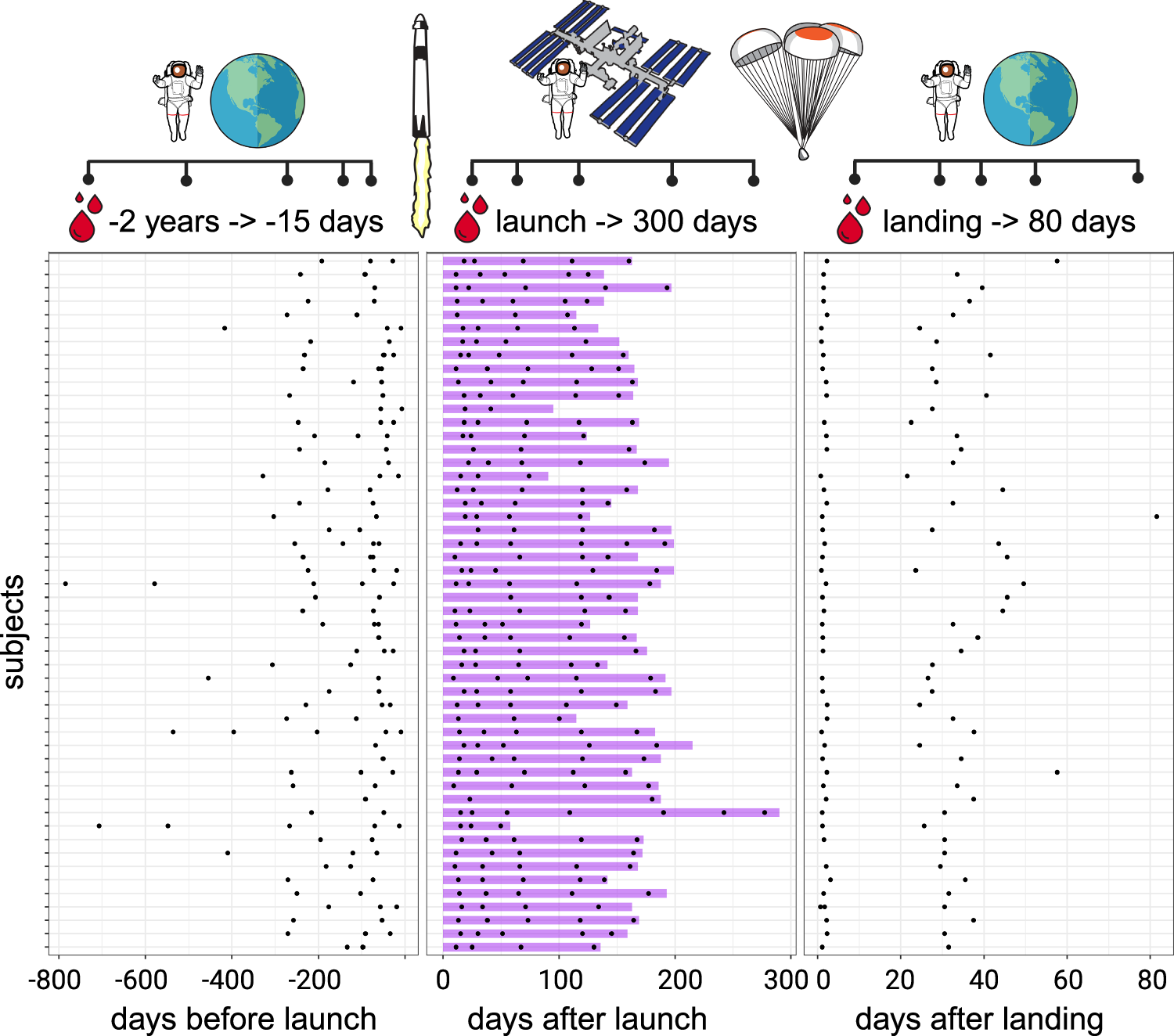
University of Copenhagen researchers found blood signs of gut bacteria fermenting more protein in 52 ISS astronauts within weeks of reaching orbit. The team suspects slower digestion and says Mars crews may need countermeasures, though blood chemistry alone cannot confirm the cause.
The Scientist · Science desk
What happened
- The metabolite changes persisted for the rest of each stay and continued until the astronauts were back on Earth.
- The University of Copenhagen team worked with NASA on samples from crews who each spent months aboard the International Space Station.
- Senior author Lars Ove Dragsted said protein fermentation products are often linked to kidney damage and to effects on mood and focus.
- Crews on planned Moon and Mars missions may spend far longer away from Earth's gravity than current station crews do.
Compiled by The ScientistSomething wrong?How this is made
Why it matters
- constraint Blood chemistry cannot separate a slower gut from a lower-fiber diet, so treatments aimed at speeding transit rest on a cause this study inferred rather than measured.
- decision Fiber content in crew food becomes a health decision for Mars mission planners, because the fix that works under either explanation is a change to diet.
- exposure Any harm from fermentation products would have far longer to act on a Mars crew than on the months-long station crews sampled here.
The study looks at the gut indirectly, through metabolites. These are small molecules in the blood that give clues about diet, metabolism and what is happening inside the intestines [5]. By the release's own definition, protein fermentation is what intestinal bacteria turn to once the dietary fiber available to them has been used up, and it happens in people on Earth too [6]. The researchers suspect microgravity slows food on its way through the digestive tract, which gives bacteria more time to reach that point [7]. "The lack of gravity in space probably causes food to move more slowly through the intestine, and this fits with the fact that we are seeing signs of increased protein fermentation. This may also help explain constipation in astronauts," said Henrik Roager, a co-author and associate professor in the University of Copenhagen's Department of Nutrition, Exercise and Sports [4].
Roager's "probably" and "may" are more careful than the release's headline, which says the blood tests "reveal why" astronauts get constipated [1][4]. His wording also leaves room for a second cause. Under the same definition, a slower gut gives bacteria longer to use up their fiber, and a diet lower in fiber runs out sooner. Either way the blood signal would look much the same [1]. The release does not report a direct measure of transit time, and it does not say how the analysis accounted for what the 52 astronauts ate in orbit [2].
The practical question is what to do about it on a Mars mission. "When we plan for longer journeys in space - for example to Mars countermeasures may be needed to mitigate negative effects of space travel on the intestines," said Giorgia La Barbera, the study's joint first author [9]. Roager said the findings "can inform potential interventions - either directly through increasing dietary fiber, supplementation with prebiotics or other types of treatments that promote peristalsis and decrease gut transit time" [10]. Peristalsis is the coordinated muscle contraction that moves food and waste through the digestive system [12].
I think the case for planning holds up even though the cause is unsettled, as long as the fixes are tried in the order the evidence supports. More fiber puts back the material bacteria run out of before they turn to protein. That means it should help whether the problem is a slow gut or a low-fiber diet [2]. Treatments that speed transit only make sense if the slow-gut explanation is right. So far that explanation has been inferred from blood chemistry, not measured [3].
The release says the work may also matter for people confined to bed for long periods, who often experience constipation [13].
What to watch
- Publication of the full paper, with effect sizes for the metabolite changes and a description of how in-flight diet was handled.
- A direct measurement of gut transit time in orbit, which could confirm or rule out the slow-gut explanation.
- Whether NASA sets fiber or prebiotic targets in food planning for Moon or Mars crews.