Science1 publisher2 min readPublished
More than half of UK residents in a Sheffield survey would welcome tortoises in their parks
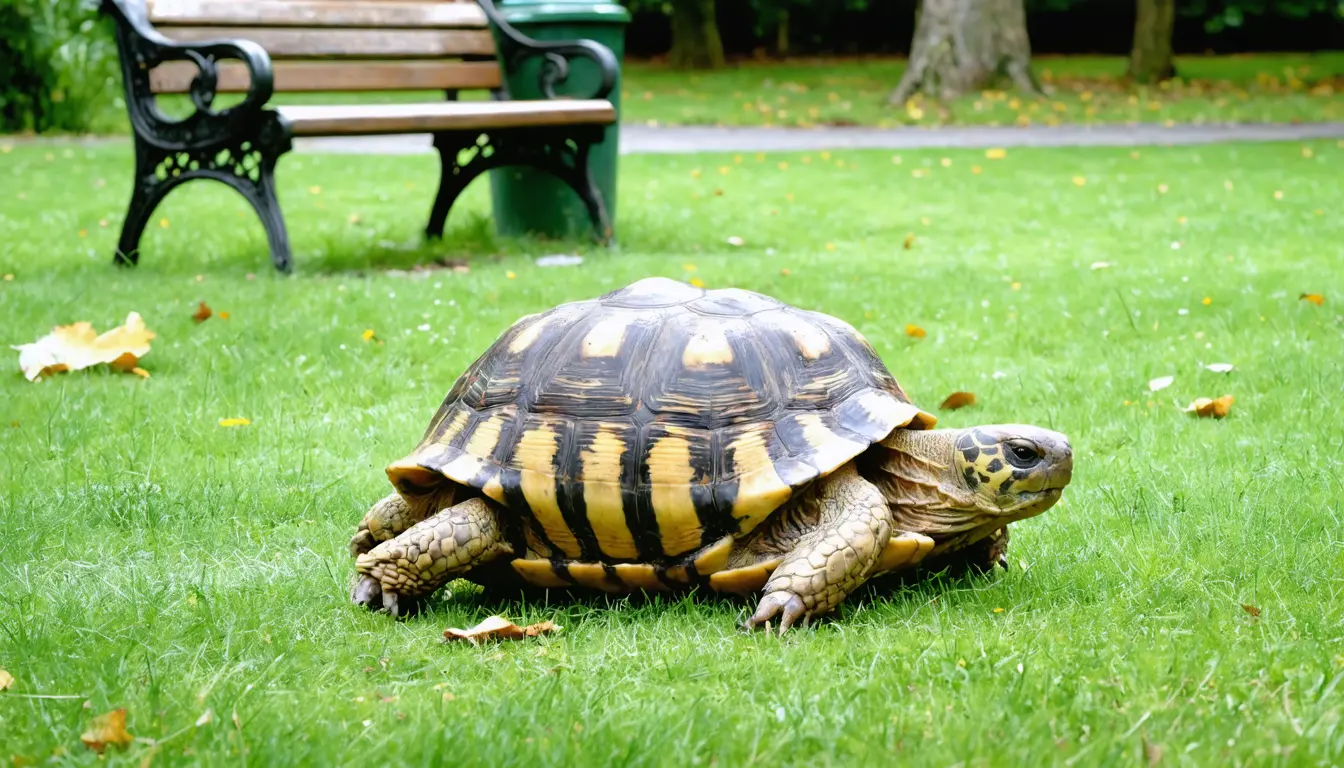
University of Sheffield researchers found more than half of 250-plus UK residents surveyed would welcome Hermann's tortoises and bee-eaters in local parks. For park managers planning refuges for heat-stressed species, public resistance among those asked was weaker than the researchers expected.
The Scientist · Science desk
Drafted by a language model from the sources cited here and checked against its claim ledger before publication. How we use AISend a correction
What happened
- A Mediterranean-style planting scheme won approval from 60% to 70% of those surveyed.
- More than 40% said they were broadly open to zebras in their local park, a result the researchers themselves called surprising.
- Venomous European asp snakes and spotted hyenas fared worst, with nearly three-quarters of respondents saying no or that they were unsure.
- The study, in the journal Sustainability, argues UK parks could be the first stepping stones in a northern European habitat network for species unable to migrate fast enough to cooler ground.
Compiled by The ScientistSomething wrong?How this is made
Why it matters
- decision Mediterranean-style planting is the step a park manager could trial first, because it drew the widest approval in the survey and involves no animals.
- constraint Predators and venomous species stay off any near-term list, since a council proposing hyenas or asps would be arguing against most of the people this survey asked.
- precedent The authors' call for a national debate now has figures to argue over, and a representative poll is the next step before councils can treat them as public opinion.
The zebra result rests on a little over 100 people. The study surveyed more than 250 UK residents [10], and the 40% figure is a share of that group [15]. The published account does not say how respondents were recruited or how closely they match the UK population. The percentages describe the people who were asked.
The researchers were surprised themselves. Ross Cameron, the University of Sheffield horticulture professor who led the research [12], said: "We expected people to be fairly resistant to the idea of exotic, nonnative animals in their local park. But people seem to understand that the natural world is under pressure and that we may need to do things differently." [2]
The figures may not all be on one scale. The article reports respondents "happy to see" tortoises and bee-eaters [4] but "broadly open" to zebras [1]. If those were different answer options, the two results are hard to compare directly. The ordering by danger is clearer. The researchers propose that any introductions start with smaller, benign animals, and they acknowledge that apex predators and dangerous species pose problems both practically and politically [8].
The reason to ask at all is climatic. Cameron put the timescale in local terms: "London's climate is already projected to resemble present-day Barcelona by 2050. Plants that currently need careful protection from frost in British gardens could eventually thrive outdoors year-round." [17] He also argued the practice already exists in a looser form: "British parks and gardens have been hosting plants from around the world for centuries. What we're suggesting is that we start being much more deliberate about it, choosing species not just for their looks, but for the role they could play in sustaining ecosystems that might otherwise disappear." [14]
The thing this doesn't tell you is whether any of it would work. A questionnaire about attitudes [3] records what people say they would accept in principle. It cannot show whether a Hermann's tortoise would cope outdoors in a British park, or how neighbours would react once one was living there. I think the survey does weaken the assumption that the public would be the first obstacle, at least for plants and small animals. That holds only if a larger sample finds the same thing.
Cameron set the predators aside himself. "We're not suggesting that anyone will be encountering hyenas on their morning run anytime soon," he said [9]. The paper, titled "The Zebra in Your Back Yard!", calls for a nationwide debate on the purpose of Britain's green spaces and how they might help protect biodiversity worldwide [11][13].
What to watch
- A larger, representative UK poll using the same species list, to test whether the zebra and tortoise figures hold beyond this sample.
- Any UK park that trials a Mediterranean planting scheme or a tortoise or bee-eater introduction, and how residents respond once the animals or plants are there.
- The full Sustainability paper's question wording, to show whether 'happy to see' and 'broadly open' were the same answer category.