MassNet pools 1.5 billion tandem mass spectra from 35 species into one training corpus for proteomics
MassNet's authors assembled 1.5 billion tandem mass spectra from 35 species and report a model that gains 38 to 144% on human Astral data. Because the model is new too, the corpus's own share of that gain is not yet separated out.
The Scientist · Science desk
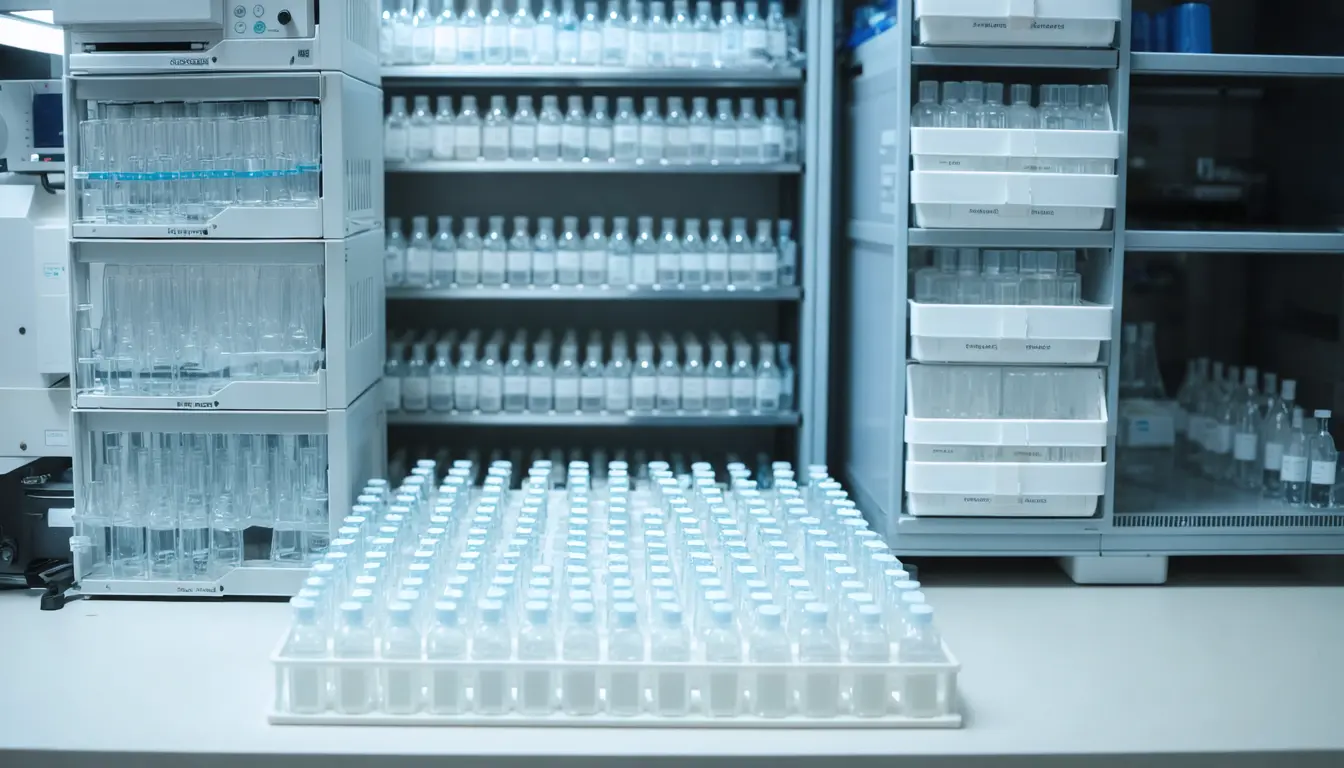
MassNet holds 1.5 billion tandem MS spectra, including approximately 1.7 million peptide precursors from human samples. XuanjiNovo improves 38.35% to 143.57% over state-of-the-art methods on human Astral data.
| Figure | Value | Note | Claim |
|---|---|---|---|
| Tandem MS spectra in MassNet | 1.5 billion spectra | 1 | |
| Human peptide precursors | 1.7 million, approx. | 2 | |
| XuanjiNovo gain vs state of the art, human Astral data | 38.35% at least | up to 143.57% | 12 |
What happened
- The authors say existing spectral resources remain heavily human-centric, with limited representation of mouse, fruit fly, roundworm and yeast.
- Data are stored in a format called MSDT, built for standardized reuse of multi-source data and convertible to a memory-mapped database for faster input/output in deep learning.
- According to the authors, MassNet also supports retention time prediction and PSM rescoring.
Why it matters
- constraint The reported gain cannot yet be credited to the corpus, because the model architecture and training strategy are new in the same paper.
- capability A shared storage format for multi-source data gives other groups a common input for training and comparing sequencing models.
- exposure A lab working on mouse, fly, worm or yeast cannot read its own expected gain off a benchmark run on human data.
Much of the case the authors make is about file formats. Peak lists usually sit in MGF or mzML files, while identification results land in .msp, .sptxt or .tsv files, and those files often lack a unified schema across tools and versions [7]. Libraries also frequently lack metadata that ties spectra back to raw files, search settings and processing workflows [6]. We think the format is the part other groups can adopt without adopting XuanjiNovo.
On coverage, the authors point to MassIVE-KB, which they call among the most comprehensive high-quality human spectral libraries currently available [8]. MassNet's human share is about 1.7 million peptide precursors [2]. Precursors and spectra are different units, so that figure cannot be set directly against the corpus total.
The headline range is wide: 38.35 to 143.57 percent over state-of-the-art methods on human Astral data [12]. If those are relative gains in a single score, the top of the range means XuanjiNovo scores about 2.4 times the comparison at that end [14]. The abstract does not name the baselines, the metric, or any run that holds the model fixed and varies the data.
That last control matters because XuanjiNovo is new as well. It is a nonautoregressive transformer trained with a curriculum learning strategy [11], and either choice could raise accuracy independently of the corpus. A clean test would train an existing sequencer on MassNet, or train XuanjiNovo on an older, smaller library, and compare. The thing this doesn't tell you is how much of the 38 to 144 percent survives either swap.
The authors say MassNet was inspired by large-scale corpora of text and images [10]. They cite WordNet, OpenWebText and ImageNet as the curated, structurally consistent resources that natural language processing and computer vision drew on [9]. The authors wrote: "MassNet represents a foundational MS-based proteomics data resource, marking a critical milestone for AI proteomics research." [4] We'd expect that claim to be settled by whether groups outside the authors' lab train on MassNet and report against the same baselines.
What to watch
- A run that trains existing sequencers on MassNet, or XuanjiNovo on older libraries, would show how much of the gain comes from the data.
- Benchmarks of XuanjiNovo on non-human species would test whether the human Astral result carries over.
- Uptake of the MSDT format by outside groups, with results reported against the same baselines.
Clarity's read
What the record supports and how the coverage leans. The claims behind it follow.
Reality
- Evidence40
- Adoption
- Insufficient
- Hype gap+25
- Incentives
- Insufficient
- Confidence45
Claim ledger
Ranked by verification strength, evidence, and original report placement.
- [1]
MassNet contains 1.5 billion tandem MS spectra from high-quality data-dependent acquisition (DDA) MS data across 35 species.
- [2]
Approximately 1.7 million peptide precursors in MassNet are from human samples.
- [3]
The authors present an AI-ready DDA data format called Mass Spectrometry DDA Tensor (MSDT) for compact and standardized storage, curation and reuse of data from multiple sources, which can optionally be converted to a Lightning Memory-Mapped Database for accelerated input/output in deep learning.
- [4]
"MassNet represents a foundational MS-based proteomics data resource, marking a critical milestone for AI proteomics research."
- [5]
According to the authors, existing spectral data resources remain heavily human-centric, with limited representation of model organisms such as Mus musculus, Drosophila melanogaster, Caenorhabditis elegans and Saccharomyces cerevisiae.
- [6]
The authors say spectral libraries frequently lack comprehensive metadata linking spectra to their original raw files, search settings and data-processing workflows.
- [7]
Spectral data are typically saved in formats such as MGF or mzML, while database search results are commonly stored in formats such as .msp, .sptxt or .tsv, and these files often lack a unified schema and semantic definitions across tools and versions.
- [8]
The authors describe MassIVE-KB as among the most comprehensive high-quality human spectral libraries currently available.
- [9]
In natural language processing and computer vision, resources such as WordNet, OpenWebText and ImageNet have provided curated, annotated and structurally consistent data for supervised and self-supervised learning.
- [10]
MassNet was inspired by large-scale data corpora of text and images.
- [11]
XuanjiNovo, developed on the basis of MassNet, is a nonautoregressive transformer model that uses a curriculum learning strategy for de novo peptide sequencing.
- [12]
XuanjiNovo achieves 38.35-143.57% improvement over state-of-the-art methods on human Astral data.
- [13]
MassNet also supports additional downstream tasks, including retention time prediction and PSM rescoring.
- [14]
If the 143.57% figure is a relative gain in one score, XuanjiNovo scores about 2.44 times the comparison method at that end of the range.
Get this ledger inside ChatGPT. Ask about any of our stories and the answer brings its figure, each claim’s verdict and the sources. Free, no account.
Sources
1 independent publisher whose own reporting we read for this story.
- nature.comMassNet: billion-scale AI-ready mass spectral corpus empowering scalable deep learning in proteomics
1 article · October 13, 2026
Topics and entities
Follow any of these and your For You feed starts watching them — no settings page required.
Topics
- De novo peptide sequencingFollow
- Scientific datasets for AIFollow
- ProteomicsFollow
Entities
- Nature MethodsFollow
- MassIVE-KBFollow
- XuanjiNovoFollow
- MassNetFollow