Product1 publisherNot yet confirmed elsewhere2 min readPublished
Lake America relabel sends MapQuest to the top of Apple's free app charts
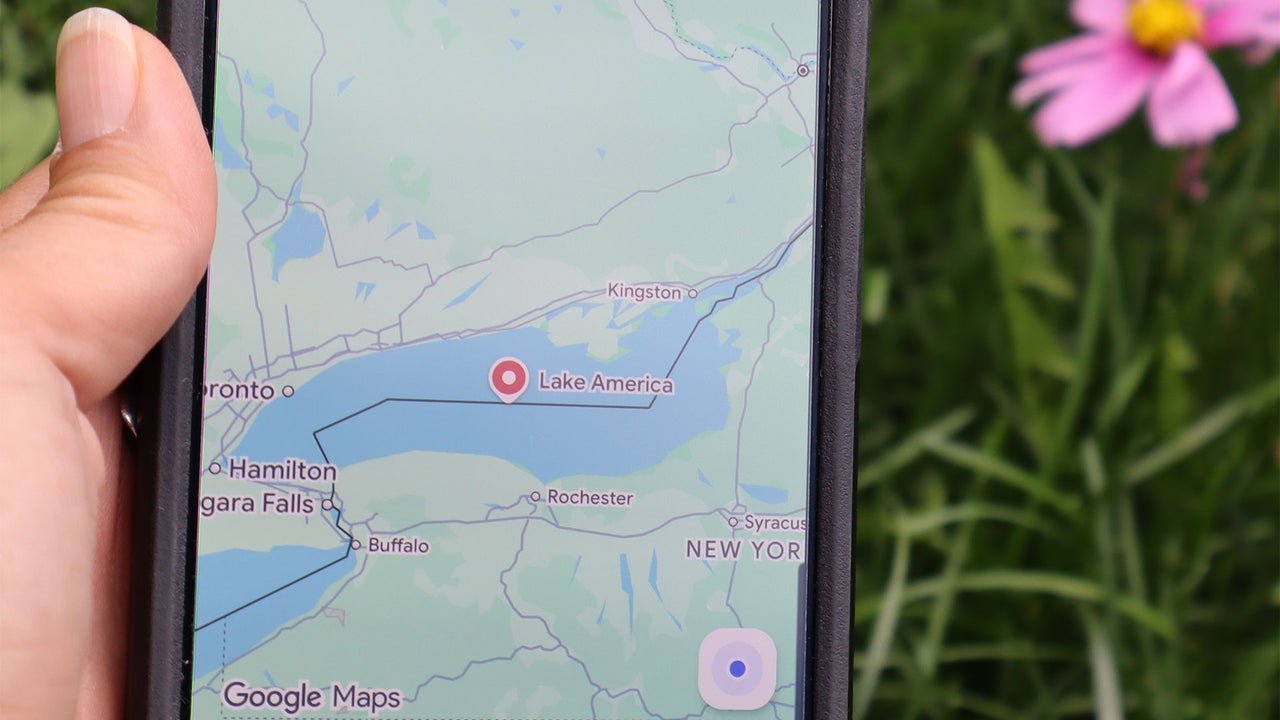
MapQuest topped Apple's free app charts in the US and Canada after Apple and Google renamed Lake Ontario to Lake America on their maps. Chart rank counts downloads, so the spike shows how many unhappy users went looking for another map.
The Product Desk
What happened
- Both companies made the change quickly after President Donald Trump ordered a new name for the lake.
- Some users pushed back, many of them already unhappy that the same companies had relabeled the Gulf of Mexico as the Gulf of America after an earlier Trump order.
- Google Maps holds about 80% of the mapping market by most estimates, according to Fast Company.
- MapQuest has been around for three decades, lost its lead to Google, and is now owned by System1, a California company.
Compiled by The Product DeskSomething wrong?How this is made
Why it matters
- constraint Fast Company credits privacy worries as well as the renaming for the interest in alternatives, so Google and Apple cannot read the downloads as a verdict on place names alone.
- decision A map team weighing the next government-ordered rename has to judge it on its own retention figures, because a rival's chart rank is the only public signal this episode produced.
- constraint MapQuest can only turn the attention into app users in the US and Canada; anyone elsewhere who wants it lands on the website.
The user in this story opens Apple Maps in early September, sees Lake Ontario labelled Lake America, and goes to the App Store to find something else [1]. Some users took the new label as a position the company had chosen, and acted on it [3].
A free install is the cheapest form of protest available on a phone. Leaving a dominant product takes more, because the user has to stop reaching for it every time they need directions. Google Maps leaves roughly 20% of the market for every other service combined, by the estimates Fast Company cites [17]. The reporting covers download rank. It does not include retention, daily use, or any count of people who deleted Google Maps or Apple Maps.
For the challengers, the work starts after the install, and it turns on whether the app handles the trips a new user takes. TomTom's free app is designed "exclusively for drivers" and has no walking or cycling routes [9]. HERE WeGo routes by car, public transport, foot and bike, but has no Street View [10]. It lets users download whole countries for offline use, while Google's offline areas are limited and expire after a year [11]. Citymapper plans transit trips in 430 cities [15]. For users weighing privacy, Magic Earth says it never collects personal data or tracks movements [13], and Organic Maps is free and built on OpenStreetMap data [12].
MapQuest's app offers real-time traffic and turn-by-turn guidance [16]. The company is looking into wider availability after receiving requests for the app from "people in multiple countries," spokesperson Anne Brownlee said [8].
The test I'd apply to a spike like this has two axes. One is what the user did. Installing is cheap; making a new app the first one you open, or paying for it, costs something, and Sygic, for one, charges a subscription for traffic updates [14]. The other axis is coverage: whether the app handles the user's trips in the country where they live. A cheap act on an app with poor coverage is a protest, and it fades. An install of an app that fits is a trial, and the useful figure there is how many people still open it a month later. Paying or changing habits for an app that misses their trips usually gets undone. Only the fourth cell, a costly change to an app that fits, means the dominant product lost a user. The Lake America evidence so far is download data, so it sits in the first two cells.
What to watch
- Retention or active-user figures from MapQuest or System1 for the September download cohort, which would show whether installs became regular use.
- MapQuest's App Store chart position in the weeks after the surge, once the renaming leaves the news.
- Any change by Google or Apple to how the Lake America label is displayed, such as showing both names, and whether alternative-app downloads move with it.
Clarity's read
What the record supports and how the coverage leans. The claims behind it follow.
Reality
- Evidence35
- Adoption25
- Hype gap+20
- Incentives
- Insufficient
- Confidence40
Claim ledger
Ranked by verification strength, evidence, and original report placement.
- [1]
Downloads of the MapQuest app surged in early September after Apple renamed Lake Ontario, topping the free app charts in both the U.S. and Canada on Apple's App Store.
- [2]
After President Donald Trump ordered a new name for Lake Ontario, Google and Apple quickly relabeled the body of water as Lake America on their digital maps.
- [3]
The relabeling sparked a backlash among some users already unhappy with the companies' decisions to rename the Gulf of Mexico to the Gulf of America on their maps following a previous Trump edict.
- [4]
Google Maps is the dominant map service with about 80% of the market, according to most estimates.
- [5]
The controversy and lingering worries about digital privacy have fueled interest in map services that are not from Big Tech companies.
- [6]
MapQuest has been around for three decades but was overtaken by the rise of Google; it is now owned by California company System1.
- [7]
The MapQuest app is not available outside the U.S. and Canada, though people in other countries can use the MapQuest website.
- [8]
MapQuest is looking into making MapQuest more broadly accessible after receiving requests for the app from "people in multiple countries," spokesperson Anne Brownlee said.
- [9]
TomTom's free map app is designed "exclusively for drivers" and has no other route options such as walking or cycling.
- [10]
HERE WeGo offers route mapping for car, public transport, walking, bike and, in some regions, taxi, but has no Street View.
- [11]
HERE WeGo users can download country maps to navigate offline; Google Maps offline downloads are limited in area and expire after a year.
- [12]
Estonia's Organic Maps is completely free and based on data from the volunteer-run OpenStreetMap database.
- [13]
Magic Earth, a Dutch route planner, says it never collects personal data or tracks user movements.
- [14]
Sygic offers free offline maps but requires a subscription for extra features including traffic updates, speed camera warnings and a dashcam function.
- [15]
Citymapper is a free journey planning app covering 430 cities, with bus, subway and ferry routes as well as taxi, rental bike and scooter options.
- [16]
The MapQuest app has real time traffic updates and turn by turn route guidance, and shows nearby places such as gas stations and coffee shops.
- [17]
By the same estimates, all map services other than Google Maps together hold roughly 20% of the market.
Sources
1 independent publisher whose own reporting we read for this story.
- fastcompany.comTrump’s Lake America controversy is driving interest to these Google Maps alternatives
1 article · October 8, 2026
Topics and entities
Follow any of these and your For You feed starts watching them — no settings page required.
Topics
- Geographic Naming DisputesFollow
- Digital maps and navigationFollow
- Digital privacyFollow
- App store rankingsFollow