Liberal Democrats press the Commons Speaker for a smart glasses rule after a Senedd speech
Liberal Democrats asked Commons Speaker Lindsay Hoyle to act on smart glasses after a Reform member's five-minute Senedd speech drew teleprompter suspicions. Parliament's own review is meant to balance security and privacy against accessibility.
The Board Room · Leadership desk
What happened
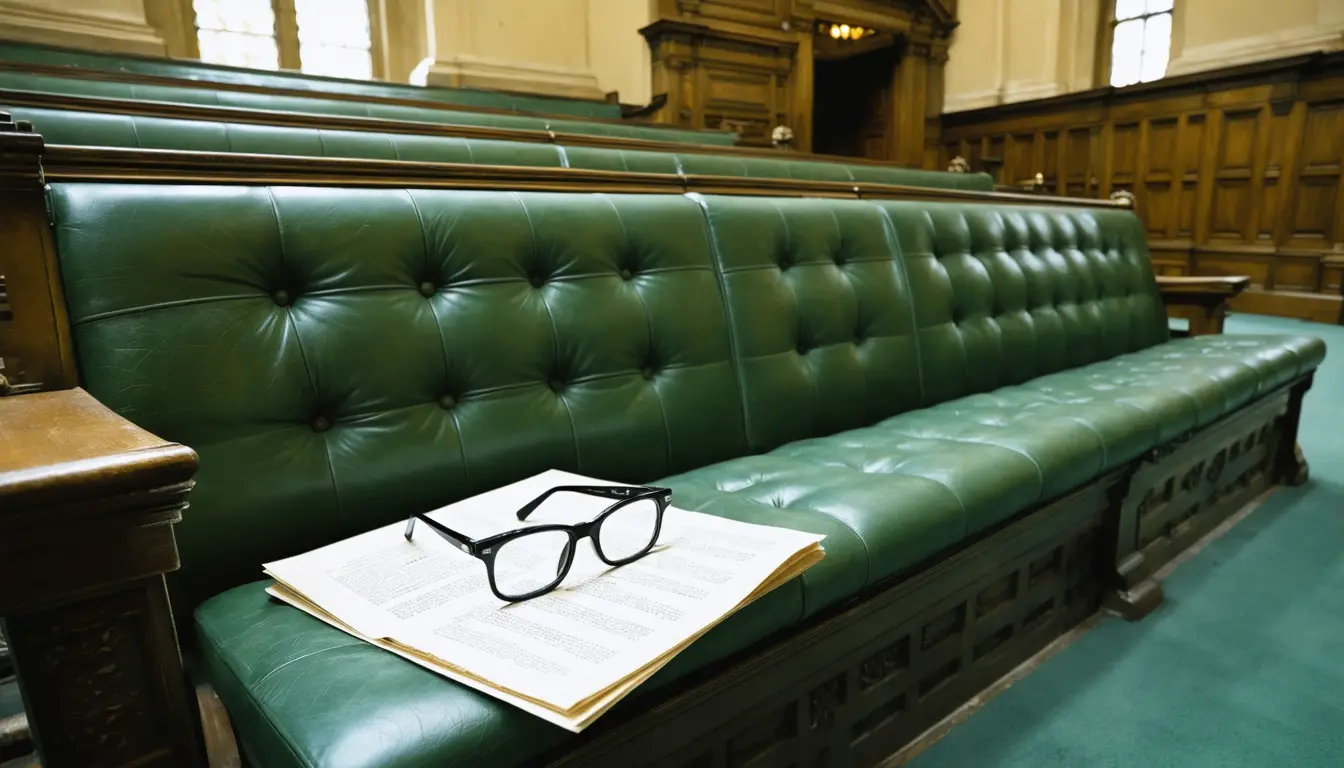
- The Guardian reported that periodic flashing in O'Connell's spectacles led to the suspicion that his lenses were working as tiny teleprompters.
- Welsh assembly members said the issue needed to be dealt with at pace, with explicit guidance developed on the use of smart glasses.
- A UK parliament spokesperson said it is reviewing its policy on camera-equipped smart glasses and other wearable technology on the parliamentary estate.
- O'Connell posted on X: "Trialling some new glasses for the chamber this week. Apparently my last ones caused quite a stir."
Why it matters
- exposure Glasses that pass for ordinary spectacles, with indicator lights that can be covered, leave security teams unable to see a breach, so any rule has to work without spotting the device.
- constraint A ban drafted around cameras would not touch the Senedd case, where nothing suggested recording, so displays and recording need separate wording.
- decision Hoyle has been asked to act while the wider wearables review is still open, which leaves the Commons choosing between an interim camera rule and waiting.
The evidence in the Senedd case is thin. The Guardian described a five-minute speech delivered without a glance at notes, and periodic flashing in the speaker's spectacles that seemed to give the game away [11][12]. The Guardian's own word for the conclusion is "suspected" [12]. Jason O'Connell has been contacted for comment, and his Sunday post on X, which showed large pink glasses worn for a breast cancer charity, does not say what his earlier pair did [10]. The Welsh assembly members who called for explicit guidance did so on that suspicion [2].
Anna Sabine, the Liberal Democrat spokesperson for culture, media and sport, raised a concern separate from privacy. She said smart glasses could lead to debates becoming increasingly "managed" [5]. "How much is the quality of what an MP is saying actually down to what they're getting through the AI glasses?" she said [5].
Parliament's review is built around a trade-off, and the Lords description says so. Speaking in parliament last month, the Lords' senior deputy speaker said the review "is considering the implications of these emerging technologies and whether additional guidance is required" [8]. The stated aim is "ensuring that any future approach appropriately balances security, privacy, operational needs and accessibility considerations" [9]. Security and privacy point toward restriction. Accessibility points toward exceptions, and in our view a blanket ban on glasses-type devices would have to carve them out.
The record here covers legislatures only. It does not show any company or board adopting a wearables rule, so the step to ordinary workplaces is our inference. We'd expect the same questions to arrive wherever confidential material is discussed: whether a device may record or display text, and who checks. The Liberal Democrats put a date on the volume risk, warning that with Christmas coming, even more people could start using the devices in 2027 [4]. A rule written this quarter can be short and about devices. One written after a disputed meeting has to settle what a named person did, and that is a harder document to draft.
What to watch
- Whether the parliamentary review ends in a ban, a permission scheme or guidance only, and whether it publishes a completion date.
- How Lindsay Hoyle answers the Liberal Democrat letter, and whether any interim rule on cameras comes before the review reports.
- Whether O'Connell or the Senedd confirms what the glasses displayed, and what form the guidance Welsh members asked for takes.
Clarity's read
What the record supports and how the coverage leans. The claims behind it follow.
Reality
- Evidence35
- Adoption
- Insufficient
- Hype gap+25
- Incentives50
- Confidence50
Claim ledger
Ranked by verification strength, evidence, and original report placement.
- [1]
There was no suggestion that O'Connell's glasses were recording.
- [2]
In the days afterwards, Welsh assembly members said the issue of smart glasses needed to be dealt with at pace, with explicit guidance on their use developed.
- [3]
The Liberal Democrats wrote to Lindsay Hoyle, the Commons speaker, on Wednesday, urging him to act amid the 'increasing use of smart glasses' on the parliamentary estate.
- [4]
The Liberal Democrats warned that with Christmas coming, even more people could start using AI-enabled smart glasses in 2027.
- [5]
Anna Sabine, Liberal Democrat spokesperson for culture, media and sport, said smart glasses could lead to debates becoming increasingly 'managed', and said: 'How much is the quality of what an MP is saying actually down to what they're getting through the AI glasses?'
- [6]
Sabine said: 'Because smart glasses look like ordinary glasses, and increasingly their recording indicator lights can be covered or disabled, filming could easily go unnoticed by security teams, putting private information at risk.'
- [7]
A spokesperson for the UK parliament said it was reviewing its policy on the use of camera-equipped smart glasses, as well as other forms of wearable technology, on the parliamentary estate.
- [8]
The senior deputy speaker of the House of Lords told parliament last month that the review 'is considering the implications of these emerging technologies and whether additional guidance is required'.
- [9]
The senior deputy speaker said the work would bring together expertise from those responsible for filming and photography policy, physical and information security, privacy and data protection compliance, and accessibility and reasonable-adjustment requirements, 'ensuring that any future approach appropriately balances security, privacy, operational needs and accessibility considerations'.
- [10]
O'Connell has been contacted for comment. On Sunday he posted on X a picture of himself in large pink comedy glasses for a breast cancer charity, with the message: 'Trialling some new glasses for the chamber this week. Apparently my last ones caused quite a stir.'
- [11]
Jason O'Connell, a Reform UK Senedd member for Pontypridd Cynon Merthyr, spoke for five minutes in the Senedd chamber without a glance at his notes.
- [12]
Periodic flashing in O'Connell's spectacles seemed to give the game away, and he was suspected of using smart glasses that turned his lenses into tiny teleprompters.
Get this ledger inside ChatGPT. Ask about any of our stories and the answer brings its figure, each claim’s verdict and the sources. Free, no account.
Sources
1 independent publisher whose own reporting we read for this story.
- theguardian.comThe eyes have it: Reform politician’s ‘smart glasses’ prompt calls for ban in Westminster
1 article · October 14, 2026
Topics and entities
Follow any of these and your For You feed starts watching them — no settings page required.
Topics
- Parliamentary technology policyFollow
- Smart Glasses and Camera WearablesFollow
- Privacy and SurveillanceFollow