Alibaba's Qwen Glasses N1 lead Ray-Ban Meta on paper at no lower price
Alibaba's Qwen Glasses N1 put a 50-megapixel camera on sale in China from 2,999 yuan ($450), a price Bloomberg says is no lower than Meta's Ray-Bans. The comparison with Meta rests on Alibaba's own ratings, and Gizmodo's writer has not tested the glasses.
The Product Desk
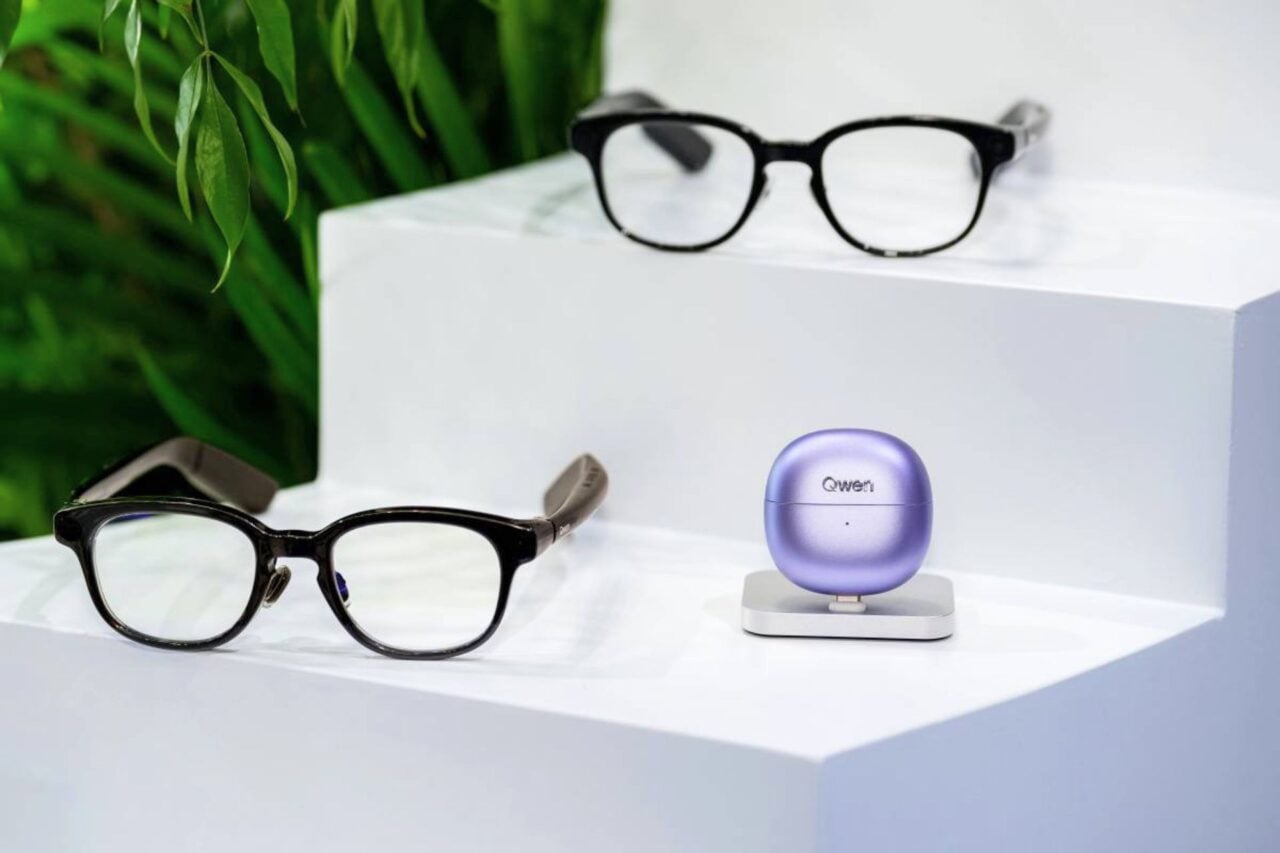
Key figures: Qwen Glasses N1 camera, 50 megapixels; Ray-Ban Meta (Gen 3) sensor, 12 megapixels; Qwen Glasses N1 starting price in China, 2,999 yuan before discounts, per Bloomberg.
| Figure | Value | Note | Claim |
|---|---|---|---|
| Qwen Glasses N1 camera | 50 megapixels | 1 | |
| Ray-Ban Meta (Gen 3) sensor | 12 megapixels | 2 | |
| N1 starting price in China | 2,999 yuan | before discounts, per Bloomberg | 13 |
What happened
- Gizmodo's writer got about six hours of continuous music playback from the Ray-Ban Meta in testing, against a rated maximum of nine hours in mixed use.
- A second tier, the N1 Pro at 3,499 yuan, adds eye tracking and iris-scan payment confirmation, TNW reported.
- The glasses are on sale in China through Taobao, Tmall, JD.com and Douyin.
Why it matters
- contradiction Gizmodo and TNW attach the same 3,499 yuan figure to different product names, so a quoted N1 price needs its tier attached before anyone budgets on it.
- constraint A buyer cannot rank the two on battery until someone runs both pairs under the same conditions.
- cost Buyers take on Alibaba's unverified specs with no price advantage to offset the risk, according to Bloomberg's comparison.
Pricing the N1 for a purchase order means choosing a source. Bloomberg reported 2,999 yuan before discounts [13]. Several Chinese outlets put the starting price at 2,899 yuan [14]. Yahoo Finance Hong Kong said buyers can pay as little as 2,218 yuan after state subsidies and launch offers [15]. That is 781 yuan, or 26%, under Bloomberg's figure [21].
The tier matters as much as the source. Gizmodo calls the $490 (3,499 RMB) glasses the Qwen Glasses N1 and credits them with a 1.7mm eye-tracking camera [4]. TNW lists 3,499 yuan as the price of the N1 Pro, the version with eye tracking, which is 500 yuan above the N1's starting price [c12, d2]. On TNW's terms, Gizmodo's price and feature list describe the Pro.
Neither tier undercuts Meta. Bloomberg noted that the N1 is no cheaper than Meta's Ray-Ban glasses, which lead the market [7]. TNW did not report Meta's price.
On the camera, 50 megapixels is 4.2 times the 12 on the Ray-Ban Meta (Gen 3) [12]. Gizmodo itself says megapixels aren't everything [2], and its writer has not tested the glasses [8].
Battery is where the comparison slips. Alibaba says the N1 lasts nine hours on music and 25 on standby [17]. Gizmodo sets the music figure against a nine-hour maximum for the newest Ray-Ban, a rating that covers more mixed use [18]. Under continuous music, Gizmodo's writer got about six hours from the Ray-Ban [19], a third short of the rating [22]. That is the only measured battery figure in either report, and it belongs to Meta. TNW passes along Chinese reports that the battery can be swapped [20].
Gizmodo's own framing cuts against a single race. It says Alibaba and Meta aren't really in direct competition, given their closed markets [9]. The eye-tracking module is among the features Gizmodo says Meta does not have, and the glasses can reportedly scan an iris to confirm a payment through Alipay [c17, c14]. The N1 is sold through Taobao, Tmall, JD.com and Douyin [16]. We think it is built for people who already shop and pay inside Alibaba's apps. Bloomberg noted that, like Meta, Alibaba wants glasses to become a way into its AI tools [10].
For Monday's comparison table, sort every spec on two tests: whether anyone other than the maker measured it, and whether the rival's figure was taken under the same conditions. That gives four boxes. A spec that passes both goes into the decision. One that is measured but not like-for-like, such as the six hours on the Ray-Ban, is context. One that is like-for-like but unmeasured, such as the megapixel counts, becomes a question for the first demo unit. One that fails both, such as the two nine-hour ratings or the eye tracking, stays off the table. In these two reports, no figure for the N1 reaches the first box.
What to watch
- Independent hands-on tests of the N1 and N1 Pro, especially battery life under continuous music and sample photos from the 50-megapixel camera.
- Alibaba or a retailer confirming which tier carries eye tracking and iris payments, and whether the battery is swappable.
- Whether the subsidized 2,218 yuan price holds after the launch offers end.
Clarity's read
What the record supports and how the coverage leans. The claims behind it follow.
Reality
- Evidence40
- Adoption
- Insufficient
- Hype gap+35
- Incentives
- Insufficient
- Confidence55
Claim ledger
Ranked by verification strength, evidence, and original report placement.
- [1]
The N1 has a 50-megapixel camera and runs Alibaba's Qwen AI assistant, which users talk to through bone-conduction microphones.
- [2]
The newest Meta smart glasses, the Ray-Ban Meta (Gen 3), have a 12-megapixel sensor; Gizmodo says megapixels aren't everything but the gap is still a significant jump in resolution.
- [3]
The N1 Pro, priced at 3,499 yuan, adds eye tracking; wearers can look at an object to ask about it and confirm payments with an iris scan.
- [4]
Gizmodo describes the $490 (3,499 RMB) Qwen Glasses N1 as having a tiny 1.7mm camera module for eye tracking.
- [5]
Eye tracking can reportedly scan your iris to confirm payments, and Alibaba's smart glasses integrate Alipay, Alibaba's mobile payment system.
- [6]
Gizmodo says the N1 has some features, including the eye-tracking module, that Meta does not have at all.
- [7]
The N1 is no cheaper than Meta's Ray-Ban glasses, which lead the market, Bloomberg noted.
- [8]
Gizmodo's writer has not tested the Qwen Glasses N1 and said they cannot say for sure whether the features work as advertised.
- [9]
Alibaba and Meta aren't really in direct competition, given their closed markets.
- [10]
Like Meta, Alibaba wants glasses to become a way into its AI tools.
- [11]
The N1 Pro's 3,499 yuan price is 500 yuan above the N1's 2,999 yuan starting price.
- [12]
The N1's 50-megapixel camera has about 4.2 times the pixel count of the Ray-Ban Meta (Gen 3)'s 12-megapixel sensor.
- [13]
Alibaba started selling its Qwen Glasses N1 in China at prices from 2,999 yuan ($450) before discounts, Bloomberg reported from a launch event in Hangzhou on Tuesday.
- [14]
Several Chinese outlets put the N1 starting price slightly lower, at 2,899 yuan.
- [15]
With state subsidies and launch offers, buyers can pay as little as 2,218 yuan for the N1, according to Yahoo Finance Hong Kong.
- [16]
The N1 glasses are on sale on Taobao, Tmall, JD.com, and Douyin.
- [17]
According to Alibaba, the Qwen Glasses N1 have 25 hours of battery on standby and nine hours for music playback.
- [18]
The most recent Ray-Ban smart glasses are rated for a maximum of nine hours on a single charge, though that is with more mixed-use scenarios.
- [19]
Based on Gizmodo's writer's testing, the Ray-Ban Meta glasses get about six-ish hours of battery life if you are continuously playing music.
- [20]
Chinese reports said the N1 battery can be swapped.
- [21]
The lowest quoted N1 price, 2,218 yuan, is 781 yuan or about 26% below the 2,999 yuan starting price Bloomberg reported.
- [22]
Gizmodo's six-hour continuous-music result on the Ray-Ban is about one third below the nine-hour maximum rating.
Get this ledger inside ChatGPT. Ask about any of our stories and the answer brings its figure, each claim’s verdict and the sources. Free, no account.
Sources
3 independent publishers whose own reporting we read for this story.
- cryptopolitan.comAlibaba launches new $450 smart glasses in AI gadget push
1 article · October 13, 2026
- gizmodo.comChina’s Smart Glasses Are Once Again Making Meta Look Silly
1 article · October 14, 2026
- thenextweb.comAlibaba starts selling its Qwen N1 AI glasses in China from $450
1 article · October 13, 2026
Topics and entities
Follow any of these and your For You feed starts watching them — no settings page required.
Topics
- AI Wearables PositioningFollow
- China consumer techFollow
- Smart Glasses and Camera WearablesFollow