Invest2 publishersReports disagree3 min readPublished Updated
Korea and Japan put their US investment pledges into power plants beside data centers
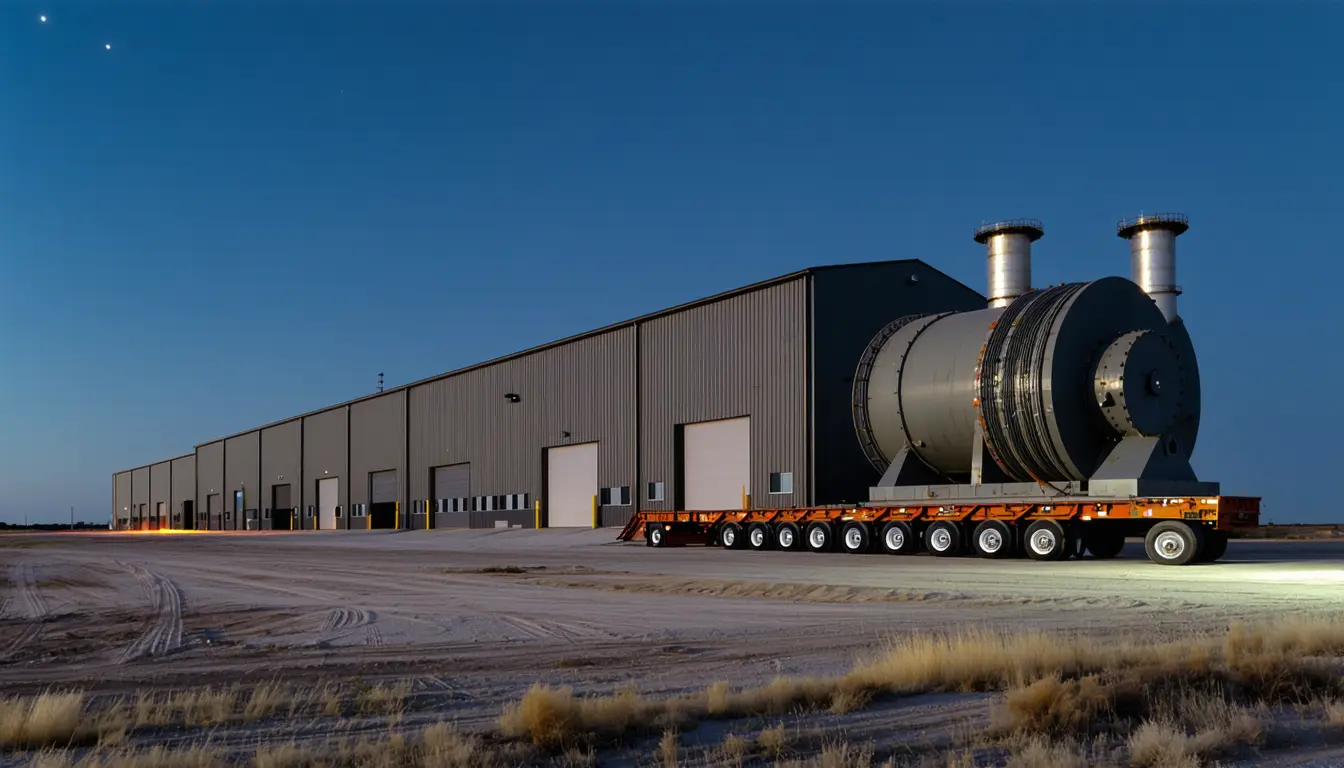
South Korea's first agreed US investment project is a $23.3 billion gas-fired power plant in Encinal, Texas. Japan's March batch has the same tilt, putting allied money into US generation next to data-center clusters that are short of power.
The Investor · Invest desk
What happened
- Related Companies and NextEra Energy lead the Encinal project, and Lewis Energy Group supplies the site, natural gas and water.
- The Texas plant's first phase is due to start commercial operation in 2029, and the full facility comes online in stages by 2032.
- Seoul and Washington also agreed on a framework for eight large US reactors, at least two of them Korean APR1400s, funded with $120 billion from the investment fund.
- Japan's March batch puts $17 billion into a 4.3-gigawatt gas plant in Pennsylvania, the state where Amazon pledged at least $20 billion for an AI and cloud campus.
Compiled by The InvestorSomething wrong?How this is made
Why it matters
- cost Under the nuclear framework, each of the eight reactors gets $12.5 billion for construction plus $2.5 billion of contingency, so a 20% overrun cushion is part of the funding from the start.
- constraint None of this electricity can lower anyone's bill before next month's midterms. Until the vote, the deals offer only the message that foreign money will fix US power, at a time when anger at data centers raising bills is spreading.
- decision The Energy Department's $5.25 billion for 31 grid projects is about 22.5% of the cost of one Korean-backed gas plant, so Washington pays for wires itself and leaves new generation to allied capital.
Japan's Pennsylvania plant is the only deal in this group with both a price and a size on the record: $17 billion for 4.3 gigawatts [11], or about $3.95 billion per gigawatt [19]. The Seoul Economic Daily reported Encinal's total cost of $23.3 billion [23] but did not report its capacity. At Pennsylvania's rate, that sum would buy about 5.9 gigawatts [24]. Treat that as an estimate until the developers publish a figure.
The strongest evidence that Washington is steering the money is where the plants are going. According to the paper, most of the selected sites are places where data centers are already clustered or planned [8]. Texas, which the paper called the world's most closely watched data-center hub, gets gas plants from both Korea and Japan [7]. GE Vernova Hitachi will lead small modular reactor projects in Tennessee and Alabama, two states that already host large data centers run by SpaceX, Google and Meta [6]. Citing analysts it did not name, the paper concluded that the US is using allied investment as leverage to ease its power bottleneck [9].
A plant built next to its customer also needs less transmission. By the paper's account, the US grid has a long way to go to catch China's [16]. Citadel Securities expects the US to struggle with grid interconnection, permitting and local opposition to data centers [13]. China had 370 gigawatts of inter-provincial and inter-regional transmission capacity last year, according to its National Energy Administration [14]. The Department of Energy is aiming for a 16% increase in long-distance transmission capacity by 2030 [15]. I'd expect allied money to keep going to plants sited next to their customers for as long as that gap holds.
On scale, the deals look small. Our World in Data put US generation last year at 4,520 terawatt-hours against China's 10,583 [12], so the US produced 42.7% as much [21]. Citadel expects China to add nearly six times as much capacity as the US over the next five years [13]. If the Pennsylvania plant ran every hour of the year, it would produce about 37.7 terawatt-hours, or 0.83% of last year's US total [22].
The Texas plant can go one of three ways. Its output can be contracted to data-center tenants near Encinal, which is what the steering argument assumes. It can sell into the wider Texas market, in which case it is a power plant that happens to sit in a data-center region. Or data-center demand can arrive after the plant does, and the Korean money pays for capacity before its customers exist. The paper did not report who buys Encinal's power or what the investment fund earns on it. In my view the siting supports the steering thesis, but the contracts have not tested it yet. Two things would count against it: a purchase agreement with the general Texas market, or a first phase that slips past its 2029 date [4].
What to watch
- Whether Encinal's capacity and power buyers are disclosed, and whether its output goes to nearby data centers under contract or into the wider Texas market.
- Whether the Encinal first phase keeps its 2029 commercial-operation date.
- Whether later Korea and Japan project batches stay concentrated in power plants or move into other sectors.