Invest1 publisher3 min readPublished
Trump Threatens to Double Tariffs on Korea if It Balks, Target Unclear, Amid $50 Billion-Plus Alaska LNG Talks
Donald Trump threatened to double what South Korea pays unless Seoul backs an Alaska LNG stake Howard Lutnick put at more than $50 billion. Ahead of the Nov. 3 midterms, that pressure is landing on allies while Trump keeps a trade truce with China.
The Investor · Invest desk
What happened
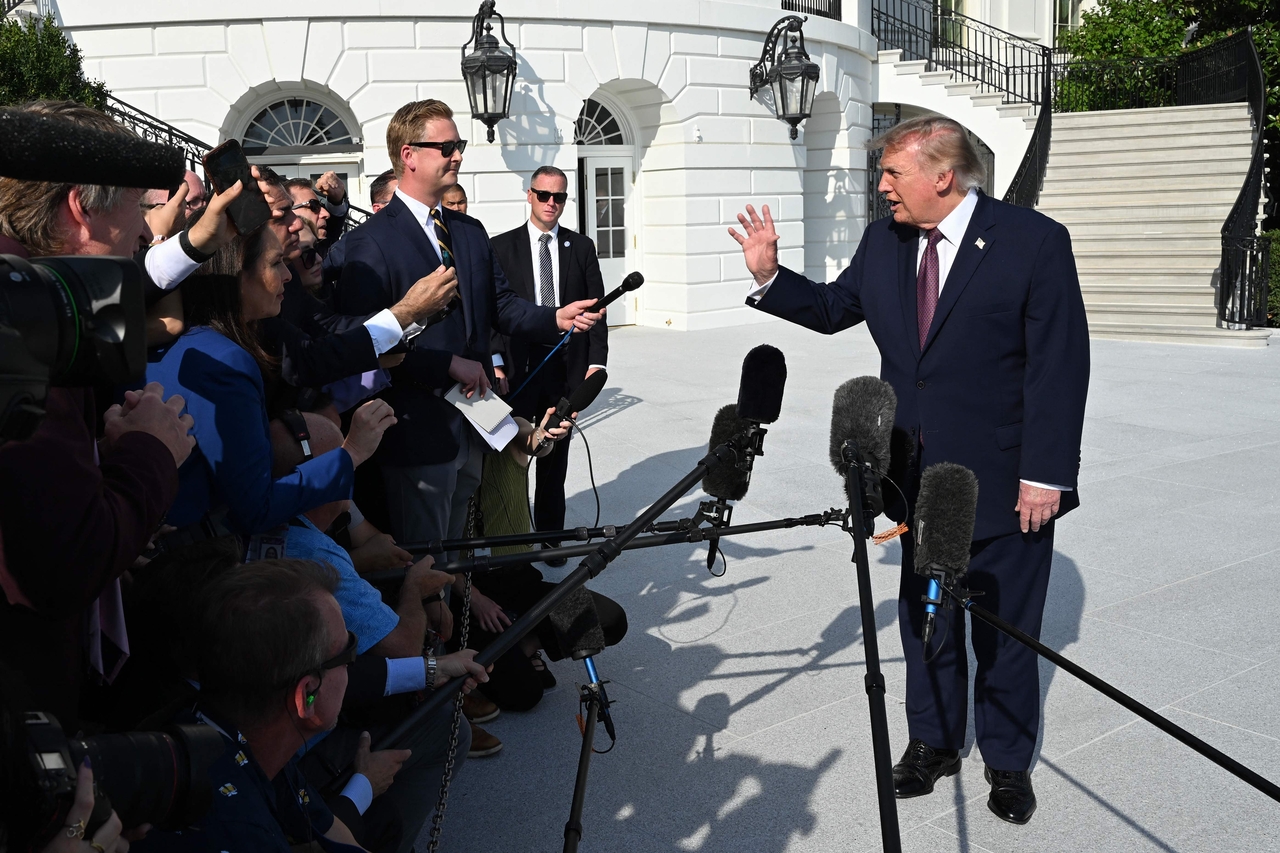
- Trump announced Korea's Alaska LNG investment from the Oval Office on Sept. 30, with Lutnick, Burgum, Wright, Sen. Dan Sullivan and Gov. Mike Dunleavy present.
- Trump also claimed "$8.4 billion for enhanced oil recovery projects" from Korea on Truth Social, an item that appears nowhere in the trade agreement.
- Since July 24, USTR has charged Section 301 forced-labor tariffs of 10% to 12.5% on 60 economies, China among them, after the Supreme Court struck down reciprocal tariffs.
Compiled by The InvestorSomething wrong?How this is made
Why it matters
- exposure Trump announces commitments Seoul never agreed to and then threatens to charge for refusing them, so any ally with an open investment pledge now carries tariff risk from White House announcements alone.
- cost Seoul pays either way: accepting Lutnick's figure ties at least a quarter of its $200 billion pledge to one project, and refusing invites a higher rate.
- contradiction The State Department says an agreement was reached while Lee says Seoul agreed only to start work subject to viability, so the two governments are describing different terms for the same deal.
- constraint Signaled overcapacity tariffs let USTR rebuild and then exceed Korea's 15% rate through Section 301 alone, so the November pledge buys less tariff certainty than its headline rate suggests.
Trump did not say what he would double, and the two readings carry different prices [19]. Korea pays a 12.5% forced-labor tariff under Section 301 [18]. Doubled, that is 25%, exactly the rate Korea paid before it pledged $200 billion of U.S. investment last November in exchange for a cut to 15% [13][2]. Doubling the 15% deal rate would give 30% [3]. Washington political circles assumed the threat ran through Section 301, according to Seoul Economic Daily [16].
Section 301 can also take Korea back to its deal rate with no threat at all. USTR has signaled overcapacity tariffs on top of the forced-labor levy, and 2.5 more points would leave Korea at the same effective 15% it carried under the reciprocal tariffs [18]. The Supreme Court struck those down on Feb. 24 [17].
The quarrel is over what Seoul signed. "I didn't announce it prematurely," Trump said on Oct. 2 [6]. "If Korea doesn't want to, that's fine with me," he said. "We'll just charge them more." [7] Lutnick put the stake at "more than $50 billion" [10], on its own at least a quarter of the November pledge [1]. Seoul describes something smaller. Lee Jae-myung wrote that Korea agreed to begin "working" on Alaska LNG on the premise that its commercial viability is confirmed [11]. He added that nuclear plants need viability guaranteed plant by plant [12]. State Department spokesman Tommy Pigott called the projects a genuine "win-win" and, asked about the gap between the two accounts, said what mattered was that an agreement had been reached [14].
China is on the same list of 60 economies paying forced-labor tariffs [17]. The difference is direction. After their Sept. 24 White House meeting, Trump and Xi Jinping agreed to refrain from escalating [5]. The new pressure falls on countries that "have little choice but to defer to Washington," according to the report [5]. Seoul Economic Daily ties the timing to the midterms: Democrats' odds of taking the House have grown and close Senate races have multiplied [2]. It says the asks are help with U.S. diesel prices and investment in congressional districts [3]. Its detailed reporting covers Korea and does not set out what Japan or Europe were asked to do on diesel.
So Trump is spending tariff leverage on Korea, Europe and Japan [1] and none, for now, on the country he just agreed a truce with [5]. Seoul, for its part, is not committing capital to Alaska before the viability test is met [11].
The threat can resolve in one of three ways. Seoul accepts Washington's account and nothing is levied; USTR doubles the 12.5% and the November deal's tariff cut is gone; or the remark stays a campaign line through Nov. 3 while the State Department's position that an agreement was reached stands [14]. I think the third is likeliest before the vote, because a 25% rate on Korea would cut against the district investment Trump is campaigning on [3]. The counter-case is that overcapacity tariffs are already signaled [18], so an increase can arrive as a routine USTR notice with no fresh announcement. A notice putting Korea above 15% before Nov. 3 would prove that view wrong.
What to watch
- A USTR notice setting overcapacity tariff rates, and whether Korea's lands at 2.5 points or higher.
- Whether Seoul publishes its own list of agreed projects against Washington's Alaska LNG and $8.4 billion enhanced oil recovery claims.
- Whether pressure on Korea, Japan and Europe eases after the Nov. 3 vote, which would test the election-timing reading.