Basel reactor tests find jet exhaust particles gain oxidative potential as they age
University of Basel researchers found that fine particles from a small jet engine gained oxidative potential after simulated atmospheric aging. Particles from a marine diesel engine tested alongside it stayed largely stable.
The Scientist · Science desk
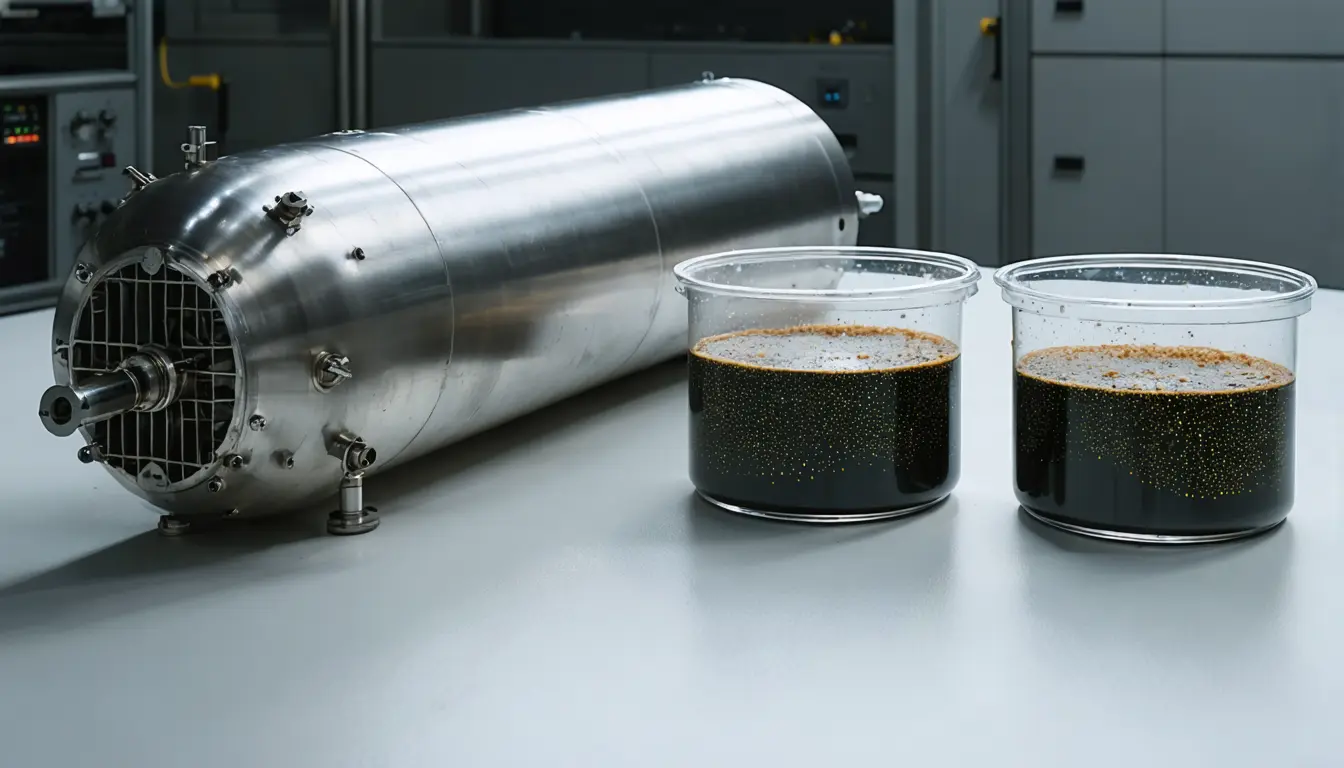
Reactor simulated 1 to 12 days of aging. Aircraft emissions: oxidative potential rose significantly with age. Ship engine emissions: largely stable. People inhale particles after hours to days in the air. Swiss ordinance: does not adequately account for the most toxic sources, Kalberer says.
- capability Photochemical reactor tests Simulated what happens to the particles in the atmosphere over 1 to 12 days, claim 5
- exposure Aircraft emissions Oxidative potential increased significantly as the particles aged, claim 7
- exposure Ship engine emissions Health-related properties remained largely stable over time, claim 7
- exposure People inhaling fine particles Particles usually remain in the atmosphere for hours or even several days before people inhale them, claim 3
- contradiction Swiss air pollution ordinance Kalberer says it does not adequately account for the most toxic sources of fine particulate matter, claim 11
| Who | How | Kind | Claim |
|---|---|---|---|
| Photochemical reactor tests | Simulated what happens to the particles in the atmosphere over 1 to 12 days | capability | 5 |
| Aircraft emissions | Oxidative potential increased significantly as the particles aged | exposure | 7 |
| Ship engine emissions | Health-related properties remained largely stable over time | exposure | 7 |
| People inhaling fine particles | Particles usually remain in the atmosphere for hours or even several days before people inhale them | exposure | 3 |
| Swiss air pollution ordinance | Kalberer says it does not adequately account for the most toxic sources of fine particulate matter | contradiction | 11 |
What happened
- The team used a photochemical reactor to simulate 1 to 12 days of atmospheric aging of the exhaust particles.
- Oxidative potential of fresh and aged emissions was measured with an instrument the University of Basel developed for the purpose, called OOPAAI.
- The source attributes the jet increase to changes in particle chemistry as the particles reacted with components of the air under sunlight.
- The paper, by Alexandre Barth and colleagues, was published in Environmental Science: Atmospheres in 2026.
Why it matters
- decision A lab or regulator that scores jet exhaust at the engine records the lower of the two values in this study, so it has to choose which stage of the particles' life to measure.
- constraint Because the diesel particles stayed largely flat, the result supports checking aged jet exhaust but does not justify an aging correction for every combustion source.
- exposure Particles typically spend hours to days in the air before inhalation, so the aged jet values may sit closer to what a person breathes than the fresh ones, if the reactor mimics open air.
The team's own reading is broad. Dr. Battist Utinger, one of the study's two first authors [13], said: "Our study shows that it is important to look beyond freshly emitted exhaust particles. Atmospheric processes can significantly alter the oxidative properties of the particles and thus their potential to harm human health." [10] Markus Kalberer, who led the research [4], went further and said: "This study clearly shows that current legal frameworks, such as the Swiss Ordinance on Air Pollution Control, do not adequately account for the most toxic sources of fine particulate matter and their properties." [11]
Only one of the two engine types behaved that way [14]. The ship engine's health-related properties remained largely stable [7], so for that engine a fresh-exhaust measurement and an aged one tell a similar story. In our view the data support Kalberer's point for the jet engine. Whether the ordinance misses other sources is not something two engines can settle.
"Significantly" is the phys.org report's only measure of the jet increase [7]. We have no figure for it, so the effect size is unknown from this account.
The thing this doesn't tell you is whether any of this shows up as illness. Oxidative potential is the property scientists tie to oxidative stress and inflammation in the respiratory tract [2], and here it was measured on particles in a reactor. The World Health Organization estimate the report cites, more than 7 million premature deaths a year from exposure to high concentrations of air pollution particles [12], covers particle pollution as a whole.
What to watch
- The full paper in Environmental Science: Atmospheres, for the size of the jet increase, the number of runs, the engine operating conditions and the compounds that formed.
- Tests of other jet engines, fuels and ship engines in the same reactor setup, to show whether the jet result repeats and whether the diesel result holds.
- Any response from Swiss authorities on Kalberer's criticism of the Ordinance on Air Pollution Control.
Clarity's read
What the record supports and how the coverage leans. The claims behind it follow.
Reality
- Evidence50
- Adoption
- Insufficient
- Hype gap+15
- Incentives
- Insufficient
- Confidence45
Claim ledger
Ranked by verification strength, evidence, and original report placement.
- [1]
Fine particulate matter consists of tiny particles with diameters in the nanometer range, produced for example by fuel combustion, which remain suspended in the air and can penetrate deep into the respiratory tract.
- [2]
In the respiratory tract, fine particles can trigger oxidative stress, a process that promotes inflammation and can lead to respiratory or cardiovascular disease; scientists call this harmful property the particles' oxidative potential.
- [3]
Fine particles usually remain in the atmosphere for hours or even several days before people inhale them.
- [4]
A research team led by professor Markus Kalberer investigated how the oxidative potential of fine particles emitted by a small aircraft jet engine and a marine diesel engine develops over time.
- [5]
Using a photochemical reactor, the researchers simulated what happens to the particles in the atmosphere over 1 to 12 days.
- [6]
To investigate the oxidative properties of fresh and aged exhaust emissions, the researchers used the Online Oxidative Potential Ascorbic Acid Instrument (OOPAAI), developed specifically for this purpose at the University of Basel.
- [7]
The health-related properties of ship engine emissions remained largely stable over time, while the oxidative potential of aircraft emissions increased significantly as the particles aged.
- [8]
The change was due to changes in the chemical composition of the particles as they reacted with components of the air under sunlight over an extended period.
- [9]
The study by Alexandre Barth et al., 'Online characterisation of oxidative potential and reactive oxygen species of fresh and aged aircraft turbine and ship engine particulate emissions', was published in Environmental Science: Atmospheres in 2026 (DOI 10.1039/d5ea00174a).
- [10]
"Our study shows that it is important to look beyond freshly emitted exhaust particles. Atmospheric processes can significantly alter the oxidative properties of the particles and thus their potential to harm human health."
- [11]
"This study clearly shows that current legal frameworks, such as the Swiss Ordinance on Air Pollution Control, do not adequately account for the most toxic sources of fine particulate matter and their properties."
- [12]
The World Health Organization estimates that more than 7 million premature deaths occur annually due to exposure to high concentrations of air pollution particles.
- [13]
Dr. Battist Utinger is one of the two first authors of the study, from the Department of Environmental Sciences and the Swiss Nanoscience Institute at the University of Basel.
- [14]
The increase in oxidative potential with aging appeared in one of the two engine types tested.
Get this ledger inside ChatGPT. Ask about any of our stories and the answer brings its figure, each claim’s verdict and the sources. Free, no account.
Sources
1 independent publisher whose own reporting we read for this story.
- phys.orgFine particles from aircraft exhaust become more harmful over time, lab tests suggest
1 article · October 14, 2026
Topics and entities
Follow any of these and your For You feed starts watching them — no settings page required.
Topics
- Aviation emissionsFollow
- Air pollutionFollow
- Atmospheric ChemistryFollow
Entities
- University of BaselFollow
- Markus KalbererFollow
- World Health OrganizationFollow
- Environmental Science: AtmospheresFollow