InvestNot yet confirmed elsewhere1 publisher2 min readPublished
Iran's security chief threatens regional cables, data centers and AI sites if the war resumes
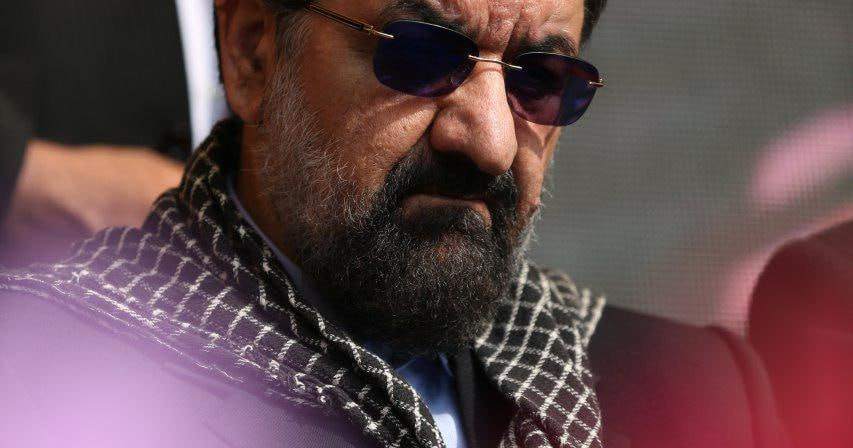
Iran's security council head Mohsen Rezaei threatened regional cables, data centers and AI facilities if intense fighting resumes, according to IRNA. The threat is conditional and unspecific, while the Hormuz disruption beside it is already running.
The Investor · Invest desk
Data center, cable owners and regional AI sites, named only as categories in Rezaei's threat if fighting resumes; ships in Hormuz, where attacks have increased; ships turning off tracking, deemed hostile; Riyadh's King Khalid airport, hit daily since Wednesday, 12 killed Saturday.
- exposure Data center and cable owners Named as a category in Rezaei's threat if intense fighting resumes; no operator or location is specified, claim 2
- exposure AI facilities in the region Listed alongside cables and data centers among sites threatened if intense fighting breaks out again, claim 2
- exposure Ships transiting Hormuz Attacks on ships transiting the strait have increased since Iran's proposal was rejected, claim 5
- constraint Ships with tracking turned off Guard navy warns any ship that turns off navigation and identification systems will be identified as hostile, claim 4
- precedent King Khalid airport, Riyadh Houthi attacks claimed every day since Wednesday; Saturday's attack killed 12 people, claim 7
| Who | How | Kind | Claim |
|---|---|---|---|
| Data center and cable owners | Named as a category in Rezaei's threat if intense fighting resumes; no operator or location is specified | exposure | 2 |
| AI facilities in the region | Listed alongside cables and data centers among sites threatened if intense fighting breaks out again | exposure | 2 |
| Ships transiting Hormuz | Attacks on ships transiting the strait have increased since Iran's proposal was rejected | exposure | 5 |
| Ships with tracking turned off | Guard navy warns any ship that turns off navigation and identification systems will be identified as hostile | constraint | 4 |
| King Khalid airport, Riyadh | Houthi attacks claimed every day since Wednesday; Saturday's attack killed 12 people | precedent | 7 |
What happened
- Rezaei said Tehran finds the latest US response to the proposal to end the war "insufficient", in comments carried by Iran's state-run IRNA news agency.
- He said Iran is no longer responding to Washington, which he said must clarify certain issues, and that the US has accepted some of the seven conditions while others remain unclear.
- Iran's delegation proposed a sped-up agreement at the UN gathering last month, echoing a June memorandum that collapsed days after signing; it was rejected, and mediation contacts continue.
- The Guard's navy warned that any ship in the strait that turns off navigation and identification systems would be "identified as hostile", according to IRNA.
- Attacks on ships transiting the strait have increased since the proposal was rejected, Fortune reported.
Why it matters
- exposure The threat names categories of site across the region and no operator or location, so every Gulf-linked data center and cable owner sits inside it and none can be ruled out.
- constraint A June memorandum collapsed within days of signing, so a new paper agreement would not on its own justify cutting the cost assumed for physical attack.
- decision Operators have to choose which risk gets money first: freight and spares for a strait where ship attacks are already up, or site hardening for a threat that has not been triggered.
- contradiction Rezaei frames the trigger as fighting that may return, yet Houthi strikes on Riyadh's main airport have run daily since Wednesday, so attacks on civilian infrastructure in the kingdom are already happening.
The wording is looser than the headlines suggest. Rezaei threatened "cables, data centers, AI facilities and other sites in the region" if intense fighting breaks out again, according to IRNA as carried by Fortune [2]. The report does not say which cables, which facilities or in which country, so an operator cannot price the threat site by site. It can price only the trigger.
The two risks run on different clocks. The strait is not yet fully open [9], so a Gulf-linked buildout that moves equipment by sea is paying for Hormuz today, whatever happens to Rezaei's condition. The facility threat is untriggered. Fortune describes the negotiations as limping along [9], and Rezaei, a former Revolutionary Guard commander [8], delivered the warning through state media, a channel where a threat costs nothing to issue.
We think the likeliest path is the current middle: contact through mediators, attacks on ships, no return to full fighting. That is a view built on one day's report, and the counter is fair. The June memorandum collapsed days after it was signed [6], so a signed deal would not retire the risk, and the decision to resume fighting sits with parties whose next move this report cannot forecast.
There are three outcomes to hold in mind. If talks resume through the mediators, the threat was leverage, and any hardening spend made in advance was early. If fighting resumes, sites named only by category become candidates, and the operators with the least notice are the ones who waited for a site name. If the middle holds, the cost lands on freight and spares, and the money for hardening buildings stays unspent. That last case is the one we would plan around.
We would be wrong if a data center or cable is hit while fighting is still below the level Rezaei described, because the condition would then have constrained nothing. We would also be wrong if a signed agreement were followed by a falling count of ship attacks and a strait that stays open, since that would put the June collapse down to its particular terms.
What to watch
- Whether ship attacks in the strait keep rising after the rejected UN proposal, and whether the Guard navy enforces its rule on vessels that switch off identification systems.
- Any strike on a data center or cable that comes before a general resumption of fighting.
- Whether the mediators obtain a US answer on the seven conditions Rezaei said remain unclear.
Clarity's read
What the record supports and how the coverage leans. The claims behind it follow.
Reality
- Evidence40
- Adoption
- Insufficient
- Hype gap+25
- Incentives
- Insufficient
- Confidence45
Claim ledger
Ranked by verification strength, evidence, and original report placement.
- [1]
Mohsen Rezaei, head of Iran's Supreme National Security Council, said Tehran finds the latest US response to a proposal to end the war "insufficient"; his comments were carried by Iran's state-run IRNA news agency.
- [2]
Rezaei threatened "cables, data centers, AI facilities and other sites in the region" if intense fighting breaks out again.
- [3]
Rezaei said Iran is no longer responding to the US and that Washington must clarify certain issues, without giving details; he said the US has accepted some of the seven conditions but others remain unclear.
- [4]
The Revolutionary Guard's navy warned that any ship on the strait that turns off navigation and identification systems would be "identified as hostile".
- [5]
Attacks on ships transiting the Strait of Hormuz have increased since Iran's proposal was rejected.
- [6]
Iran's delegation to the UN gathering last month proposed a sped-up agreement echoing the memorandum of understanding that collapsed days after the US and Iran signed it in June; the new proposal was rejected, but the two sides remain in contact via mediation.
- [7]
Iran-backed Houthi rebels claimed responsibility for attacks on King Khalid International Airport in Riyadh, which has been targeted every day since Wednesday; Saturday's attack killed 12 people.
- [8]
Rezaei is a former Revolutionary Guard commander.
- [9]
Efforts at negotiations to end the war and fully open the Strait of Hormuz are limping along.
Sources
1 independent publisher whose own reporting we read for this story.
Topics and entities
Follow any of these and your For You feed starts watching them — no settings page required.
Topics
- US-Iran warFollow
- Strait of Hormuz Shipping RiskFollow
- Critical digital infrastructure securityFollow