Two months separate the IPCC chairs' report schedule from the 2028 Paris stocktake
Nearly three years of debate have left the IPCC's 195 member states without publication dates for the next assessment. Under the chairs' proposal, approval would come about two months before the November 2028 Paris stocktake.
The Investor · Invest desk
Key figures: nearly 3 years of debate among IPCC members; the IPCC has 195 member states; under the opponents' plan, 2 of the 3 reports, the second and third, would arrive in 2029, after the November 2028 stocktake.
| Figure | Value | Note | Claim |
|---|---|---|---|
| Years of debate, nearly | 3 years | 1 | |
| IPCC member states | 195 states | 2 | |
| Opponents' plan: reports in 2029 | 2 of 3 reports | the second and third reports | 17 |
What happened
- The scientists chairing the groups that prepare the three reports have proposed a work plan under which all three would be approved by September 2028.
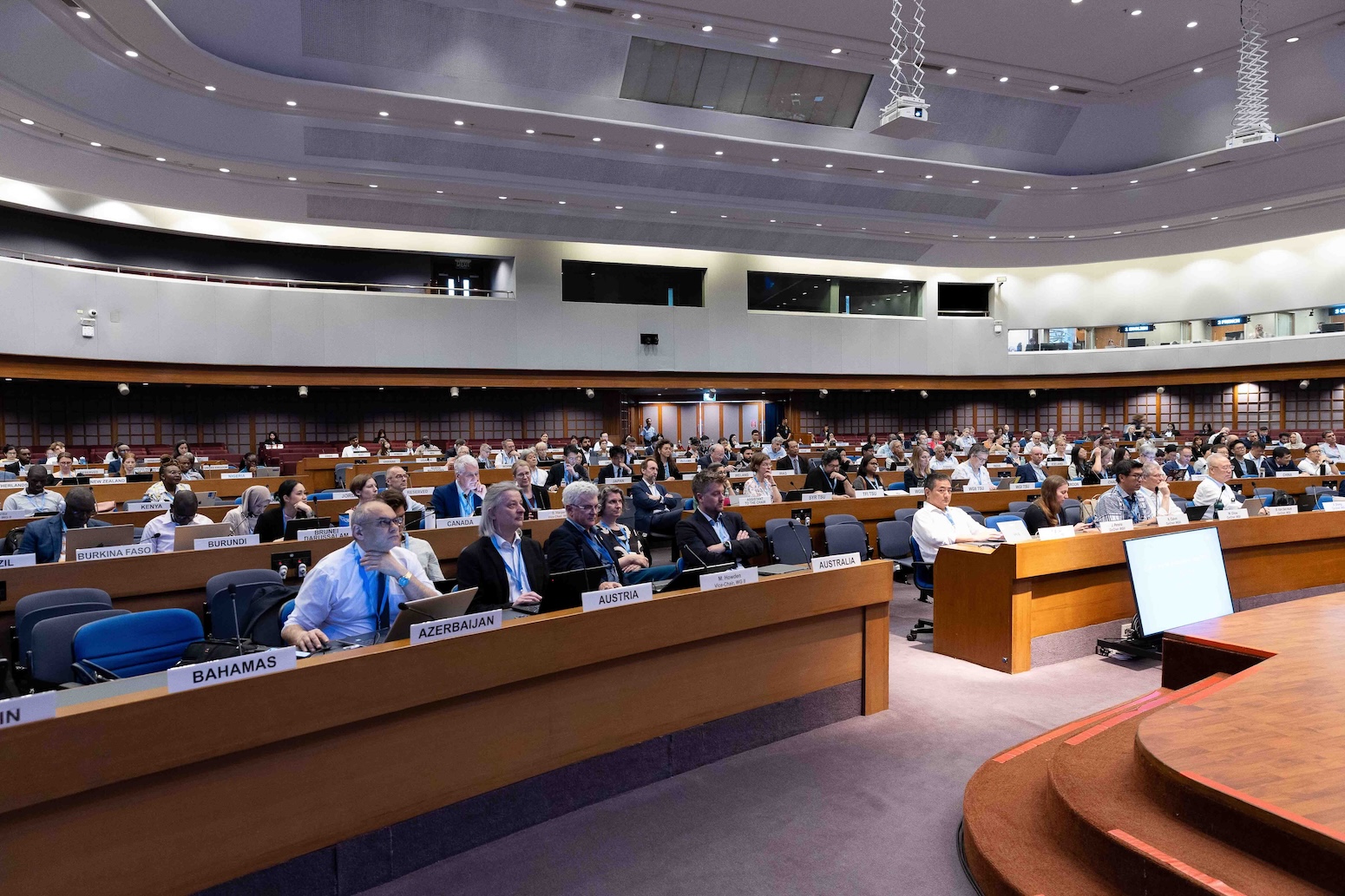
- A plenary in Addis Ababa on October 12 was expected to be the last chance to agree dates falling before the November 2028 talks.
- India, Kenya, Saudi Arabia, Russia and China want more time so scientists from less-resourced countries can contribute, saying some cannot publish in time or take unpaid leave from their jobs.
- The United States, the IPCC's biggest funder, quit the organisation in January.
Why it matters
- Who's exposed exposure Governments setting climate financing and national targets in 2028 could do so without consensus on how far some warming is reversible, according to the interviews The Hindu cites.
- What it limits constraint A slip of more than about two months in the chairs' own schedule would miss the stocktake even if every member state signed off on the dates.
- What doesn't add up contradiction Vautard says timelines usually clear in "a matter of minutes", yet The Hindu calls this deadlock unprecedented in IPCC history, so dates can no longer be treated as a formality.
Robert Vautard, a French co-chair, said the chairs' proposal was based on the anticipated workload and not on the timing of the 2028 UN talks [9]. If he is right, the margin between a September 2028 approval [5] and the November 2028 talks [16] fell out of the workload estimate and was not set against the summit.
The cost to the stocktake is two missing reports. The opponents of the chairs' plan want the second and third reports pushed into 2029 [6], so two of the three would arrive after governments meet to assess progress under the Paris agreement [17]. The capacity argument behind that is old: developing countries have long said their perspectives are thinly reflected in IPCC reports because they have fewer experts involved and fewer resources to publish peer-reviewed studies [13].
We think the risk to the stocktake is narrower than "no updated science" implies. As reported, the opponents move only the second and third reports. The first, on the extent and causes of climate change [15], would presumably stay where the chairs put it. The account does not say which of the three reports would address reversibility. If it is the first, a 2029 date for the others costs the stocktake little on that question; if it is the second or third, governments meet without it. A coalition of countries pushing for more robust action is alarmed that the reports may miss the talks [14], and Thiagarajan Jayaraman, a scientist who represents India at the IPCC, said it was "short-sighted" to treat contributing to the 2028 UN talks as the only measure of what the body's work is worth [12].
The plenary could adopt the chairs' September 2028 plan, split the reports with one in 2028 and two in 2029, or break up without dates. The Hindu published on October 12, the day the plenary was expected to convene [2], before any outcome. Our view is wrong if reversibility sits in a later report, or if the plenary ended with no dates at all.
What to watch
- Whether the plenary fixed dates for the second and third reports before or after the November 2028 talks.
- Which of the three reports the approved outline assigns the question of reversibility of warming.
- Whether any compromise puts a single report ahead of the stocktake while the other two move into 2029.
Clarity's read
What the record supports and how the coverage leans. The claims behind it follow.
Reality
- Evidence55
- Adoption
- Insufficient
- Hype gap+10
- Incentives50
- Confidence55
Claim ledger
Ranked by verification strength, evidence, and original report placement.
- [1]
After nearly three years of debate, members of the IPCC, which has 195 member states, cannot agree on a timeline to publish its next review of the latest climate science.
- [2]
On October 12, representatives from the IPCC's 195 member states were expected to convene in Addis Ababa for a plenary many see as the last chance to agree publication dates falling before the UN climate talks of November 2028.
- [3]
At the UN climate talks in November 2028, governments are due to assess progress toward the goals of the 2015 Paris agreement; those discussions are intended to guide decisions on climate financing and national emissions targets.
- [4]
The impasse over publication dates could leave countries to decide the next phase of action without consensus on critical issues, including the extent to which some global warming might be reversible, according to interviews with more than a dozen current and former IPCC scientists, government negotiators and meeting observers.
- [5]
Scientists chairing the groups preparing the three IPCC reports have proposed a work plan that would see all three approved by September 2028.
- [6]
Opponents of the chairs' proposal want the second and third reports pushed into 2029.
- [7]
India, Kenya, Saudi Arabia, Russia and China are pressing for more time to prepare the IPCC's next reports so that scientists from less-resourced countries can contribute; they say some struggle to publish new research in time or to take time off from their regular jobs for unpaid IPCC work.
- [8]
The United States, the IPCC's biggest funder, quit the organisation in January.
- [9]
Robert Vautard, a French co-chair, said the chairs' proposal was based on the anticipated workload rather than the timing of the 2028 UN summit.
- [10]
Vautard said report timelines are typically approved in "a matter of minutes".
- [11]
The deadlock is unprecedented in the IPCC's history.
- [12]
Thiagarajan Jayaraman, a scientist who represents India at the IPCC, said it was "short-sighted" to suggest the value of the body's work rests solely on contributing to the 2028 UN talks.
- [13]
Developing countries have long argued their perspectives are not sufficiently reflected in IPCC reports because they do not have enough experts involved and because their researchers have fewer resources to publish peer-reviewed studies.
- [14]
The possibility that the IPCC's reports might not be ready in time for the 2028 talks has alarmed a coalition of countries pushing for more robust action.
- [15]
The three IPCC reports cover the extent and causes of climate change, vulnerabilities and how countries can adapt, and options to avoid warming getting worse, in that order of listing.
- [16]
Approval of all three reports by September 2028 would come about two months before the November 2028 UN climate talks.
- [17]
Under the opponents' plan, two of the three reports (the second and third) would arrive in 2029, after the November 2028 stocktake.
Get this ledger inside ChatGPT. Ask about any of our stories and the answer brings its figure, each claim’s verdict and the sources. Free, no account.
Sources
1 independent publisher whose own reporting we read for this story.
- thehindu.comWorld’s top climate body deadlocked over inclusivity concerns - The Hindu
1 article · October 12, 2026
Topics and entities
Follow any of these and your For You feed starts watching them — no settings page required.
Entities
- Intergovernmental Panel on Climate ChangeFollow
- Paris AgreementFollow
- Robert VautardFollow
- Thiagarajan JayaramanFollow
- The HinduFollow