ProductNot yet confirmed elsewhere1 publisher3 min readPublished
Apple adds Blackfoot, Comanche and Northern East Cree to the iOS 27 keyboard
Apple's iOS 27 keyboard adds Blackfoot, Comanche and Northern East Cree to a list Apple says covers more than 200 languages and variants. Wired's account shows each addition depends on a standards body and on speaker communities, and the Cherokee Nation's chief says the community is rapidly losing its oldest speakers.
The Product Desk
What happened
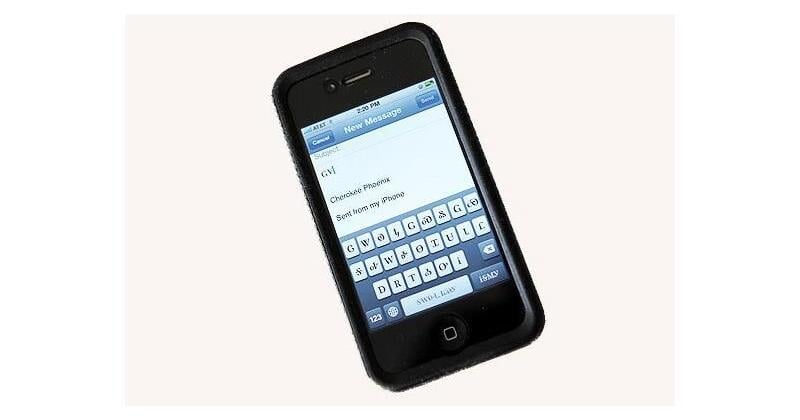
- Cherokee was the first Native American language in iOS, added in 2010 after long collaboration between the Cherokee Nation and Apple.
- A handful of languages came in iOS 26 last year, including Haitian Creole and Nez Perce.
- The Cherokee Nation has around 1,500 active speakers left, and most of them are over 70.
- Apple says adding a language is a multi-year effort that needs deep research, and that it leans on community members for their expertise.
Why it matters
- constraint A script that Unicode has not encoded cannot get a keyboard from Apple or anyone else, so the slowest step is one the phone maker does not control.
- decision Spelling and key layout are choices for each language community, so a team adding a language has to put speaker time on the schedule before engineering time.
- exposure Apple relies on community expertise, and the Cherokee chief says that community is rapidly losing its oldest speakers, so in our view the window for consulting them narrows each year.
A speaker who wants to write the glottal stop in a text message, on a phone with no key for it, types a question mark [17]. That is what users actually do, and they do it because the keyboards historically available did not support the character [16]. On a roadmap the same item reads "add language".
The work begins outside Cupertino, at Unicode [9]. A character has to exist in the Unicode Standard before it can be typed or read on a phone [10]. Unicode CEO Toral Cowieson said, "Everything does start with Unicode in terms of a language, but it actually starts with characters and scripts." [11] The standard holds more than 157,000 characters [12]. Proposing a language, verifying it and encoding the set can take three to five years [13]. Cowieson told Wired earlier this year that Unicode has only four full-time employees [14].
Encoding is not the end of it. Platforms then have to add font support, or the character can show up as an empty box, often called "tofu" [15].
The next steps are decisions that belong to the speakers. Where a language has no settled orthography, communities use ad hoc replacements [16], and Apple connects with them to work out how the sounds should be written in digital text [18]. Layout follows, and it has no default. Osage already had a physical keyboard layout, so Apple adapted it directly [19]. Some cultures prefer the QWERTY layout they already know [20]. Nez Perce has no capital letters, so Apple repurposed the Shift key to reveal an accented secondary layer [21].
Chuck Hoskin Jr., principal chief of the Cherokee Nation, listed colonization, displacement and boarding schools as the language's historical foes [23]. He said: "But it's nothing compared to the mathematics we're up against now. Which is why we're filled with this urgency every day to do all we can to find partners that can help us accelerate what we want to do." [7]
The goal, as Wired describes it, is to reach young people on the phone screens where they spend much of their waking hours [22]. The article does not report usage or retention figures for any of the added keyboards [24]. The case that a keyboard helps a language survive rests on the Nation's stated aim.
For a team choosing which language to take on next, we'd sort each one by two facts taken from the steps above: whether the script is encoded and covered by fonts, and whether the community has settled its spelling and layout.
- Encoded and settled: adapt the layout the community already uses, as Apple did for Osage [19]. - Encoded, spelling unsettled: hold working sessions with speakers on how sounds are written, since users are already typing question marks [17][18]. - Settled, not encoded: the wait belongs to Unicode, at three to five years [13]. - Neither: both waits apply.
We'd book speaker time ahead of engineering time for every language outside the first cell. The tradeoff is a roadmap whose dates depend on people outside the company, and on a standards body with four full-time staff [14].
What to watch
- Whether Apple or the Cherokee Nation publish usage figures for the Indigenous-language keyboards, since none appear in Wired's account.
- Which languages Apple adds after Blackfoot, Comanche and Northern East Cree, and whether their scripts were already encoded in Unicode.
- Whether Unicode adds staff beyond the four full-time employees Cowieson described, given a three-to-five-year encoding step.
Clarity's read
What the record supports and how the coverage leans. The claims behind it follow.
Reality
- Evidence55
- Adoption
- Insufficient
- Hype gap
- Insufficient
- Incentives40
- Confidence60
Claim ledger
Ranked by verification strength, evidence, and original report placement.
- [1]
Apple says its iOS keyboard supports more than 200 languages and language variants.
- [2]
In iOS 27, Apple expanded support for Indigenous languages to include Native American languages such as Blackfoot, Comanche and Northern East Cree.
- [3]
A handful of languages were added in iOS 26 last year, including Haitian Creole and Nez Perce.
- [4]
The Cherokee Nation has long collaborated with Apple, and Cherokee was the first Native American language included in iOS, in 2010.
- [5]
The Cherokee Nation has around 1,500 active speakers left, and most are over 70.
- [6]
Chuck Hoskin Jr., principal chief of the Cherokee Nation, says the community is rapidly losing the over-70 generation of speakers, which is why it has trained second-language learners and runs a baby immersion program.
- [7]
"But it's nothing compared to the mathematics we're up against now. Which is why we're filled with this urgency every day to do all we can to find partners that can help us accelerate what we want to do."
ReportedSupportedSource: Chuck Hoskin Jr., principal chief of the Cherokee Nation, to WiredView cited source - [8]
Apple says adding a language is not as simple as translating words; it is a multi-year endeavor that requires deep research, and the company leans on community members for their expertise.
- [9]
The process of adding a language does not start in Cupertino; it begins with Unicode.
- [10]
Before a character can be typed or read on a smartphone screen, it needs to exist as a recognized character in the Unicode Standard.
- [11]
"Everything does start with Unicode in terms of a language, but it actually starts with characters and scripts," said Unicode CEO Toral Cowieson.
- [12]
The Unicode Standard now includes more than 157,000 characters.
- [13]
Proposing a language, verifying it, and then encoding the character set can take three to five years.
- [14]
Cowieson told Wired earlier this year that Unicode had only four full-time employees.
- [15]
After a script is encoded, platforms like Apple and Google need to add font support; without it, a character could appear as an empty box, often called "tofu".
- [16]
When a language's orthography is not standardized, communities use ad hoc replacements because historically available keyboards do not support it.
- [17]
Because some keyboards do not support a distinct glottal stop character, many Indigenous cultures use alternatives such as a question mark to represent the sound.
- [18]
Apple connects with the community to figure out the best way to represent the sounds in digital text.
- [19]
When a community already has an established physical keyboard layout, as Osage does, Apple adapts it directly to the software keyboard.
- [20]
Some cultures prefer the QWERTY layouts people are already familiar with.
- [21]
Nez Perce (Nimipuutimt) does not use capital letters, so Apple repurposed the Shift key to reveal an accented secondary layer instead of toggling uppercase letters.
- [22]
The goal is to meet young people where they already spend much of their waking hours, on phone screens; Hoskin says that to revitalize and save a language, it has to become accessible.
- [23]
Hoskin named the so-called Age of Discovery, colonization, the displacement of the Cherokee people and boarding schools as the historical foes of the language.
- [24]
The Wired article reports no usage, retention or time-to-value figures for the Indigenous-language keyboards it describes.
Sources
1 independent publisher whose own reporting we read for this story.
- wired.comHow Apple Puts Indigenous Languages on the iPhone Keyboard
1 article · October 12, 2026
Topics and entities
Follow any of these and your For You feed starts watching them — no settings page required.
Topics
- Language revitalizationFollow
- Mobile Operating SystemsFollow
- Unicode and text encodingFollow
- Indigenous language technologyFollow